


-

- 2025-12-16
The Rise of MGDA: A Green Chelating Agent for Sustainable Industries
With global environmental regulations becoming increasingly stringent, traditional chelating agents such as EDTA (CAS 60-00-4), DTPA (CAS 67-43-6), and NTA (CAS 139-13-9) are facing growing restrictions due to their poor biodegradability or potential health risks. In this context, a new generation of green chelating agents is quietly revolutionizing multiple sectors including cleaning, detergency, and water treatment. The global market for Methylglycinediacetic Acid Trisodium Salt (MGDA, CAS 164462-16-2) reached USD 660 million in 2024 and is projected to grow at a CAGR of 10.2%, reaching approximately USD 1.43 billion by 2032.
01 Market Potential & Environmental Trends
The global chelating agents market is undergoing a green revolution. Valued at over USD 2.8 billion in 2022, it is expected to grow steadily at a CAGR of around 3.5% through 2028. Within this shift, Methylglycinediacetic Acid Trisodium Salt (MGDA, CAS 164462-16-2) stands out as a novel, environmentally friendly, small-molecule chelating agent with significant market potential. Its core advantages lie in being non-toxic, phosphate-free, and readily biodegradable.
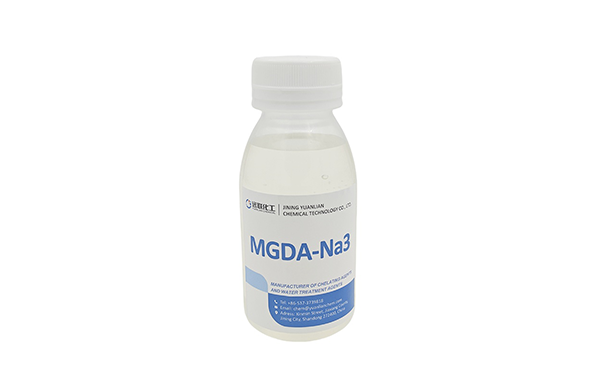
Tightening environmental regulations are directly accelerating the transition from traditional to green and novel chelants. Global demand for MGDA reached 386,000 tonnes in 2023, a figure anticipated to rise further as phosphate bans are implemented in more regions worldwide.
02 Core Technical Advantages
The chemical formula for Methylglycinediacetic Acid Trisodium Salt is C7H8NO6Na3 (CAS 164462-16-2). It is commonly available as a clear, pale-yellow liquid or white granules, marketed under tradenames such as Trilon® M and Dissolvine® M-40.
Compared to conventional chelators, MGDA offers multiple technical benefits. It exhibits a very strong chelating capacity for calcium and magnesium ions, enabling rapid action against both inorganic and organic soils. Notably, MGDA maintains stable performance across an exceptionally broad pH range (2-14). Long-term studies confirm that MGDA is non-carcinogenic, safe, non-toxic, and biodegradable. This profile makes it an ideal substitute for traditional chelating agents.
03 Expanding Application Fields
The application scope for Methylglycinediacetic Acid Trisodium Salt (CAS 164462-16-2) is extensive, covering nearly all industrial and domestic scenarios requiring chelation.
-
In household detergents, MGDA shows excellent cleaning efficacy against stains like blood, milk, ink, natural oils, and sebum. It has become a key component in automatic dishwashing detergents and laundry detergent formulations.
-
In industrial & institutional cleaning, its high chelation power and rapid action make it a preferred choice for various cleaning agents.
-
In water treatment, MGDA effectively inhibits scale formation and improves water quality by sequestering metal ions.
The table below outlines MGDA's specific functions across different applications:
| Application Sector | Primary Function | Market Trend |
|---|---|---|
| Automatic Dishwashing Detergents | Removes food residues, prevents limescale formation | Steady Growth |
| Laundry Detergents | Enhances stain removal, softens water (replaces phosphates) | Substituting traditional phosphates |
| Industrial & Institutional Cleaners | Removes inorganic and organic soils | Widely Adopted |
| Water Treatment | Inhibits scale, chelates metal ions | Growth driven by环保 regulations |
| Personal Care Products | Acts as a mild chelating agent | Emerging Application |
04 Comparison with Traditional Chelating Agents
The limitations of traditional chelating agents are becoming increasingly apparent. Ethylenediaminetetraacetic acid (EDTA, CAS 60-00-4) and its salts are poorly biodegradable. Nitrilotriacetic acid (NTA, CAS 139-13-9) carries potential carcinogenicity concerns, while Diethylenetriaminepentaacetic acid (DTPA, CAS 67-43-6) is considered harmful to fetuses.
In contrast, MGDA (CAS 164462-16-2) demonstrates comprehensive environmental advantages. It maintains excellent chelation performance while addressing the ecological and safety issues associated with traditional products, positioning it as one of the optimal choices to meet modern industrial and consumer demands.
05 Evolution of Production Technology
Production technologies for MGDA (CAS 164462-16-2) are continuously advancing. Significant progress has been made in China, where the supply of key raw material L-alanine is ample, providing a solid foundation for industry development. China is a major global producer of L-alanine.
Technological innovation is evident, for instance, the Shandong Chemical Research Institute at Qingdao University of Science and Technology has developed an efficient novel synthesis process for MGDA. This innovation has been successfully commercialized through technology transfer, with one project签约 valued at RMB 10 million. Notably, this process utilizes an innovative telescoped reaction mode, enabling one-step synthesis of the product, which significantly shortens the production流程 and reduces costs.
06 Yuanlian Chemical: A Specialist MGDA Force in China
Among Chinese MGDA suppliers, Shandong Yuanlian Chemical Co., Ltd. is a notable market participant. Through its subsidiary Jining Yuanlian Chemical Technology Co., Ltd., the company focuses on the R&D and promotion of environmentally friendly chemicals, including MGDA. Yuanlian Chemical collaborates with several renowned research institutes such as Qilu University of Technology, South China University of Technology, and Xi'an Jiaotong University. This industry-academia-research integration model strongly supports its product development and technological innovation. In 2024, Shandong Yuanlian Chemical entered into a cooperation with the aforementioned Shandong Chemical Research Institute for the novel chelating agent synthesis process, specifically targeting the technology transfer for a new MGDA production route.
07 Competitive Landscape & Suppliers
The global MGDA (CAS 164462-16-2) market features a diversified competitive landscape. Key suppliers include international chemical giants like BASF and Nouryon, alongside Chinese companies such as Sino Lion, Shandong Yuanlian Chemical, Lishui Boret Chemical, and Shandong Taihe Water Treatment Co., Ltd.
The competitiveness of Chinese enterprises in this field is steadily growing. Driven by rising environmental standards and expanding downstream demand, the Chinese MGDA market is expected to grow further.
The future for the MGDA industry in China is promising. As technology matures and environmental awareness increases, MGDA (CAS 164462-16-2) is poised to replace traditional chelants in更多 applications, creating substantial new market opportunities. While companies like BASF were pioneers in commercializing MGDA, Chinese firms like Shandong Yuanlian Chemical have achieved industrial upgrading through technological innovation. Their MGDA products effectively remove stubborn stains like tea scale and coffee marks while maintaining stable performance across a pH range of 2 to 14.
As global demand for sustainable chemicals continues to surge, the application landscape for this novel, eco-friendly chelating agent keeps expanding. From household cleaning to industrial applications, from water treatment to personal care, the green molecule of Methylglycinediacetic Acid Trisodium Salt is redefining environmental standards across the entire value chain.
Yuanlian Chemical specializes in the production of polyaspartic acid (PASP),tetrasodium iminodisuccinate(IDS), GLDA, MGDA etc. with stable quality and excellent quantity!

Contact us