


-

- 2025-12-26
Defying Extreme Heat: How Tetrasodium Iminodisuccinate (IDS) Provides Unmatched Stability for European Industries
On a textile dyeing production line, the temperature holds steady at 95°C. In the vigorously churning dye bath, conventional chelating agents would have long since degraded. Yet, Tetrasodium Iminodisuccinate (IDS) continues to perform effectively, ensuring consistent color quality and process stability by sequestering metal ions.
Technicians from Shandong Yuanlian Chemical Co., Ltd. monitor the equipment, documenting IDS performance across various conditions. Since its founding in 2015, this innovator in green chemistry has developed into a leading producer of high-purity IDS.
01 The Performance Edge: Unrivaled Stability Under Thermal Stress
Heat resistance is critical for industrial sustainability. Tetrasodium Iminodisuccinate (IDS) delivers exceptional high-temperature performance, distinguishing it from alternatives.
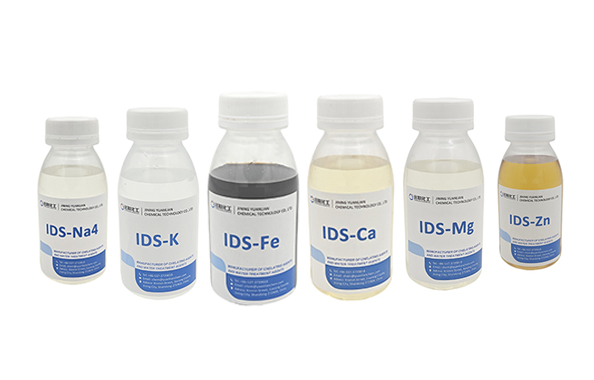
[Image: Shandong Yuanlian Chemical's Tetrasodium Iminodisuccinate (IDS) Product]
Laboratory tests confirm that IDS retains over 80% stability following 20 hours of exposure to 100°C in highly alkaline conditions. Performance is even more robust at moderate temperatures (≤50°C), with long-term stability exceeding 90%.
This resilience originates in its unique molecular structure. The configuration of dual carboxylate groups and a nitrogen atom creates a foundation for thermal stability, while also enhancing aqueous solubility for easier application.
Compared to traditional agents like EDTA or NTA, IDS offers superior stability in high-temperature, high-pH environments, enabling reliable performance in demanding industrial processes.
02 Engineering Excellence: Building an Industry Benchmark
The development and production of IDS by Shandong Yuanlian Chemical reflects focused innovation in green chemistry. The company directs significant investment toward R&D, aiming for technological leadership.
Collaborations with leading academic institutions, including Nankai University and Beijing University of Chemical Technology, have been crucial in advancing IDS synthesis and optimization.
A rigorous quality control system, supported by automated production and multiple testing protocols, ensures consistent product performance. The company's annual production capacity now surpasses ten thousand metric tons, serving diverse customer requirements across markets.
03 Transforming Applications: Green Solutions for High-Temperature Processes
The superior heat tolerance of IDS makes it a key component across multiple high-temperature industrial sectors.
-
Textile Dyeing & Finishing: Processes often operate between 80-100°C. IDS remains stable where others fail, effectively chelating calcium, magnesium, iron, and copper ions to ensure uniform dyeing and vibrant color fastness while protecting fabric integrity.
-
Pulp & Paper Manufacturing: In the high-temperature, alkaline environments of pulp bleaching, IDS controls metal ion interference, improves brightness stability, and reduces scale formation on equipment.
-
Industrial Cleaning: For cleaning boilers, heat exchangers, and other equipment under high-temperature conditions, IDS acts as an effective agent for dissolving and removing hardened deposits.
-
Water Treatment Systems: Industrial cooling water systems operating at elevated temperatures are prone to scaling. IDS inhibits the deposition of calcium and magnesium ions even under alkaline, high-heat conditions, enhancing system efficiency and longevity.
04 Sustainable by Design: The Environmental Advantage
Tetrasodium Iminodisuccinate (IDS) combines high performance with a strong environmental profile.
It is completely phosphate-free, eliminating a primary cause of aquatic eutrophication and aligning with stringent environmental regulations.
IDS is also readily biodegradable, breaking down naturally without leaving persistent pollutants. This profile supports compliance with international standards like EU REACH, facilitating global market access.
Synthesized from comparatively eco-friendly raw materials with a low-pollution process, IDS stands as a sustainable alternative to traditional chelators, supporting the industry's shift toward greener chemistry.
05 Market Perspective: The Future of Heat-Resistant Green Chemistry
The convergence of advancing industrial processes and stricter environmental regulations creates significant opportunity for chemicals like IDS.
Demand is growing for solutions that maintain integrity in high-temperature operations while meeting sustainability goals. Global policies increasingly restrict polluting chemicals, favoring greener alternatives such as IDS.
Future applications may expand into sectors like petroleum extraction, metal processing, and food production. Furthermore, formulating IDS with complementary chemicals will broaden its utility and enhance synergistic effects.
Driven by innovation, Yuanlian Chemical is contributing to the advancement of sustainable fine chemicals for industry.
Yuanlian Chemical specializes in the production of polyaspartic acid (PASP),tetrasodium iminodisuccinate(IDS), GLDA, MGDA etc. with stable quality and excellent quantity!

Contact us