


-

- 2026-02-28
Unlocking Crop Potential: The Critical Role of Chelating Agents in Modern Agriculture
In the face of a growing global population and shrinking arable land, the pressure on agricultural productivity has never been higher. While traditional N-P-K fertilizers provide the foundation for growth, the "silent" factor determining the difference between a mediocre harvest and a record-breaking yield often lies in micronutrient bioavailability.
This is where chelating agents—the specialized "protectors" of plant nutrition—become indispensable. For industry professionals seeking sustainable and high-efficiency solutions, understanding the synergy between soil chemistry and chelation is key to modern crop management.
The Science of Bioavailability: Why Raw Minerals Aren't Enough
Most soils contain essential trace elements like Iron (Fe), Zinc (Zn), Manganese (Mn), and Copper (Cu). However, these minerals are often "locked" in the soil due to high pH levels or chemical antagonism. In alkaline or calcareous soils, free metal ions quickly react with hydroxides or phosphates to form insoluble precipitates that roots cannot absorb.
Chelating agents (from the Greek chele, meaning "claw") function by wrapping around these metal ions, preventing them from reacting with the soil environment while keeping them water-soluble. This "claw" holds the nutrient until it reaches the plant root or leaf surface, where it is released for immediate uptake.
Comparing Key Chelating Agents: EDTA, DTPA, and EDDHA
Not all chelates are created equal. Choosing the right agent depends largely on your soil's pH profile and application method:
| Chelating Agent | Optimal pH Range | Best Use Case |
| EDTA | 4.0 – 6.5 | Best for acidic soils and foliar sprays. |
| DTPA | 4.0 – 7.5 | Ideal for neutral soils and hydroponic systems. |
| EDDHA | 4.0 – 9.0 | The gold standard for highly alkaline/calcareous soils. |
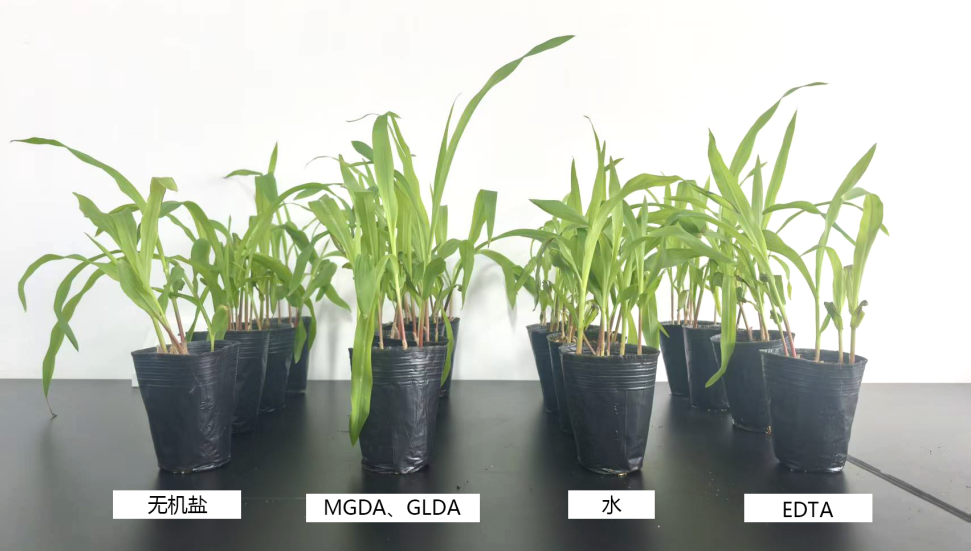
While these synthetic agents have dominated the market, the 2026 agricultural landscape is shifting toward biodegradable alternatives that offer high performance without environmental persistence.
Yuanlian Chemical: Pioneering Sustainable Chelation Technology
As a high-tech enterprise at the forefront of chemical R&D, Shandong Yuanlian Chemical Co., Ltd. is redefining nutrient efficiency with its suite of eco-friendly chelating agents. Unlike traditional persistent organic pollutants, Yuanlian's focus is on biodegradability and synergy.
Key products in the Yuanlian Chemical portfolio include:
-
IDS (Tetrasodium Iminodisuccinate): A fully biodegradable chelating agent that serves as an excellent "green" alternative to EDTA.
-
PASP (Sodium Polyaspartate): A biopolymer that acts as a fertilizer synergist, enhancing the absorption of nitrogen and phosphorus while mobilizing soil-bound trace elements.
-
GLDA & MGDA: High-performance, bio-based chelates designed for specialized agricultural formulations that require stability across varying water hardness levels.
By integrating these advanced molecules into liquid fertilizers or soil conditioners, growers can achieve up to 30% higher nutrient uptake efficiency compared to non-chelated salts.
The 2026 Trend: Precision Nutrition and Soil Health
The future of agriculture is not about applying more fertilizer, but applying it smarter. Precision farming now utilizes chelated micronutrients in fertigation and drone-assisted foliar spraying to address specific deficiencies in real-time.
Furthermore, the industry is moving toward "Circular Agriculture." Yuanlian Chemical’s biodegradable range ensures that after the nutrients are delivered, the chelating agent breaks down into harmless components, preserving the long-term microbial health of the soil—a critical factor for carbon farming and sustainability certification.
Conclusion
Chelating agents are the bridge between soil potential and actual yield. Whether you are battling iron chlorosis in alkaline orchards or looking to optimize a hydroponic nutrient film, selecting a high-stability, environmentally responsible chelate is non-negotiable.
Are you ready to optimize your fertilizer formulations for maximum ROI?
Yuanlian Chemical specializes in the production of polyaspartic acid (PASP),tetrasodium iminodisuccinate(IDS), GLDA, MGDA etc. with stable quality and excellent quantity!

Contact us