



-

- 2026-04-13
Solving Soil Compaction: How PASP Optimizes Aggregate Structure and Unlocks Cumulative Phosphorus & Potassium
In the pursuit of intensive crop production, the hidden cost is often the degradation of the soil’s physical and chemical health. Soil compaction (soil hardening) has become a global crisis, leading to poor aeration, restricted root growth, and the "locking" of vital nutrients.
As we navigate the 2026 agricultural landscape, PASP (Polyaspartic Acid) is emerging as a disruptive biotechnological tool. It is not just a fertilizer enhancer; it is a soil structural architect designed to restore the vitality of the rhizosphere.
1. The Science of Soil Hardening: A Chemical Deadlock
Soil compaction is often the result of long-term reliance on inorganic mineral salts. When excess ions—specifically sodium, calcium, and magnesium—react with clay particles without sufficient organic buffering, the soil loses its porosity.
Furthermore, traditional fertilizers lead to Nutrient Fixation:
-
Phosphorus () Fixation: Applied phosphorus quickly reacts with soil metal ions (Al, Fe, Ca) to form insoluble precipitates.
-
Potassium () Entrapment: Potassium ions become trapped within the lattice of clay minerals, becoming "cumulative but unavailable."
2. Restoring the "Breath" of the Soil: PASP and Aggregate Formation
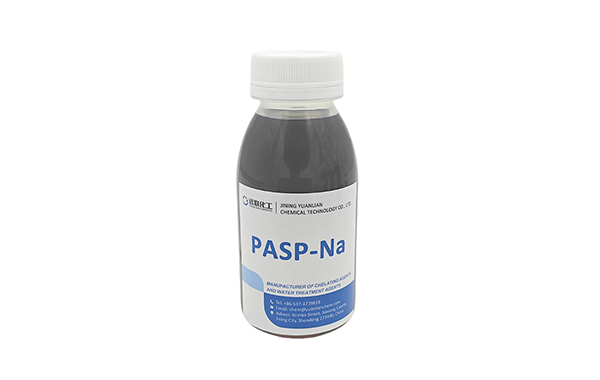
PASP is a biodegradable biopolymer with a high density of active carboxyl groups. Its impact on soil physical structure is profound:
-
Flocculation & Aggregation: PASP acts as a molecular "bridge" between clay particles and organic matter. This promotes the formation of soil aggregates—small clusters that create macro-pores for water and air movement.
-
Cation Exchange Capacity (CEC) Enhancement: By increasing the soil's CEC, PASP prevents the "caking" of mineral salts, ensuring the soil remains friable and easy for roots to penetrate.
3. The "Unlocker": Releasing Cumulative Phosphorus and Potassium
The most powerful economic argument for PASP is its ability to recover the "lost" investment already sitting in the soil.
Releasing Fixed Phosphorus
PASP possesses a stronger chelating affinity for Calcium () and Magnesium () than phosphate ions do. When applied, PASP "grabs" these metal ions away from insoluble phosphorus compounds, effectively dissolving the precipitates and releasing active back into the soil solution for crop uptake.
Mobilizing Cumulative Potassium
Through its high ionic activity, PASP helps displace potassium ions that are tightly bound to soil colloids. By increasing the mobility of in the rhizosphere, PASP ensures that the "accumulated" potassium becomes a functional part of the plant’s metabolic cycle.
4. 2026 Agronomic Performance: Data-Driven Results
Field trials in 2026 have quantified the synergistic impact of PASP-enriched soil management:
Conclusion: Engineering a Living Soil
Solving soil compaction is not a matter of mechanical force, but of chemical intelligence. By utilizing Polyaspartic Acid (PASP), modern agriculture can transition from a cycle of "more inputs" to a cycle of "higher efficiency." PASP allows growers to reclaim the locked nutrients in their soil while building a sustainable, porous structure that supports long-term fertility.
At Yuanlian Chemical, we are dedicated to providing the upstream biopolymer technology that turns compacted ground into productive, living soil.
Yuanlian Chemical specializes in the production of polyaspartic acid (PASP),tetrasodium iminodisuccinate(IDS), GLDA, MGDA etc. with stable quality and excellent quantity!

Contact us