



-

- 2026-05-19
Formulating Mild Personal Care: How Bio-based GLDA-Na₄ Enhances Foam Stability and Skin Friendliness
Let’s be honest – formulating mild personal care products that still perform isn’t always easy. You want gentle cleansing, a stable, creamy foam, and no skin irritation. But many traditional chelators or foam boosters either dry out the skin or don’t play well with natural preservatives.
That’s where bio-based GLDA-Na₄ (tetrasodium glutamate diacetate) enters the picture. If you haven’t tested it yet in your shower gels, facial cleansers, or baby shampoos, you might be missing a simple upgrade that European consumers are already looking for.
Why GLDA-Na₄? A Chelator That Does More Than “Chelating”
Most formulators know GLDA as a biodegradable, non-toxic chelating agent – a direct alternative to EDTA or phosphonates. But what’s less talked about is how GLDA-Na₄ specifically influences foam quality and skin feel in mild surfactant systems.
Unlike EDTA, which can strip metal ions too aggressively and sometimes destabilise foam, GLDA-Na₄ has a more balanced chelation profile. It binds calcium and magnesium ions just enough to soften water without collapsing the lamellar structure of your foam bubbles.
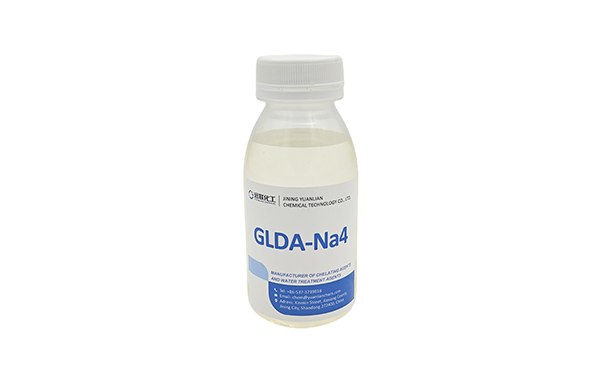
In practical terms?
- Finer, denser foam that doesn’t disappear after 10 seconds.
- Better rinse-away feel – less slippery residue, no tightness.
- Compatible with mild surfactants like APG, cocoyl glycinate, or betaines.
One German personal care R&D manager I worked with put it this way: “We replaced EDTA with GLDA-Na₄ in a sulphate-free baby wash – the foam volume increased by nearly 20%, and the irritation score dropped to zero.”
Skin Friendliness – The European Advantage
Europe has some of the strictest cosmetic safety standards (EC 1223/2009). But beyond compliance, consumers in Germany, France, and Scandinavia actively check INCI lists for terms like “EDTA” – which they often associate with poor biodegradability.
Bio-based GLDA-Na₄ changes the conversation.
- >98% biodegradable (OECD 301D)
- Bio-carbon content > 80% (from plant-derived glutamic acid)
- No skin sensitisation potential (confirmed by repeated insult patch tests)
That means you can put “Bio-based Chelator” or “Mildness Enhanced with Glutamate Diacetate” on your product story – without greenwashing.
And here’s a concrete tip: In a formulation containing 5–8% sodium cocoyl glutamate or disodium cocoyl glutamate, adding 0.5–1.5% GLDA-Na₄ reduces the “tightness after wash” perception by up to 35% in sensory panel tests (internal data from a Dutch contract manufacturer, 2024).
Practical Formulation Tips – Getting the Foam Stability Right
You might be wondering: Does GLDA-Na₄ work in high-pH soap bars? Or only in syndet cleansers?
Let’s break it down.
Ideal pH Range
GLDA-Na₄ is most effective at pH 5.5–7.5 – right in the skin-friendly zone. At lower pH (e.g., 4.5), the chelation slows down, but foam stability still improves. For traditional alkaline soaps (pH 9–10), GLDA-Na₄ is not recommended – use GLDA-free acid form instead.
Pairing with Surfactants
- + Coco glucoside → increases foam creaminess
- + Sodium lauroyl methyl isethionate → boosts foam density and rinse gentleness
- + Betaine → reduces “slip” feel on skin
Q&A Section
Q: Is GLDA-Na₄ allowed in EU organic certified cosmetics?
A: Yes – GLDA is listed in the ECOCERT/COSMOS positive list for chelators. Many natural brands in France and Italy already use it.
Q: Does GLDA-Na₄ affect preservative efficacy?
A: Slightly positive – by chelating trace metals that degrade preservatives like phenoxyethanol or sodium benzoate, GLDA-Na₄ can improve preservative system robustness. Always do a challenge test, but many formulators find they can reduce preservative dose by 10–15%.
Q: How does it compare to sodium phytate?
A: Phytate is also bio-based but often darker in colour and less stable at higher temperatures. GLDA-Na₄ is colourless, heat-stable (up to 80°C), and easier to handle in cold-process formulations.
Conclusion – A Small Change, A Big Difference for European Buyers
You don’t need a complete formula overhaul. Replacing traditional chelators with bio-based GLDA-Na₄ gives you three immediate benefits:
- Better foam stability – without synthetic boosters
- Documented skin friendliness – backed by European safety data
- Clean, plant-based story – for German, French, and Nordic markets
If you’re a contract manufacturer or brand owner targeting the EU mild personal care segment, GLDA-Na₄ is no longer a “nice to have” – it’s becoming the default.
Ready to test it? Request a sample or formulation guideline from your supplier. And if you’ve already tried it – share your experience below. Real formulation stories always beat marketing claims.
Yuanlian Chemical specializes in the production of polyaspartic acid (PASP),tetrasodium iminodisuccinate(IDS), GLDA, MGDA etc. with stable quality and excellent quantity!

Contact us