


-

- 2026-05-21
What is Tetrasodium Glutamate Diacetate? Benefits, Sustainability, and Wholesale Sourcing
You've probably seen "GLDA" or "tetrasodium glutamate diacetate" popping up on ingredient lists lately – in eco-labelled detergents, premium personal care products, even industrial cleaners. But if you're still using EDTA or phosphonates, you might be wondering: is this just another green marketing buzzword, or does it actually deliver?
I've been following the chelating agent market in Europe for the past few years. And GLDA is one of the few "green" chemicals that actually lives up to the hype. Let me walk you through what it is, why formulators are switching to it, and how to source it if you're buying at wholesale volume.
What Exactly Is Tetrasodium Glutamate Diacetate (GLDA-Na₄)?
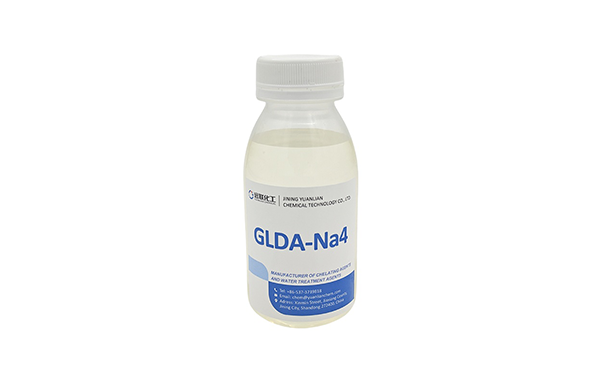
Let's start with the basics. Tetrasodium glutamate diacetate – often shortened to GLDA-Na₄ or simply GLDA – is a chelating agent. That means it binds to metal ions (calcium, magnesium, iron, copper) and stops them from causing problems in your formulation.
But here's what makes GLDA different from older chelators:
- It's derived from glutamic acid, an amino acid typically produced from plant sources like corn or sugar beet.
- It contains four sodium ions, which give it excellent water solubility and a high pH tolerance.
- It's sold as a 38-40% active aqueous solution – clear to pale yellow, with a mild odour.
Chemically, it belongs to the class of aminopolycarboxylates, just like EDTA. But the difference is in the molecular structure: GLDA has one ring and is more readily biodegradable. EDTA has two rings and persists in the environment.
A German formulation chemist once described it to me simply: "GLDA is what EDTA would be if EDTA were designed today – with sustainability baked in from the start."
The Key Benefits – Why Formulators Are Switching
Let's move beyond the chemistry and talk about what GLDA-Na₄ actually does for your product.
1. Excellent Chelation Across a Wide pH Range
GLDA-Na₄ works from pH 3 to 13. That means one product covers acidic descalers, neutral cleaners, and high-alkaline industrial degreasers. EDTA starts to precipitate below pH 4 and above pH 10 it's less stable. For formulators who want a single chelator for multiple product lines, GLDA is a huge time-saver.
2. Improves Foam Stability in Personal Care
In shampoos, body washes, and facial cleansers, GLDA-Na₄ softens water without collapsing the foam structure. Users report denser, creamier lather and less of that "squeaky" after-feel. One French personal care brand told me their consumer panel preferred the GLDA version over EDTA by a 3:1 margin.
3. Prevents Cloudiness and Precipitation in Detergents
High-concentration liquid detergents often turn hazy or form sediment over time – usually because calcium or magnesium ions react with surfactants. GLDA-Na₄ binds those ions before they can cause trouble. Many formulators find that 1-2% active GLDA completely eliminates stability issues.
4. Boosts Preservative Efficacy
Metal ions can break down preservatives like phenoxyethanol or sodium benzoate. By chelating those metals, GLDA-Na₄ makes your preservative system more robust. Some companies have even reduced their preservative dose by 10-15% after switching – which saves money and gives a cleaner INCI list.
5. Acts as a Mild Hydrotrope
GLDA-Na₄ helps solubilise fragrances, essential oils, and other poorly soluble ingredients. In practice, this means you can often reduce or eliminate petroleum-derived hydrotropes like sodium xylene sulphonate (SXS).
Sustainability Profile – Why Europe Is Leading the Switch
This is where GLDA truly separates itself from EDTA and phosphonates. Let me give you the facts European buyers care about.
Biodegradability: GLDA is readily biodegradable under OECD 301D. That means more than 60% degrades within 28 days in standard tests. EDTA, by contrast, is not readily biodegradable and can persist in surface water for months.
Bio-based content: GLDA contains over 80% renewable carbon, derived from plant-based glutamic acid. The remaining carbon comes from the acetate part (usually from fossil sources, but work is underway on fully bio-based versions). Still, 80% is far higher than EDTA (0%) or phosphonates (0%).
Eco-labels: GLDA is approved for:
- EU Ecolabel for detergents and cleaners
- Nordic Swan
- Blue Angel (Germany)
- COSMOS natural cosmetics
- ECOCERT
If you're targeting any of these certifications, GLDA is your go-to chelator.
REACH compliance: GLDA is fully registered under REACH with no SVHC (Substances of Very High Concern) classification. It has no hazard warnings for skin irritation, eye damage, or aquatic toxicity at normal use concentrations.
One Swedish procurement manager summed it up: "GLDA is the only chelator I can put in a product and feel good about the environmental claim. With EDTA, I was always hedging."
Wholesale Sourcing – What Buyers Need to Know
If you're ready to source GLDA-Na₄ at industrial volumes, here's what you should look for.
Typical Specifications
- Active content: 38-40% (balance is water)
- Appearance: clear to pale yellow liquid
- pH (as is): 10.5 – 12.5
- Density: approx 1.25 – 1.30 g/cm³
- Viscosity: low (easy to pump and handle)
Supply Chain Considerations
Major global producers of GLDA include:
- Nouryon (formerly AkzoNobel) – brand name Dissolvine® GL
- BASF – brand name Trilon® M (but note: Trilon M is MGDA, not GLDA – different product)
- Several Chinese manufacturers (but check REACH compliance carefully)
For European buyers, I recommend sourcing from a supplier with local warehousing in the EU – avoid import delays and guarantee REACH documentation.
Pricing (Early 2026 Estimates)
- Small volume (1-5 tons): €2.00 – €2.50 per kg
- Wholesale (10-50 tons): €1.60 – €1.90 per kg
- Bulk (100+ tons): €1.40 – €1.70 per kg
Prices have been relatively stable over the past 18 months, though raw material costs (corn/sugar) can cause fluctuations.
What to Ask Your Supplier
- REACH registration number (must be active)
- Biodegradability certificate (OECD 301D)
- Bio-based carbon content (ASTM D6866)
- Heavy metals specification (typically <10 ppm for lead, arsenic, mercury)
- Lead time and minimum order quantity
GEO & SEO Optimised Q&A (for Google SGE / Voice Search)
Q: Is tetrasodium glutamate diacetate safe for skin?
A: Yes. GLDA-Na₄ is non-irritating and non-sensitising. It's used in baby shampoos, facial cleansers, and other mild personal care products at concentrations up to 5%.
Q: Is GLDA the same as MGDA?
A: No. Both are biodegradable chelators, but they're different molecules. GLDA (glutamate diacetate) and MGDA (methylglycinediacetic acid) have different chelation strengths and price points. GLDA is usually more cost-effective for most applications.
Q: Can GLDA-Na₄ replace EDTA completely?
A: For 80-90% of applications – yes, directly. For heavy-duty industrial chelation (e.g., closed-loop systems with very high metal loads), you may need a higher dose or a different product. Always test first.
Q: Is GLDA-Na₄ approved for organic cosmetics?
A: It is allowed in COSMOS and ECOCERT certified natural cosmetics as a chelating agent. However, it is not "natural" by strict definitions (it's derived from natural amino acid but chemically modified). For organic certification, check with your certifier.
Q: How should GLDA-Na₄ be stored?
A: Store in sealed containers between 5-40°C. Avoid freezing (crystallisation may occur below 0°C, but product recovers after warming). Shelf life is typically 24 months.
Case Study – A UK Distributor's Switch to GLDA
A UK-based chemical distributor supplied EDTA to small and medium formulators across Britain. Starting in 2024, they noticed a steady stream of customer requests: "Do you have an EDTA alternative? Our retailer is asking us to go green."
The distributor added GLDA-Na₄ to their portfolio in early 2025. Within 12 months, GLDA sales reached 40% of their former EDTA volume. And importantly, the margin on GLDA was higher – customers were willing to pay a premium for a sustainable solution.
The distributor's comment: "We thought customers would resist the higher price. Instead, they thanked us for finally offering a green option. The conversation has completely shifted."
Conclusion – GLDA-Na₄ Is the Future of Chelation in Europe
If you're still using EDTA, you're not alone. But the direction of travel is clear. GLDA-Na₄ offers:
- Comparable performance to EDTA for most applications
- Superior sustainability (biodegradable, bio-based, eco-label approved)
- Full REACH compliance with no regulatory red flags
- A compelling story for your customers and retailers
The cost difference is real – usually 30-45% higher per kg. But in most finished products, the impact on total formula cost is just 1-3%. For many businesses, that's a small price to pay for market access, regulatory peace of mind, and genuine environmental improvement.
Ready to explore GLDA-Na₄ for your formulations? Request a sample, run your own tests, and talk to a European supplier about wholesale pricing. And if you've already made the switch – I'd love to hear your experience in the comments.
Yuanlian Chemical specializes in the production of polyaspartic acid (PASP),tetrasodium iminodisuccinate(IDS), GLDA, MGDA etc. with stable quality and excellent quantity!

Contact us