



-

- 2026-06-18
Tetrasodium Iminodisuccinate: A Biodegradable Peroxide Stabilizer for Paper Pulp Bleaching
Why the Pulp and Paper Industry Is Looking for Alternatives
If you work in pulp bleaching, you know the challenge. Hydrogen peroxide is the go-to bleaching agent for mechanical pulps and for brightening recycled fibres. It is effective, relatively cheap, and chlorine-free. But it has a weakness.
Trace metal ions—iron, copper, manganese—catalyse peroxide decomposition. The bleach breaks down before it can do its job. You end up using more peroxide, chasing brightness targets, and dealing with higher chemical costs. Traditional chelating agents like EDTA and DTPA solve the problem. They sequester those metal ions and keep the bleach stable.
The trouble is, EDTA and DTPA do not break down in the environment. They persist. And with tightening regulations across Europe, mills are under pressure to find alternatives that actually work.
Tetrasodium iminodisuccinate (IDS-Na4) offers a way forward. It stabilises peroxide, chelates transition metals, and biodegrades completely. No trade-offs. Just chemistry that fits the new reality.
What Is Tetrasodium Iminodisuccinate?
IDS-Na4 is a biodegradable chelating agent based on iminodisuccinic acid. It belongs to the same family as MGDA and GLDA—amino-acid-derived chelates designed to replace persistent alternatives .
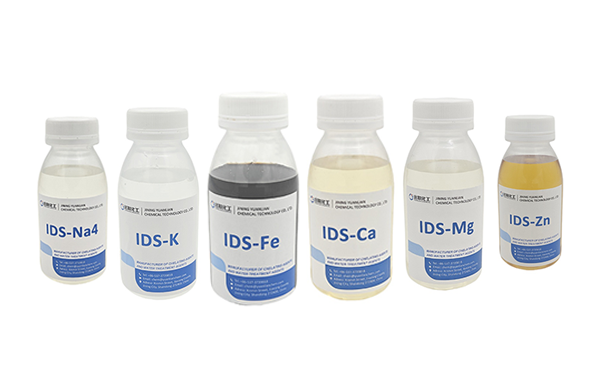
Basic specifications:
| Property | Detail |
|---|---|
| CAS No. | 144538-83-0 |
| Common names | Tetrasodium iminodisuccinate, IDS-Na4 |
| Delivery forms | Liquid (34–40% solution), solid granules |
| Biodegradability | Readily biodegradable (OECD 301) |
| pH stability | Effective across wide pH range |
The key difference from EDTA is structural. IDS has a different molecular backbone that allows microorganisms to break it down quickly. But it still chelates calcium, magnesium, iron, copper, and manganese effectively .
How IDS Works in Pulp Bleaching
In peroxide bleaching, the problem is catalytic decomposition. Metal ions like Fe³⁺ and Mn²⁺ accelerate peroxide breakdown into oxygen and water. That is oxygen you do not want—it does not bleach pulp. IDS prevents this by forming stable complexes with those metal ions, rendering them inactive .
The industry calls this the "Q stage"—a chelation step before the peroxide stage. Pulp is mixed with the chelating agent at 60–80°C for about an hour. Then the peroxide is added. The difference is measurable.
What IDS delivers in practice:
-
Improved bleaching efficiency. By controlling metal ions, IDS improves peroxide utilisation by 15–30% .
-
Higher brightness. Studies show IDS achieves equivalent or better brightness than EDTA, with reported whiteness improvements of 2–4% .
-
Better fibre strength. The same research found tensile index improvements of 5–6% and burst index improvements of 20–23% when IDS replaced EDTA .
-
Less yellowing over time. IDS prevents iron from reacting with phenolic groups in the pulp, which would otherwise form dark-coloured compounds .
IDS vs EDTA: The Numbers
A comparative study on bagasse pulp put it side by side :
| Parameter | IDS-Na4 | EDTA |
|---|---|---|
| Biodegradability (OECD 301) | ✅ Ready | ❌ Not ready |
| Brightness improvement | 2–4% | 2–4% |
| Tensile index improvement | 5–6% | Comparable |
| Burst index improvement | 20–23% | Comparable |
| Tear index improvement | 8–10% | Comparable |
The performance is essentially identical. The environmental profile is not. That is the entire point.
Beyond Bleaching: Deposit Control
Metal ions do not just affect bleaching. They also form deposits—calcium oxalate, calcium carbonate, barium sulphate—on equipment surfaces. These deposits reduce heat transfer, restrict flow, and increase maintenance downtime.
IDS prevents this by chelating the hardness ions before they can precipitate. In one case, a packaging board mill that switched to IDS reduced equipment cleaning frequency by 70% and extended system operation cycles threefold . Less downtime means more production time.
Regulatory Alignment
European mills are under pressure from multiple directions. The EU Industrial Emissions Directive, water framework directives, and retailer sustainability standards all point in the same direction: reduce persistent chemical use.
IDS is compliant with EU Ecolabel criteria and meets the biodegradability requirements under REACH . EDTA does not. For mills supplying paper products to eco-conscious brands or markets with strict environmental procurement policies, that difference is decisive.
Sourcing IDS for the European Market
IDS-Na4 is available from several suppliers, with Lanxess's Baypure® CX 100 being a well-known brand in Europe . Solid and liquid forms are both available.
Yuanlian Chemical is another producer worth noting. Based in China, they operate what they describe as the largest IDS production line in the country, with an annual capacity of 15,000 tonnes . Their IDS products are REACH-compliant and meet ISO 9001 and ISO 14001 standards. They supply over 30 countries, including Europe .
When sourcing IDS, request:
-
OECD 301 biodegradability test report
-
Certificate of Analysis with active content and heavy metal limits
-
REACH registration confirmation
-
Stability data in alkaline peroxide systems
The Bottom Line
Tetrasodium iminodisuccinate does what EDTA does—just without the persistence. It stabilises peroxide, controls metal ions, prevents deposits, and delivers comparable brightness and fibre strength. And it biodegrades.
For European pulp mills facing regulatory pressure and sustainability targets, IDS is a practical, proven alternative. It is available at scale, works in existing processes, and removes a compliance headache that is only going to get worse.
Yuanlian Chemical specializes in the production of polyaspartic acid (PASP),tetrasodium iminodisuccinate(IDS), GLDA, MGDA etc. with stable quality and excellent quantity!

Contact us