


-

- 2026-06-23
Replacing EDTA with GLDA-Na4 in Sustainable Detergent Formulations
Why the Switch Is Happening Now
Anyone formulating detergents for the European market has felt the pressure. EDTA works—there is no denying that. It chelates calcium, magnesium, and transition metals effectively. But it does not biodegrade. It persists in the environment, and regulators are taking notice.
The EU Ecolabel, Nordic Swan, and most European retailer standards have moved away from EDTA. The Detergent Regulation is under revision. And consumer-facing brands are increasingly expected to demonstrate genuine sustainability credentials, not just marketing claims .
The question is no longer whether to replace EDTA, but what to use instead.
GLDA-Na4 (tetrasodium glutamate diacetate) has emerged as the most practical alternative. It is derived from L-glutamic acid—a naturally occurring amino acid—and biodegrades completely. More importantly, it matches EDTA's performance in most applications without the environmental trade-offs .
What Is GLDA-Na4?
GLDA-Na4 is an amino-acid-based chelating agent. Its structure is built around glutamic acid, which is produced from renewable raw materials via fermentation . The compound forms stable, water-soluble complexes with calcium, magnesium, iron, copper, zinc, and manganese across a wide pH range .
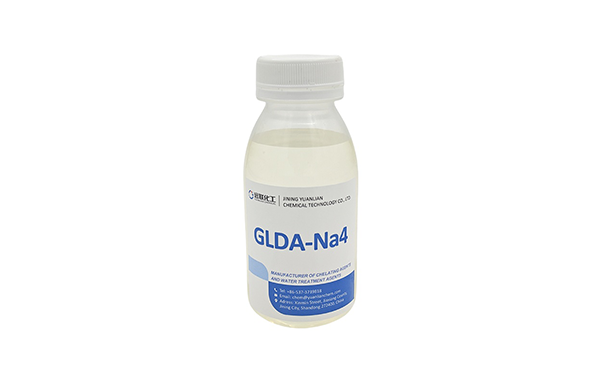
Basic specifications:
| Property | Value |
|---|---|
| CAS No. | 51981-21-6 |
| INCI Name | Tetrasodium Glutamate Diacetate |
| Forms | Liquid (38–55% active) |
| pH (1% solution) | 10.0–12.0 |
| Biodegradability | Readily biodegradable (OECD 301D) |
Why GLDA Matches EDTA in Performance
1. Strong Chelating Power
GLDA forms stable complexes with calcium ions—the main culprit in hard water interference. Its sequestering values are comparable to EDTA across the pH range relevant to most detergent applications .
According to technical data from major producers, GLDA offers:
-
Calcium binding: ~65 mg metal/g
-
Zinc binding: ~100 mg metal/g
-
Copper binding: ~100 mg metal/g
In practice, this means GLDA prevents soap scum formation, keeps surfactants active, and prevents scale deposition on fabrics and dishes just as effectively as EDTA .
2. Broad pH Tolerance
GLDA remains soluble and effective from pH 2 to 14 . That flexibility matters because detergent formulations vary widely—acidic toilet cleaners, neutral surface sprays, and highly alkaline dishwasher powders all need effective chelation.
Where some green alternatives struggle at low pH, GLDA maintains its solubility and chelating ability .
3. Thermal Stability
Laundry and dishwashing cycles run hot. GLDA holds up. Tests show it remains stable at temperatures up to 170°C, outperforming many organic phosphonates and matching EDTA's thermal performance . At 100°C, GLDA maintains its chelating ability without measurable decomposition .
The Green Advantage: Biodegradability
This is the decisive difference between GLDA and EDTA.
GLDA is readily biodegradable under OECD 301D, with more than 60% degradation within 28 days . In real-world conditions, breakdown is often faster. EDTA shows virtually no degradation over the same period.
What that means for your label:
-
Eligible for EU Ecolabel and Nordic Swan certification
-
Compliant with REACH biodegradability requirements
-
No persistence concerns in wastewater or surface water
For brands targeting sustainability-conscious consumers or retailer private-label programmes, this difference is non-negotiable.
Additional Benefits Formulators Appreciate
Preservative Boosting
GLDA has a synergistic effect with preservatives. It disrupts microbial cell membranes by chelating the metal ions they need to survive . Formulators report that using GLDA can reduce preservative requirements by 20–80% while maintaining product shelf life .
Skin-Friendly Profile
GLDA is non-irritating to skin and eyes. It carries no hazard classification under EU CLP . For personal care and hand dishwashing formulations, this is a distinct advantage over some alternatives.
Clarity in Liquid Formulations
In transparent liquid detergents, precipitation is a visible problem. GLDA prevents the formation of insoluble salts, keeping products clear from the factory shelf to the consumer's home .
Practical Replacement Guidelines
Start with a 1:1 active replacement. Most technical sources confirm that GLDA can replace EDTA at the same active concentration in many applications .
Check your pH range. GLDA works across a wide pH spectrum, but if your formulation is particularly acidic (below pH 4), test compatibility carefully.
Adjust preservative levels. Because GLDA boosts preservative efficacy, you may be able to reduce preservative loads. Test microbiological stability to confirm the right level.
Request NTA data. GLDA should be NTA-free. Reputable suppliers provide this documentation .
Supply and Documentation
GLDA-Na4 is available from several producers serving the European market:
Nouryon offers Dissolvine GL Premium with 55% active content and high purity specifications .
Yuanlian Chemical supplies GLDA-Na4 with full REACH documentation, OECD 301 biodegradability certification, and batch-specific Certificates of Analysis .
Other suppliers include Connect Chemicals, Aquapharm, and specialty chelate distributors across Europe .
When sourcing, request:
-
OECD 301D biodegradability test report
-
Certificate of Analysis with active content, chloride, and heavy metal limits
-
REACH registration confirmation
-
NTA content analysis
The Bottom Line
GLDA-Na4 is not a compromise. It is a genuinely better choice for sustainable detergent formulations—strong chelation, broad pH and temperature tolerance, preservative synergy, and ready biodegradability. For European formulators facing regulatory pressure and consumer demand, it is the practical, proven alternative to EDTA.
Yuanlian Chemical specializes in the production of polyaspartic acid (PASP),tetrasodium iminodisuccinate(IDS), GLDA, MGDA etc. with stable quality and excellent quantity!

Contact us