



-

- 2026-06-30
Enhancing Drought Resilience: How PASP Promotes Deep Root System Architecture
The Root of the Problem in Modern Agriculture
European agriculture is facing a quiet crisis. Warmer summers, shifting rainfall patterns, and more frequent dry spells are forcing growers to rethink how they manage water and nutrients. The old approach of relying solely on irrigation is no longer sustainable—not with water restrictions tightening across southern Europe and parts of the continent becoming increasingly arid.
The answer may lie beneath the surface. A crop's ability to withstand drought is largely determined by what happens underground. Root system architecture—the length, depth, branching, and spatial arrangement of roots—governs how efficiently a plant captures water and nutrients from the soil. Deeper root systems, more lateral branches, and greater root surface area all contribute to better access to moisture during dry periods.
Polyaspartic acid (PASP) has emerged as a practical tool for influencing root development in ways that enhance drought resilience. It is not a fertiliser in the traditional sense. It is a biodegradable polymer that works with the plant's natural growth processes to build a more robust root system.
How PASP Affects Root Development
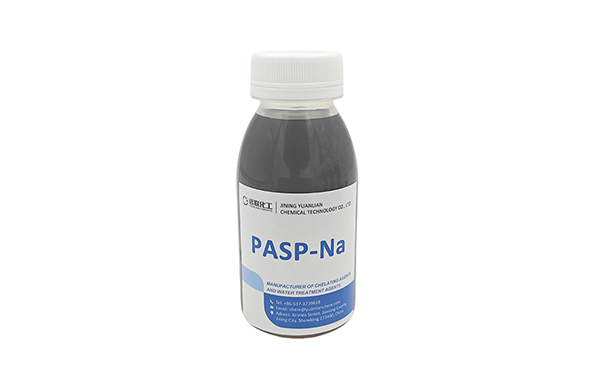
Research has demonstrated that PASP exposure triggers significant changes in root growth and stress response. The polymer's molecular chain contains active carboxyl groups that act as "molecular claws," chelating insoluble minerals in the soil and converting them into forms roots can readily absorb . This mechanism improves the rhizosphere environment—the critical zone immediately surrounding the root where nutrient exchange occurs.
In addition to nutrient mobilisation, PASP also helps maintain a stable moisture film around root hairs, preventing "root shock" during minor drought periods and enabling continuous growth . This dual action—improved nutrient availability and better moisture retention—creates conditions that encourage root development.
Evidence from Field and Pot Trials
Maize. A controlled pot study under water deficit conditions found that PASP application increased root length by 8.3% and lateral root number by 14.8% compared to untreated plants . The same study showed a 12.2% increase in total dry matter accumulation. For a seedling trying to establish itself in dry soil, those extra centimetres of root length can make the difference between survival and failure.
Desert plants. Research on Populus euphratica seedlings under extreme drought conditions demonstrated that root-applied PASP improved rhizosphere soil moisture, increased lateral root development, and promoted both aboveground and belowground biomass accumulation . Plants treated with PASP also showed increased concentrations of soluble protein and sugar, and higher antioxidant enzyme activity—indicators of enhanced stress tolerance .
Cotton. A field study in arid conditions found that PASP application improved soil water-holding capacity, increasing the water content available to the root system for extended periods . The research also showed significant increases in soil organic matter, available phosphorus, and ammonium-N. Compared to untreated controls, PASP at 75 kg per hectare increased seed cotton yield by 8.31% .
Wheat and other crops. Observations have reported that PASP stimulates the proliferation of capillary roots, which are responsible for over 90% of nutrient absorption. By stimulating division of pericycle cells, PASP significantly increases the total surface area of the root system, allowing the plant to access a larger volume of soil .
How a Deeper Root System Improves Drought Resilience
The advantages of a more extensive root system during drought are straightforward:
-
Access to deeper moisture. Shallow roots dry out quickly when the topsoil loses moisture. Roots that penetrate deeper can tap into water reserves that remain available longer into the dry period.
-
Greater soil volume explored. More lateral roots and root hairs increase the total soil volume that can be scavenged for water and nutrients.
-
Better nutrient uptake during stress. Even when water is limited, a larger root surface area allows the plant to continue absorbing essential nutrients like nitrogen and phosphorus.
-
Improved osmotic regulation. Research on PASP-treated plants has shown increased accumulation of soluble sugars and proteins, which helps maintain cellular function under water stress .
Practical Considerations for European Growers
PASP is applied either as a coating on granular fertilisers or as a liquid additive in fertigation systems. Application rates vary depending on soil type, crop, and expected stress level. For field crops, research suggests that rates around 75 kg per hectare can be effective for alleviating drought stress in arid conditions .
The polymer is fully biodegradable under OECD 301B standards, breaking down into carbon dioxide and water over a growing season. It does not accumulate in the soil, making it suitable for repeated applications in annual cropping systems.
The Bottom Line
Drought resilience is not a single trait. It is the sum of many factors—root depth, branching, surface area, osmotic adjustment, and nutrient status. PASP addresses several of these simultaneously. It encourages deeper, more branched root systems that explore more soil volume, while also improving the plant's physiological capacity to withstand water stress.
For European growers facing more frequent dry spells, PASP offers a practical, biodegradable tool for building drought resilience into their cropping systems.
Yuanlian Chemical specializes in the production of polyaspartic acid (PASP),tetrasodium iminodisuccinate(IDS), GLDA, MGDA etc. with stable quality and excellent quantity!

Contact us