



-

- 2026-07-03
Mitigating Crop Water Stress: Super-Soluble Polyaspartic Acid for Root Architecture Optimization
Why European Agriculture Needs a New Approach to Water Stress
The pattern is becoming familiar across Europe—warmer summers, shifting rainfall, and longer dry spells. Southern Europe has been dealing with water scarcity for years, but now regions further north are also experiencing prolonged periods without rain. The response has largely been to rely on irrigation, but that is becoming less sustainable as water restrictions tighten and energy costs for pumping rise.
The solution may not lie above ground. A crop's ability to withstand drought is determined largely by what is happening beneath the surface. Root system architecture—the length, depth, branching pattern, and overall spatial arrangement of roots—determines how efficiently a plant captures water and nutrients from the soil.
Polyaspartic acid (PASP) has emerged as a practical tool for influencing root development in ways that enhance drought resilience. It is not a fertiliser in the traditional sense. It is a biodegradable polymer that works with the plant's natural growth processes to build a more robust root system. And because it is highly soluble, it integrates easily into existing fertigation and foliar application programmes.
The Mechanism: How PASP Influences Root Development
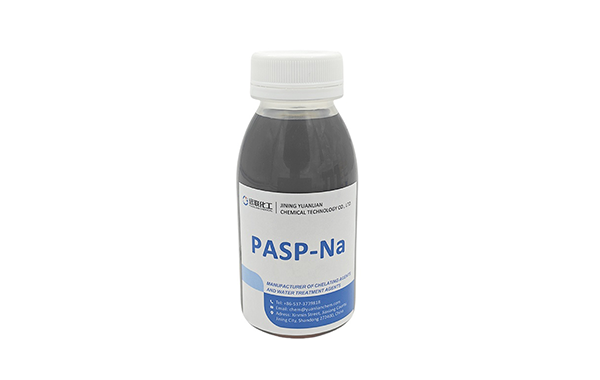
PASP is a water-soluble polymer built from aspartic acid units. Its molecular structure contains peptide bonds and carboxyl groups that act as chelating sites, binding nutrient ions and keeping them in plant-available forms . This improves the rhizosphere environment—the critical zone immediately surrounding the root where nutrient exchange occurs.
But PASP does more than chelate nutrients. It also helps maintain moisture around root hairs, preventing "root shock" during minor drought periods and enabling continuous growth . This dual action—improved nutrient availability and better moisture retention—creates conditions that encourage deeper, more branched root systems.
Research using transcriptomic analysis has shown that PASP treatment triggers significant changes in gene expression related to root development and stress response. Studies on maize have identified specific genes that are upregulated in response to PASP application, enhancing the plant's ability to cope with drought and recover after rewatering .
Molecular Weight Matters
Not all PASP performs the same way in the field. Research has shown that molecular weight is a critical factor.
A 2026 study examining potassium polyaspartate with different molecular weights found that low molecular weight (<2 kDa) delivered the most significant benefits under drought stress . Compared to untreated drought-stressed plants, the low-molecular-weight treatment:
-
Increased root activity by 21.5%
-
Boosted SOD, POD, and CAT enzyme activities by 77.3%, 39.5%, and 50.3% respectively
-
Reduced oxidative damage markers (superoxide anion, H₂O₂, malondialdehyde) by 40.8–64.4%
-
Elevated net photosynthetic rate by 112.7% and stomatal conductance by 200%
-
Increased soluble protein and free proline by 25.4% and 35.9%
Under normal water conditions, low-molecular-weight PASP also improved root morphology without drought stress—total root length increased by 36.5%, root surface area by 16.1%, and root volume by 21.8% .
For growers, this suggests that formulations with lower molecular weight fractions may offer the best results for building drought resilience.
Evidence from Field and Pot Trials
Maize. A controlled pot study under water deficit conditions found that PASP application increased root length by 8.3% and lateral root number by 14.8% compared to untreated plants . The same study showed a 12.2% increase in total dry matter accumulation.
Populus euphratica. Research on desert plant seedlings under extreme drought conditions demonstrated that root-applied PASP improved rhizosphere soil moisture, increased lateral root development, and promoted both aboveground and belowground biomass accumulation . The study found that the optimal dosage for drought relief was 10 grams per plant, with higher doses showing diminishing returns.
Wheat and other crops. Observations have reported that PASP stimulates the proliferation of capillary roots, which are responsible for over 90% of nutrient absorption. By stimulating division of pericycle cells, PASP significantly increases the total surface area of the root system, allowing the plant to access a larger volume of soil .
How a Deeper Root System Improves Drought Resilience
The advantages of a more extensive root system during dry periods are straightforward:
-
Access to deeper moisture. Shallow roots dry out quickly when topsoil moisture is depleted. Roots that penetrate deeper can tap into water reserves that remain available longer into the dry period.
-
Greater soil volume explored. More lateral roots and root hairs increase the total soil volume that can be scavenged for water and nutrients.
-
Better nutrient uptake under stress. Even when water is limited, a larger root surface area allows the plant to continue absorbing essential nutrients like nitrogen and phosphorus.
-
Improved osmotic regulation. Research on PASP-treated plants has shown increased accumulation of soluble sugars and proteins, which helps maintain cellular function under water stress .
Practical Considerations for European Growers
Application methods. PASP can be applied as a coating on granular fertilisers, as a liquid additive in fertigation systems, or as a foliar spray. The super-soluble nature of the sodium or potassium salt form means it dissolves readily in water without clogging irrigation lines.
Application rates. Dosage depends on soil type, crop, and expected stress level. For field crops, research suggests rates around 75 kg per hectare can be effective for alleviating drought stress in arid conditions . For seedling establishment, lower rates may be sufficient.
Environmental profile. PASP is readily biodegradable under OECD 301B standards, breaking down into carbon dioxide and water over a growing season . It does not accumulate in soil, making it suitable for repeated applications in annual cropping systems.
The Bottom Line
Drought resilience is not a single trait. It is the sum of many factors—root depth, branching, surface area, osmotic adjustment, and nutrient status. PASP addresses several of these simultaneously.
It encourages deeper, more branched root systems that explore more soil volume, while also improving the plant's physiological capacity to withstand water stress. The polymer is fully biodegradable, compatible with existing application systems, and available at scale.
For European growers facing more frequent dry spells, PASP offers a practical, science-backed tool for building drought resilience into their cropping systems.
Yuanlian Chemical specializes in the production of polyaspartic acid (PASP),tetrasodium iminodisuccinate(IDS), GLDA, MGDA etc. with stable quality and excellent quantity!

Contact us