



-

- 2026-08-05
GLDA-Na4 Preservative Synergy: How Plant-Based Chelators Cut Biocide Loading
Formulators who switch to GLDA-Na4 often notice something unexpected: their preservative systems start working better. This is not a coincidence. GLDA-Na4 preservative synergy comes from the molecule's natural amino acid origin, which gives it a stronger affinity for microbial cell walls than synthetic chelators. The practical result is that you can reduce biocide loading by 20 to 80 per cent across many formulation types without losing antimicrobial protection.
For brands trying to shorten INCI lists, cut preservative costs, or meet clean-label retailer demands, this effect changes the economics of formulation. You are not just replacing EDTA. You are gaining a functional ingredient that does two jobs at once.
What Makes GLDA-Na4 Different from Synthetic Chelators
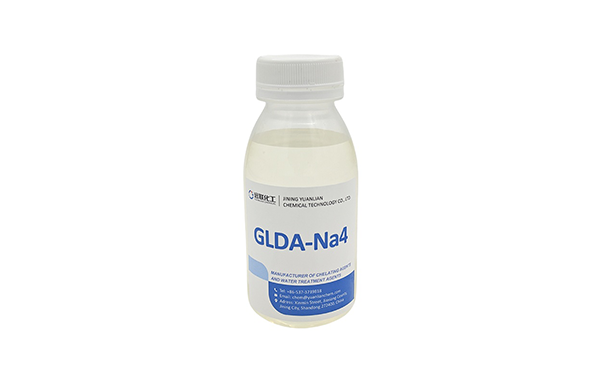
Most chelating agents grab metal ions and stop there. GLDA-Na4 goes further because its molecular backbone comes from L-glutamic acid, a naturally occurring amino acid. This structure matters because microbial cell walls contain components that respond to amino acid-based molecules differently than to petrochemical-derived ones.
The mechanism works in two stages. First, GLDA-Na4 chelates calcium and magnesium ions that stabilise the outer membrane of bacterial cells. Second, its amino acid component binds to the cell wall itself, disrupting the electrolyte balance inside. The cell loses its ability to maintain homeostasis and becomes far more vulnerable to biocides.
This dual action means a lower concentration of preservative achieves the same kill rate. For formulators working with imidazolidinyl urea, isothiazolinones, or parabens, the savings add up quickly across production batches.
Test Data: GLDA-Na4 Preservative Synergy with Imidazolidinyl Urea
Specific testing gives you a clearer picture than general claims. The lab team combined GLDA-Na4 with imidazolidinyl urea and tested the mixture against *Pseudomonas aeruginosa*, one of the most common contaminants in personal care and detergent products.
The results showed a 50 per cent reduction in the preservative concentration needed to achieve the same antimicrobial effect. When GLDA-Na4 was present at typical use levels, the biocide worked at half its normal loading.
This is not an isolated finding. Across multiple test organisms and preservative systems, GLDA-Na4 consistently reduced the effective biocide dose by 20 to 80 per cent. The exact figure depends on the specific preservative, the formulation pH, and the target microorganisms.
Learn more about chelating agent mechanisms from this Wikipedia article on sequestering agents.
Where Preservative Synergy Matters Most
Liquid Detergents and Cleaning Products
Water-based detergent formulations face the highest risk of microbial contamination. The combination of water, surfactants, and organic ingredients creates an ideal growth environment. Formulators typically load these products with preservatives at levels that sometimes irritate sensitive skin. GLDA-Na4 lets you bring those levels down while keeping the same shelf life.
Personal Care Formulations
Shampoos, body washes, and creams all need preservative systems. Consumers and regulators in Europe are pushing for fewer preservatives on the label. Retailer restricted substance lists increasingly target specific biocides. GLDA-Na4 helps you meet these demands without reformulating from scratch.
Agricultural Nutrient Solutions
Liquid fertiliser and micronutrient solutions also suffer from microbial growth during storage. Adding GLDA-Na4 as a chelating agent for trace elements gives you preservative protection as a secondary benefit, reducing the need for separate antimicrobial additives. The GLDA-Na4 preservative synergy effect applies here just as it does in personal care.
Formulation Guidance for GLDA-Na4 Preservative Synergy
Getting the synergy right depends on a few variables. The pH of your formulation affects how strongly GLDA-Na4 binds to microbial cell walls. It works across a broad pH range from 2 to 13, but the preservative-boosting effect tends to be strongest in slightly acidic to neutral systems typical of personal care products.
The concentration matters too. At 0.3 to 1.0 per cent active content, GLDA-Na4 delivers both chelation and preservative synergy. Going below 0.3 per cent reduces the antimicrobial boost. Going above 1.0 per cent does not hurt performance but adds cost without proportional benefit.
You should also consider compatibility with your existing biocide package. GLDA-Na4 works well with imidazolidinyl urea, DMDM hydantoin, and most isothiazolinone systems. Run a standard challenge test (OECD 301D or equivalent) with your specific combination to confirm the reduction percentage.
Technical Properties That Support Formulation Stability
Beyond preservative synergy, GLDA-Na4 brings several properties that make it a practical choice for your formulation pipeline.
The product is thermally stable to 170 degrees Celsius. Six hours of testing at that temperature showed zero decomposition. This means you can use it in hot-fill processes without worrying about degradation.
It dissolves readily across the full pH range from strong acid to high alkali. In highly concentrated formulations with low water content, GLDA-Na4 stays in solution where other chelating agents precipitate out.
The calcium chelation value reaches 550 milligrams of CaCO3 per gram of product. This is among the highest values for biodegradable chelators. It means you use less product to achieve the same water-softening effect.
How to Evaluate GLDA-Na4 in Your Formulation
A proper evaluation should cover four areas. Test chelation efficiency at your specific water hardness. Check compatibility with your surfactant and enzyme systems. Run preservative challenge tests with your biocide package at reduced loading. Verify stability under your manufacturing and storage conditions.
The standard product comes as a pale yellow viscous liquid with 65 per cent minimum solid content. Packaging options include 25-kilogram, 250-kilogram, and 1,250-kilogram plastic drums. Custom packaging is available on request.
Request a free sample of 200 to 500 grams for laboratory evaluation, along with the complete technical data sheet and safety data sheet. Most formulators complete their internal testing within two to three weeks. Contact the application lab at [email protected] or call +86-537-3739818 to discuss your specific formulation requirements.
Yuanlian Chemical specializes in the production of polyaspartic acid (PASP),tetrasodium iminodisuccinate(IDS), GLDA, MGDA etc. with stable quality and excellent quantity!

Contact us