


-

- 2026-08-10
PASP-Na Supplier: Sodium Polyaspartate for Scale and Corrosion Control
PASP-Na is a biodegradable, phosphorus-free polymer that stops scale and disperses particulates across water treatment, agriculture and cleaning. As a PASP-Na supplier, Yuanlian produces sodium polyaspartate in both liquid and powder forms, backed by ISO 9001 controls and full REACH documentation for European import. This article covers the product, its specifications, and the places where formulators use it.
What Makes a Dependable PASP-Na Supplier
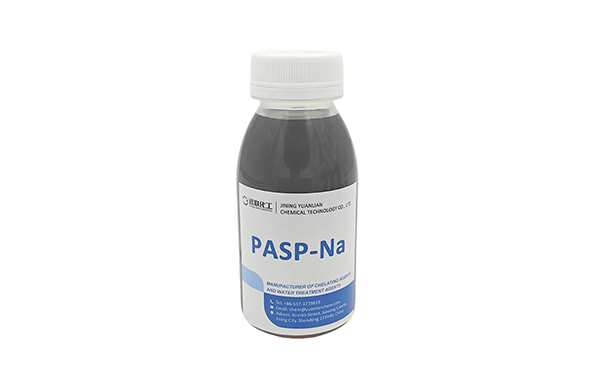
A PASP-Na supplier should offer consistent molecular weight, verified biodegradability and reliable documentation. Sodium polyaspartate is a polyamino acid: its peptide backbone breaks down through fungal and microbial action, eventually returning to water and carbon dioxide. That profile suits buyers operating under tightening phosphorus discharge limits. Yuanlian holds ISO 9001 certification and supplies a certificate of analysis with every batch, so formulators can audit each delivery against an agreed specification. Buyers also watch molecular consistency from lot to lot, because drift changes dose response in sensitive processes. A documented chain from raw material to finished drum supports that audit, which is why batch traceability matters as much as the spec sheet itself.
PASP-Na Product Specifications
The liquid grade is a yellow to amber solution with at least 40% solid content, pH 9.0 to 11.0 and density 1.20 to 1.30 g/cm³. The powder grade is a yellow to brown solid with at least 92% solid content. Two molecular weight ranges are available: 3,000 to 4,000 Da for scale inhibition, and 7,000 to 8,000 Da for dispersancy in pigments and dyes. The CAS number is 181828-06-8. Both grades are phosphorus-free and show low ecotoxicity, which matters for discharge-conscious sites. Batch testing confirms active content and molecular weight before release.
PASP-Na in Cooling Water and Boilers
In cooling towers, evaporation concentrates calcium and magnesium until they precipitate as scale. PASP-Na inhibits calcium carbonate and calcium sulphate, with particularly strong performance against sulphate scale. It also stays stable at boiler temperatures, so it keeps protecting heat-transfer surfaces where weaker polymers break down. Typical dosing sits at 2 to 10 ppm in cooling water systems. Operators often track the Langelier index to judge scaling risk, then set the dose against it. Because the polymer also keeps metal surfaces clean, it is frequently paired with a mild corrosion inhibitor for full programme control. Regular blowdown management holds concentration factors in range, which protects both the equipment and the chemical budget.
PASP-Na for Fertiliser and Agriculture
PASP-Na chelates trace elements such as iron, zinc and copper, keeping them available for root uptake instead of locking them in the soil. It also improves phosphorus availability, which matters because phosphate precipitates readily with calcium in alkaline soils. In fertigation, it prevents emitter blockage while acting as a fertiliser synergist. Field use shows better yields in vegetables, fruit and flowers. Beyond nutrient delivery, PASP-Na improves soil structure by encouraging aggregation, which helps compacted and saline-alkali land recover. Better aggregation also raises water infiltration, so less irrigation is lost to runoff. These soil benefits compound with the fertiliser effect across a growing season.
PASP-Na in Detergents and Cleaning
As a phosphate-free builder, PASP-Na softens water, disperses soil and prevents redeposition on fabric. It resists alkali and electrolytes, so it fits liquid laundry, dish and institutional cleaners. Because it is non-toxic and biodegradable, it supports clean-label and ecological positioning without reworking the whole formula. In institutional cleaners, the dispersant action keeps soil suspended so it does not redeposit on cleaned surfaces. That matters in laundries and floor care, where repeated cycles magnify any residue. Formulators value the low-foaming profile, which suits high-speed and spray equipment.
A PASP-Na Supplier with a Complete Green Range
Yuanlian stocks PASP-Na alongside GLDA-Na4, MGDA-Na3, IDS-Na4 and ASDA-Na4. One qualified source can therefore cover calcium, magnesium, iron and copper control from a single supplier. That reduces paperwork and simplifies substitution projects, because each product is documented to the same quality standard.
Blending PASP-Na with Other Treatment Chemicals
PASP-Na shows synergy with phosphonates such as HEDP and PBTCA. Partial replacement of phosphonates with PASP-Na cuts phosphorus loading while maintaining scale control. It also pairs with dispersants for particulate control. Because results vary with water chemistry, a bench trial at your actual hardness and temperature is the reliable way to set the blend. In agriculture, the same blending logic applies: a small PASP-Na addition raises the value of existing fertiliser, so trials usually start by top-dressing the current programme rather than replacing it.
Certificates and Samples from a PASP-Na Supplier
Yuanlian provides free samples in liquid or powder form, with the technical data sheet, safety data sheet and certificate of analysis. REACH registration supports EU customs clearance. The technical team helps select the right molecular weight and dose for your system.
Working with a PASP-Na Supplier for Global Delivery
Liquid PASP-Na ships in 25 kg, 250 kg and 1,250 kg drums; powder in moisture-proof bags. Store sealed, away from direct light, at room temperature. A PASP-Na supplier plans lead times around your production schedule, and documentation is prepared for the destination market before dispatch.
A PASP-Na Supplier for Custom Programmes
Yuanlian tunes molecular weight and dose to the job rather than shipping a single grade. Cooling-water and boiler programmes usually take the 3,000 to 4,000 Da range, while pigment and dye dispersancy call for the higher range. A PASP-Na supplier that adjusts the grade with you shortens the trial and avoids over-specifying the product.
Frequently Asked Questions
Is PASP-Na safe to handle?
It is alkaline and low in toxicity, but skin and eye contact should be avoided. Follow the guidance in the safety data sheet, and wear basic protective equipment during transfer.
Can PASP-Na fully replace phosphonates?
In many cooling-water programmes, partial replacement works well and cuts phosphorus discharge. A staged trial confirms the right ratio for your water chemistry.
What storage temperature does PASP-Na need?
Liquid grades prefer room temperature and protection from freezing, which can change viscosity. Powder stores well in sealed, moisture-proof bags away from direct light.
For the chemistry of scale formation, see this overview on Wikipedia.
Request a Quotation
A PASP-Na supplier should make trial easy. Yuanlian supports sample dispatch, documentation and formulation advice. To review specifications, request a sample or discuss a substitution project, contact [email protected] or call +86-537-3739818. Visit the Yuanlian Chemical product centre for the full green range.
Yuanlian Chemical specializes in the production of polyaspartic acid (PASP),tetrasodium iminodisuccinate(IDS), GLDA, MGDA etc. with stable quality and excellent quantity!

Contact us