


-

- 2026-09-07
Importing Chelating Agents into the EU: REACH Compliance
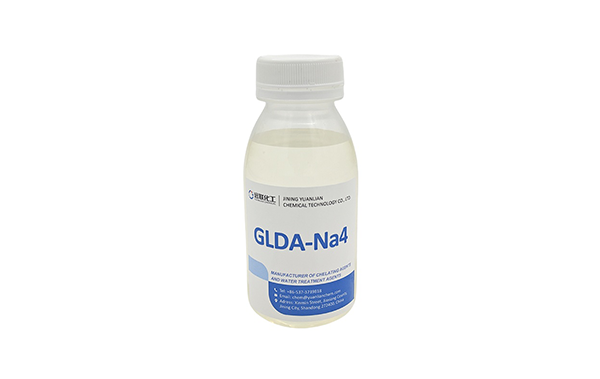
A container of GLDA-Na4 that leaves a plant in Shandong and lands in Rotterdam has to satisfy two sets of paperwork. One is commercial — the order, the invoice, the packing list. The other is regulatory, and it decides whether the goods are released or held at the port. Buyers who treat the second set as an afterthought tend to find the gap at the worst possible moment, which is after the vessel has sailed.
This article sets out what a European importer of biodegradable chelants should have in hand before the first order, and what to ask a Chinese manufacturer for at quotation stage rather than at shipment stage.
Who holds the REACH obligation
Under REACH (Regulation (EC) No 1907/2006), the duty to register a substance sits with the manufacturer or importer established inside the EU. A producer based in China cannot register in its own name. That leaves the importer with two routes.
The first is to register the substance yourself, which is a considerable undertaking for a company whose business is distribution rather than chemical manufacture. The second, and the one most buyers take, is to buy from a manufacturer that has appointed an Only Representative in the EU. The Only Representative assumes the registration and the associated duties, and the importer then acts as a downstream user rather than a registrant.
The practical consequence is straightforward. Before you commit to a volume, ask who holds the registration and ask for the registration number. A manufacturer supplying the European market on a repeat basis answers that question without hesitation. Where the answer is vague, the exposure sits with you, not with the factory.
The document set to request
Safety data sheet
An SDS is required for hazardous substances and mixtures placed on the EU market, and in commercial practice buyers expect one for every chemical regardless of hazard level. Three checks matter more than the rest.
Language. The sheet has to be in an official language of the member state where the product is placed on the market. An English-language SDS is widely accepted in practice, but the requirement is set nationally, so confirm it for your destination.
Format and date. The layout follows Annex II of REACH as amended by Regulation (EU) 2020/878. A sheet still written to the older 453/2010 structure is a signal that a supplier has not refreshed its documentation in several years.
Content. Section 1 carries the substance identity and the EU contact point. Section 14 carries the transport classification. Section 15 carries the regulatory information, including registration status. Read those three before anything else.
Certificate of analysis
The CoA is the document your goods-inward team actually works from. It should be batch-specific rather than a reprint of the specification, and it should list active content, pH, appearance, iron content and heavy-metal limits, each with the test method used. When a CoA arrives carrying a batch number that differs from the drum label, that is worth a phone call before the pallet is unloaded.
CLP label and packaging
Under the CLP Regulation (EC) No 1272/2008, the drum label needs the supplier identity, the product identifier, hazard pictograms where they apply, the signal word, H- and P-statements, and the nominal quantity. For a low-hazard chelant the pictogram field is often empty. That is normal and does not mean the label is incomplete.
Transport documentation
Most liquid chelants travel as non-hazardous goods, but that has to be stated rather than assumed. Ask for Section 14 of the SDS and compare it against what the freight forwarder has been told. A mismatch between the two is one of the more common reasons a consignment gets held.
Rules that follow the end use
Clearing customs is not the finish line. Where the chelant ends up determines which additional framework applies:
|
End use |
Framework that applies |
|
Detergents and cleaners |
Regulation (EC) No 648/2004, covering biodegradability and labelling |
|
Cosmetics and personal care |
Regulation (EC) No 1223/2009, plus INCI naming |
|
Fertilisers |
Regulation (EU) 2019/1009, including impurity ceilings |
|
Ecolabelled products |
EU Ecolabel or Nordic Swan criteria on biodegradability and aquatic toxicity |
The point for a buyer is that the documentation you need depends on your customer, not only on customs. A distributor selling into detergent manufacturing will be asked for OECD 301 biodegradability data. One selling into cosmetics will be asked about INCI status and the impurity profile. Ask your supplier for both sets at the start rather than scrambling for them when a tender lands.
Five questions before the first order
- Who holds the REACH registration, and what is the number? Ask for it in writing.
- Is there an Only Representative, and does the appointment cover the tonnage band you plan to buy? Registrations are banded by volume.
- Can you send a recent CoA from a shipped batch, not a template? A real one shows what the factory actually tests.
- What is the standard lead time to a named European port, and what packaging is available? Drums, IBCs and flexitanks move your landed cost per kilogramme more than the unit price does. Chelating Agent Cost in Use: Reading Price Beyond the Drum works through the calculation.
- Which grade suits my application? Water treatment grades and cosmetic grades are not interchangeable, and the difference shows up in the impurity limits.
Frequently asked questions
Does a Chinese manufacturer need its own REACH registration?
No. Registration is held by an EU-established entity. A manufacturer outside the EU can appoint an Only Representative to hold it, which is the arrangement buyers should look for.
Is an SDS in English enough for the whole EU?
Not in every member state. The language requirement is national. In practice English is widely accepted, but confirm the position for the country where the goods are released.
Do biodegradable chelants still need full REACH documentation?
Yes. Biodegradability affects environmental scoring and eco-label eligibility; it does not remove registration, SDS or CLP duties.
What happens if the substance is not registered for import?
Placing an unregistered substance on the EU market above one tonne per year is a compliance breach. Your national enforcement authority is the body to consult on your specific position.
How long should it take to get the document set?
For a standard grade, a supplier with European trade experience should return SDS, CoA, technical data sheet and transport information within a couple of working days. A long wait at this stage usually predicts slow responses later.
Documentation before quotation
Yuanlian Chemical supplies GLDA-Na4, MGDA-Na3, PASP-Na, IDS-Na4, ASDA-Na4 and EDDS-3Na to European importers under ISO 9001 controls, with SDS and CLP documentation prepared for EU delivery and per-batch certificates of analysis. For the registration details, the current document set and landed-cost options to your port, write to [email protected] or call +86-537-3739818. Tell us your destination country and intended end use and we will return the paperwork with the quotation, not after it.
Specifications, safety data and grade options for the full range sit in the Yuanlian Chemical product centre.
Yuanlian Chemical specializes in the production of polyaspartic acid (PASP),tetrasodium iminodisuccinate(IDS), GLDA, MGDA etc. with stable quality and excellent quantity!

Contact us