



-

- 2026-09-29
PASP in Nutrient Efficiency: Cutting Fertiliser Loss on Farms
European farming operates under a tightening frame. The Nitrates Directive sets limits on manure and fertiliser use to protect drinking water, and national action programmes add their own rules on timing and rates. At the same time, fertiliser cost and supply volatility have pushed every agronomist to ask the same question: how much of what we apply actually reaches the crop? Sodium polyaspartate, PASP-Na, is a biodegradable polymer that has spent years in this conversation not as a fertiliser itself but as a partner that helps the applied nutrient stay available longer and move less. This article looks at how it works and what a buyer should weigh before bringing it into the programme.
The nutrient-loss problem farms cannot ignore
Nitrogen and phosphorus applied to a field do not stay put. Rain and irrigation move soluble nitrate down past the root zone into groundwater, while surface runoff carries phosphate into ditches and streams. The crop never sees a share of what was paid for, and the environment carries the rest. The Nitrates Directive and the Water Framework Directive both target this loss, and action programmes in nitrate-vulnerable zones restrict when and how much can be applied. For a producer, the constraint is operational as well as regulatory: lower efficiency means more product to hit the same yield, and more product means more cost and more scrutiny.
What sodium polyaspartate does in the root zone
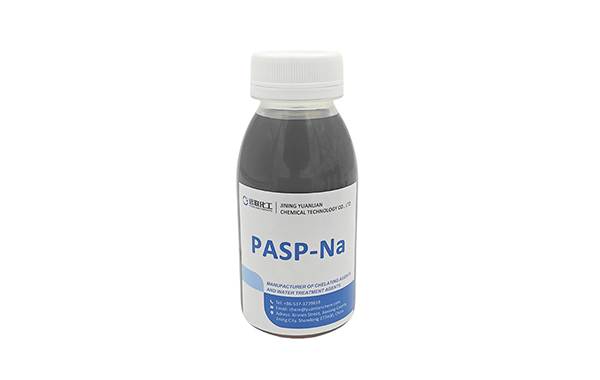
PASP-Na is not a fertiliser and it is not a chelant in the EDTA sense. It is a polymeric material that interacts with soil moisture and with nutrient ions around the root. In field and greenhouse work it has shown an ability to hold nutrients in a more plant-available form near the root and to reduce the fraction that leaches below it. The mechanism is physical rather than a strong bond: the polymer affects how water and dissolved ions move through the soil, so the nutrient stays in the root zone for longer and the plant has more time to take it up. It is also used to improve the performance of some fertiliser and pesticide formulations by steadying the mix and supporting uptake.
Reducing nitrate leaching under the directives
The direct benefit for a European operator is a lower nitrate load leaving the field. Where a site sits in a nitrate-vulnerable zone, every percentage point of reduced leaching eases the permit conversation and the action-programme accounting. Because the polymer carries no phosphorus and no NTA-type chelator, it adds nothing to the phosphate side of the balance while it works on the nitrogen side. The effect is measured in field trials against an untreated check, and the size of the benefit tracks the local conditions, soil type, rainfall, crop and the existing programme, so the honest approach is to trial it on your own ground rather than assume a fixed number.
Where it fits in the fertiliser programme
PASP-Na is supplied as an aqueous solution or a powder that blends with liquid fertilisers, suspensions and some seed treatments. It is used as a tank-mix partner or as a component of a formulated product, not as a replacement for the nutrient itself. Common practice pairs it with nitrogen and compound fertilisers where leaching risk is high, and with foliar feeds where the aim is to keep the applied nutrient available through a dry spell. It works alongside, not against, the agronomic plan, which is why formulators keep it in the toolkit rather than treating it as a standalone input.
Reading the trade against synthetic polymers
Other synthetic polymers and superabsorbents can also influence water and nutrient movement, and some persist in soil longer than buyers would like. PASP-Na's advantage is its environmental file: under OECD 301B it reaches ready-biodegradability, so it does not accumulate season after season. The trade is that it is a support input with a measurable but moderate effect, not a fix for poor agronomy. Where the soil structure, the rate and the timing are already right, the polymer lifts efficiency at the margin; where the basics are wrong, no additive recovers the loss.
A practical route into the field
Start with a strip trial on a representative field, paired with an untreated check at the same rate and timing. Measure the nitrate in drainage where you can, and read yield and crop vigour across the season. Set the review before you start, and agree the criterion for wider use with the agronomist. A trial that ends with "the crop looked fine" teaches nothing; one that ends with a drainage nitrate figure and a yield trend either justifies the input or stops it cleanly. Keep the batch certificate and the method details so any later question starts from a known product.
What to ask a supplier
Before the first drum, ask for the OECD 301B report, the safety data sheet and a certificate that names the active content, the residual monomer limit and the heavy-metal profile by a named method. Confirm the phosphorus and NTA content in writing, because a free-from claim only counts on the document. Ask for guidance on compatibility with your fertiliser matrix, since some blends need an order-of-addition note to keep the mix stable. The company website carries the product details: https://www.yuanlianchem.com
Frequently asked questions
Is PASP a fertiliser? No. It is a biodegradable polymer used to support nutrient efficiency; the nutrient itself still comes from the fertiliser.
Does it add phosphorus? No. It carries no phosphorus and no NTA-type chelator, so it does not add to the phosphate balance while it works.
Is it biodegradable in soil? Under OECD 301B it reaches ready-biodegradability, so it does not accumulate season after season.
How is it applied? Most often as a tank-mix partner or a component of a formulated liquid or suspension fertiliser, blended at the recommended rate.
European farms are asked to do more with less nutrient loss every season. For the OECD 301B report, the specification sheet and a sample for field evaluation, contact [email protected] or call +86-537-3739818. Full product details are available at the company website: https://www.yuanlianchem.com
Yuanlian Chemical specializes in the production of polyaspartic acid (PASP),tetrasodium iminodisuccinate(IDS), GLDA, MGDA etc. with stable quality and excellent quantity!

Contact us