


-

- 2026-10-10
GLDA-Na4 and MGDA-Na3 for EU Ecolabel Detergent Lines
The EU Ecolabel sits on the shelf as a signal that a detergent meets stricter environmental and health criteria than the legal minimum. For the chelating agent, that mostly means proven ready biodegradation, low aquatic toxicity and a transparent safety file. GLDA-Na4 and MGDA-Na3 both clear that bar, and each brings a different strength to the wash. This guide walks through where each fits and what to document.
What the EU Ecolabel asks of a detergent
The Ecolabel detergent criteria set limits on ingredients of concern, require biodegradability evidence for every component, and cap certain surfactants and preservatives. A chelating agent counts toward the formulation's overall environmental profile, so a buyer needs the biodegradation study, the aquatic toxicity data and the REACH registration for the exact substance used. The criteria also reward removing phosphorus, which is where amino-acid chelants gain ground over older builders. The criteria are revised periodically, so the document set that satisfied a launch two years ago may not satisfy the next one; building the file once and keeping it current is the lower-effort path.
GLDA-Na4: the broad-window option
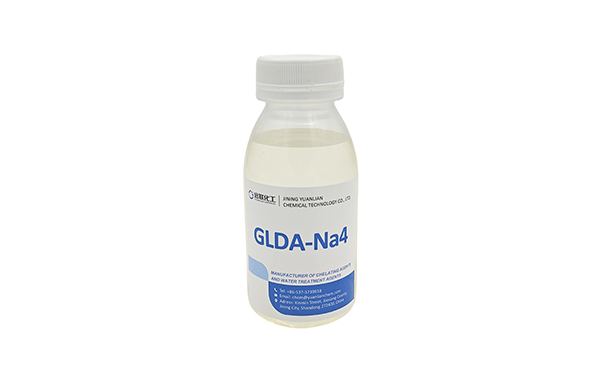
GLDA-Na4 holds calcium and magnesium across a wide pH span and stays useful from mildly acidic to alkaline conditions. That breadth suits laundry liquids, hand dish and multi-purpose cleaners where the formula pH moves with the rest of the base. It also reads well on a label because it is derived from a naturally occurring amino acid and biodegrades readily. Formulators use it where they want one chelant to cover several product forms.
MGDA-Na3: the alkaline and hard-water option
MGDA-Na3 is the stronger choice where the wash runs alkaline and hot, such as automatic dishwashing and institutional laundering. Its grip on magnesium is particularly useful for a spot-free glassware finish, and it holds up next to bleach and at wash temperature. Where water is very hard, MGDA-Na3 often does more with less, which helps keep the active load and the cost in check.
Using the two together in one line
Many European lines carry both molecules, not as a compromise but as a deliberate split. GLDA-Na4 covers the neutral and mildly acidic products; MGDA-Na3 covers the alkaline and high-temperature ones. A blend also appears where a single product spans a wide pH or a hard-water region. The two share a biodegradation and toxicology story, so combining them keeps the Ecolabel documentation consistent. A single supplier for both also trims the admin, because one technical file covers the chelation block of the whole range rather than a separate dossier per product.
Critical concentration and the detergent matrix
The chelant level that matters is the one that actually frees the surfactant and protects the dye, not a fixed percentage. That depends on water hardness, the surfactant system and the wash temperature. A bench check at the intended use dilution shows the threshold far more reliably than a copy of another brand's label. Buyers should record the active content they specify and the make-down they approve, so production stays inside the tested window.
The documents to keep on file
For an Ecolabel application and for routine due diligence, hold the REACH registration, the OECD 301 biodegradation study, the aquatic toxicity summary and the certificate of analysis for the grade supplied. Keep the safety data sheet current and note the exact active content, because a change of concentration can move the formula outside the tested profile. A supplier that hands over this set without a chase saves weeks at launch. Where a brand sells across several member states, the same dossier supports local language labels without re-testing, which is a quiet saving that adds up across a portfolio.
Common mistakes when switching
The first error is swapping the EDTA dose number onto MGDA or GLDA without a trial, since chelation strength differs. The second is assuming one chelant fits every pH in the range, when GLDA and MGDA behave differently as the wash moves alkaline. The third is letting the grade drift between samples, which changes colour and chloride load in a clear product. None of these is hard to avoid with a short bench check and a fixed specification. The bench check need not be elaborate; a side-by-side wash at the two hardness levels your market sees most often will expose most problems before they reach a filling line.
A note on cost and sizing
The chelant is rarely the largest cost in a detergent; surfactant, filler and packaging usually lead. Yet specifying the right active content and the right grade avoids paying for strength you do not use, or for a second chelant to cover a gap the first should have handled. A short bench trial that pins the working level lets procurement buy to the tested number rather than a rounded safety margin. Across a yearly volume, that discipline on a few percentage points of active is a visible saving, and it keeps the Ecolabel file honest because the formula matches what was tested.
Frequently asked questions
Do both molecules qualify for the EU Ecolabel? Both are readily biodegradable with low aquatic toxicity, which supports an application, but the full formula still has to meet every criterion.
Which one should a laundry liquid use? GLDA-Na4 covers the neutral pH well; MGDA-Na3 suits alkaline or high-temperature washes.
Can I blend them? Yes, and many European lines do, keeping the documentation consistent across products.
What paperwork do I need? REACH registration, OECD 301 study, aquatic toxicity summary and the certificate of analysis for the supplied grade.
Build the formulation with a documented supplier
If you are reformulating toward the EU Ecolabel, start with samples and the full document set so your bench trial and your compliance file line up. Contact Yuanlian Chemical at [email protected] or +86-537-3739818, and visit https://www.yuanlianchem.com for specifications, biodegradation data and REACH documentation.
Yuanlian Chemical specializes in the production of polyaspartic acid (PASP),tetrasodium iminodisuccinate(IDS), GLDA, MGDA etc. with stable quality and excellent quantity!

Contact us