



-

- 2026-10-14
PASP for Crop Quality and Stress Tolerance on Farms
The buyer at the packhouse or the processor does not pay for tonnes of biomass; they pay for marketable quality. Size, colour, sugar content and shelf life decide whether a crop clears the grade or is diverted, and a few points of quality often mean more to the margin than a few percent of bulk yield. European growers manage that quality through variety, nutrition and water, and an increasing number are adding sodium polyaspartate (PASP-Na) to the programme as a biodegradable input that supports the plant through the stress that otherwise drags quality down.
Quality is where the margin sits
A field can produce a large bulk yield and still return a poor result if too much of it falls below grade. Uneven ripening forces multiple harvest passes, soft fruit shortens the shelf window, and a low sugar reading costs the load at the gate. The pressures that drive this are rarely a single deficiency; they are the accumulation of water stress, nutrient imbalance and the temperature swings that European seasons now deliver. An input that helps the plant hold its physiology together under that load is worth more than one that simply pushes growth.
What polyaspartate does for the plant
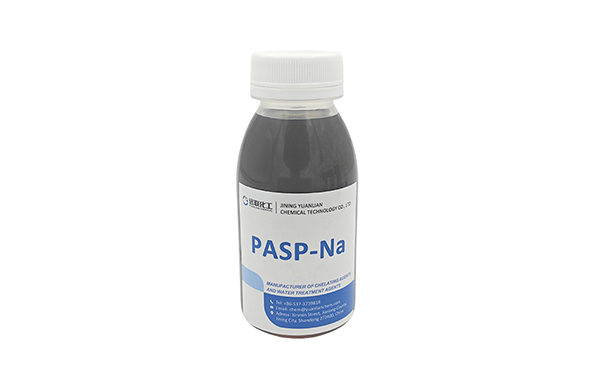
PASP-Na is a biodegradable polycarboxylate built from aspartic acid. In the plant it is not a hormone and not a nutrient; it is a conditioner that influences how water and nutrient ions behave in the root zone and in the sap. By keeping a more steady supply of moisture and of available nutrients close to the active roots, it reduces the sharp dips in plant water status that translate into fruit split, poor colour and weak sugar accumulation. The effect is physiological support rather than stimulation, and it is most clearly seen where the crop meets a stress it would otherwise fail to shrug off.
Colour, sugar and the grade line
In fruit and vegetable crops the visible quality is built in the weeks before harvest. Steady water availability through that window supports the pigment development that gives a consistent skin colour, and a more even nutrient supply supports the sugar accumulation measured as Brix. Growers who have used the polymer in a programme report a tighter distribution of fruit size and a steadier colour across the block, which reduces the sorting loss at the packhouse. The honest position is that genetics and climate set the ceiling, and the polymer helps more fruit reach it rather than lifting the ceiling itself.
Shelf life and post-harvest behaviour
Quality that collapses in transit is quality the grower never gets paid for. Crops that enter storage or transport under less water stress tend to arrive firmer and with a slower softening curve, which extends the marketable window. Polyaspartate's role here is indirect: by supporting the plant through the late-season stress that weakens cell walls, it leaves the produce in a better state to travel. It is not a coating or a preservative applied at the gate; the benefit is built during the growing season, which is why it belongs in the nutrition and irrigation plan rather than the packing line.
Tolerance to salinity and heat
European agriculture is seeing more saline irrigation water and more heat episodes, both of which pinch the plant's ability to take up water and nutrients. Polyaspartate's influence on the moisture films around the root helps the crop keep functioning when the soil solution turns hostile, which shows up as less tip burn, less scorching and a slower decline in photosynthesis under heat. This is a support role: it does not make a salt-sensitive crop salt-tolerant, but it widens the band of conditions in which a normal crop keeps performing. The size of the effect depends on the crop, the soil and the season, so an on-farm comparison remains the reliable test.
Fitting it into the nutrition plan
On most farms the molecule enters through the fertigation line or the foliar programme rather than as a standalone pass. It is tank-mix compatible with standard liquid fertilisers and with many crop-protection products, so it rides along with what is already being applied at the growth stages where quality is decided. The usual approach is a modest rate across those stages rather than a single large dose, and the rate that pays back is the one matched to the crop, the soil and the irrigation schedule. A short trial on a representative block settles the question more reliably than a catalogue figure.
Reading the trade against stimulants
The market offers plant stimulants, biostimulants and a long list of foliar products that promise quality gains. Polyaspartate's position is that it is a simple, biodegradable polymer with no phosphorus and no persistent residue, so it does not add to the environmental accounting already weighing on intensive horticulture. It is not a replacement for correct nutrition or for shade and irrigation management, and it will not rescue a crop that was already water-starved. What it offers is a low-burden way to steady the plant through the stress that otherwise costs quality.
A practical route into the field
Choose one block or one irrigation zone that is easy to compare with the rest, apply the product through the existing equipment at a rate agreed with the supplier, and keep nutrition and water the same as the control. Score colour, size distribution and Brix at harvest, and track the packhouse grade rather than relying on a single observation. A season of this comparison tells a grower more than a shelf of brochures, and it either justifies the input or stops it cleanly before the whole area is committed.
What to ask a supplier
Ask for the agricultural grade specification, the biodegradation evidence under OECD 301B, and the tank-mix compatibility notes with your fertiliser and crop-protection products. Confirm the heavy-metal profile against the EU fertilising product ceilings and the recommended rate range for your crop and stage, because a free-from claim only counts on the document. Request a sample and a reference from a grower with a similar crop and climate, since the behaviour in your conditions is the result that matters. The company website carries the product details: https://www.yuanlianchem.com
Frequently asked questions
Does PASP add phosphorus to the land? No. The polymer carries no phosphorus, so it does not add to the nutrient load regulated under the Nitrates Directive.
Will it improve a low grade on its own? It helps more of the crop reach its genetic quality potential under stress; it does not change the variety's ceiling or replace correct nutrition.
Is it a plant hormone or biostimulant? It is a biodegradable polymer conditioner, not a hormone; its action is on water and nutrient availability rather than on plant signalling.
How do I judge whether it paid back? Compare a treated block with an untreated one over a season, scoring harvest colour, size distribution and Brix rather than relying on one observation.
Protect the quality your buyers pay for with a biodegradable crop conditioner. For the agricultural-grade specification, the OECD 301B report and a sample for your crop, contact [email protected] or call +86-537-3739818. Full product details are at the company website: https://www.yuanlianchem.com
Yuanlian Chemical specializes in the production of polyaspartic acid (PASP),tetrasodium iminodisuccinate(IDS), GLDA, MGDA etc. with stable quality and excellent quantity!

Contact us