



-

- 2026-10-26
Choosing the Right Chelating Agent for Each Crop Type
A chelating agent that suits a vineyard on limestone is not automatically the right one for a cereal field on lighter ground, and a vegetable grower with a clean-label brief faces a different set of constraints again. The crop, its value, its deficiency pattern and the soil pH together decide which agent earns a place in the programme. Treating every crop the same way is a common reason chelate programmes underperform, so a short decision framework before the first order saves money and avoids a season of trial and error.
One agent does not fit every crop
Crops differ in how much iron and zinc they move, how sensitive they are to deficiency, and how much a lost percentage of yield costs. A permanent crop such as an olive or a vine is planted once and cropped for decades, so a dependable soil programme is worth paying for. An annual field crop is judged on cost per hectare and response within a single season. The agent that is sensible in one case may be hard to justify in the other, and the selection should reflect that rather than a single favourite product.
Orchards and vines: iron demand and canopy value
Vines, apples and stone fruit show iron shortage as interveinal yellowing on young growth, and a poor canopy directly cuts the season's fruit set and quality. On calcareous ground these crops benefit from a chelate that holds iron firmly above pH 7.5, applied to the root zone through fertigation or as a soil dressing, with foliar sprays used to correct visible symptoms quickly. Because the crop is high value and long lived, the extra cost of a protected, biodegradable chelate is easy to defend against the risk of a weak canopy.
Citrus and olives: sustained alkaline-soil programmes
Citrus and olives are classic calcareous-soil crops where iron chlorosis recurs season after season. A sustained programme, rather than a one-off correction, keeps the canopy green through the growing period. Agents such as EDDS, IDS and GLDA, which keep iron available across a wide pH window, suit this repeated use, and their biodegradability is a practical advantage where soil and water loads are monitored. The programme is tuned to the local water alkalinity as much as to the crop itself.
Field crops and cereals: zinc and starter nutrition
Maize, wheat and rice are more often limited by zinc than by iron, and the economics favour a low-cost protected form placed with the seed or in the starter band. Zinc deficiency shows as reduced tillering, poor ear size and uneven stands. A chelate here is chosen for reliable placement and safe seed contact rather than for the widest pH window, because the soil pH of arable land is usually less extreme than that of calcareous orchard ground.
Horticulture and vegetables: fast correction and clean labels
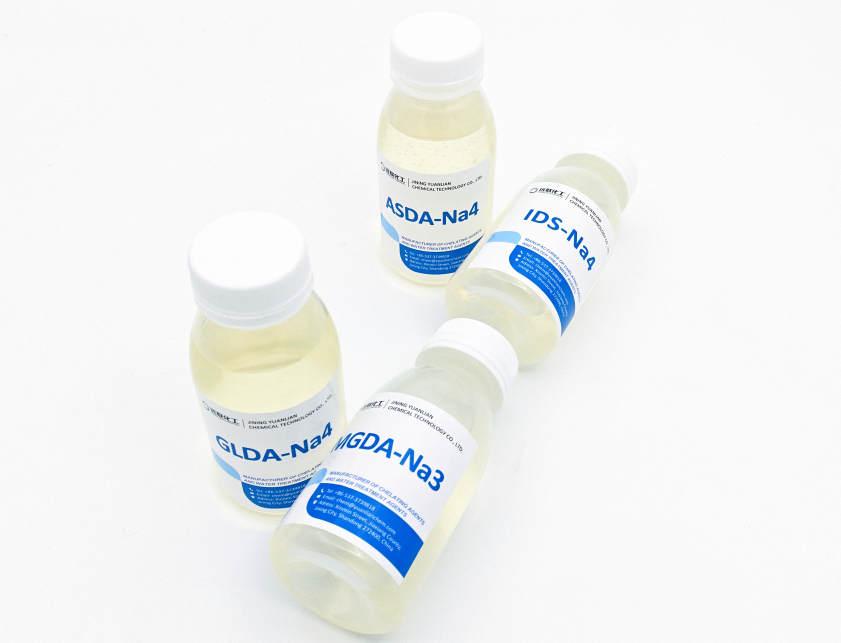
Vegetable and horticultural growers value speed of correction and a clean regulatory profile. Foliar chelated iron and zinc correct visible deficiency within days, which matters when a crop is close to harvest. Where a buyer or a certification scheme restricts persistent substances, readily biodegradable agents such as GLDA, MGDA, IDS, EDDS and ASDA fit the brief without compromising the correction. The choice balances response time against the label the produce must carry.
Growth stage and timing
The same crop wants different support at different moments. Establishment is the stage most sensitive to micronutrient shortage, so seed treatment or starter placement protects the stand from the start. Vegetative growth is when iron demand peaks in fruit crops, and a foliar top-up during that window prevents the canopy from falling behind. Timing the application to the physiological stage, rather than to a calendar date alone, makes a given dose go further.
Grade, concentration and formulation fit
Chelates are supplied at different metal loadings and in liquid or solid form, and the grade should match the equipment. Fertigation favours a clear liquid that will not block emitters; drilling favours a free-flowing solid that blends evenly; foliar work favours a grade that stays in solution at the spray pH. Matching the grade to the method avoids blockages, uneven dressing and wasted product, and it is a step often skipped when the order is placed on price alone.
Cost per hectare versus value at risk
The honest way to compare agents is cost per hectare against the yield or quality at risk, not cost per kilogram. A dearer chelate that actually corrects the deficiency protects more value than a cheaper one that precipitates on contact with bicarbonate. On high-value permanent crops the gap is obvious; on broad-acre crops the calculation is tighter, which is precisely why the crop and its margin should lead the decision instead of the headline price.
What to ask before the first order
Ask the supplier for the active and chelate percentage, the metal loading, the stated pH stability range and the recommended crops. Request the safety data sheet and, for Europe, the fertilising-product documentation. Confirm compatibility with the other products in your tank and the pH of your mixing water. A supplier who supplies these numbers readily is showing the product can stand up to scrutiny, which is worth more than a confident claim.
Frequently asked questions
Should I use the same chelate for iron and zinc? Often the same agent handles both, but the pH window and the crop matter. Iron is the harder metal to keep available at high pH, so the choice is usually driven by iron, with zinc following along.
Is a more expensive biodegradable chelate worth it? On high-value crops and where soil or water loads are monitored, the dependable correction and the lower persistence usually justify the cost. On low-margin broad-acre land a simpler protected form may be enough.
Can I switch agent mid-season? You can, but keep a record of what was applied where, because comparing two programmes on the same field in the same season is difficult. A clean switch with notes is better than mixing products blindly.
Does crop value alone decide the agent? Crop value is a strong factor, but soil pH, water alkalinity and the label the produce must carry weigh just as heavily. The four together set the sensible choice.
Yuanlian Chemical provides GLDA-Na4, MGDA-Na3, IDS-Na4, EDDS, ASDA and polyaspartate for orchard, field and horticultural programmes. Review the agriculture product range or write to [email protected] for a crop-specific recommendation. Background on micronutrient labelling in the EU is available through Regulation (EU) 2019/1009.
Yuanlian Chemical specializes in the production of polyaspartic acid (PASP),tetrasodium iminodisuccinate(IDS), GLDA, MGDA etc. with stable quality and excellent quantity!

Contact us