


-

- 2026-11-05
PASP versus Other Biostimulants: A Buyer Comparison
Buyers weighing a biostimulant face a crowded shelf: seaweed extracts, humic and fulvic substances, protein hydrolysates, amino acids and sodium polyaspartate all promise healthier crops and better nutrient use. They are not interchangeable. Each comes from a different source, acts through a different route, and suits a different budget and cropping system. This comparison sets PASP beside the main alternatives so a purchasing decision rests on fit rather than marketing.
Where biostimulants sit in the programme
A biostimulant supports the plant or the soil's use of nutrients; it is not a fertiliser in itself and not a crop-protection product. Its job is to make the existing programme more effective — steadier roots, better nutrient uptake, or a softer edge to stress. The value shows up as reduced loss, improved uniformity or a small yield or quality lift, not as a dramatic single response. Knowing this boundary stops buyers expecting the wrong thing from the wrong product.
Sodium polyaspartate (PASP)
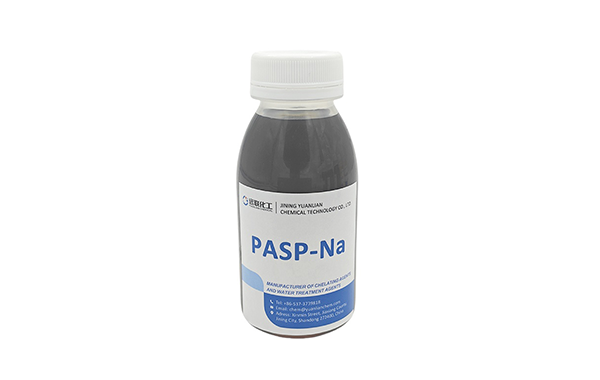
PASP is a synthetic, biodegradable polyamino acid built from aspartic acid. It works mainly in the root zone, moderating nutrient availability, supporting root growth and keeping trace elements in a plant-available form. Its strengths are consistency, low use rate, and clean breakdown without a persistent soil or water load. Its limit is that it is a single-mode input: it does not supply hormones or broad organic matter the way some extracts do, so it is often paired with a fertiliser programme rather than standing alone.
Seaweed extracts
Seaweed extracts carry a mix of hormones, sugars and trace compounds that can lift seedling vigour and stress tolerance. Their effect is variable because the composition depends on species and processing, and batches differ. They suit growers who want a broad, natural input and can accept some inconsistency. Against PASP, seaweed is richer in bioactive variety but less precise in dose-response and less uniform batch to batch.
Humic and fulvic substances
Humic and fulvic acids bind nutrients and improve soil structure and cation exchange, which suits tired or compacted soils more than intensively managed ones. They are soil-conditioning inputs first and plant-stimulant second. Where the limiting factor is soil physical condition, they may outperform PASP; where the limiting factor is precise nutrient availability in a clean system, PASP is the sharper tool.
Protein hydrolysates and amino acids
Protein hydrolysates supply ready-made amino acids and small peptides that can support stress recovery and nitrogen use. They are useful during checks such as transplant shock or heat, and they read as natural to many buyers. Their downside is cost at field rate and variability by source. PASP complements rather than replaces them: the hydrolysate feeds the plant directly, while PASP manages nutrient availability around the root.
How the modes differ in practice
In practice the choice follows the limiting factor. Poor root establishment or wasted fertiliser points to PASP. Stressed seedlings or a need for broad natural input points to seaweed or hydrolysates. Heavy or dead soil points to humates. Few growers need only one; the skill is combining them without doubling cost, using each where its mode earns its place rather than across the whole farm by habit.
Cost, rate and residue
PASP works at low grams per hectare and breaks down cleanly, which keeps both cost per hectare and residue load modest. Seaweed and hydrolysates often need higher rates and carry more organic load. Humates are cheap by the tonne but bulky to handle. Reading cost per hectare against the value at risk — the crop's margin — is what turns a shelf comparison into a buying decision. Where runoff or receiving-water limits apply, the lower organic load of a precise synthetic can also reduce the paperwork that a heavier natural input brings.
Matching the product to the crop and market
Export and organic crops add a filter: the input must clear the buyer's standard and leave a clean residue profile. PASP's biodegradability and documented profile suit tight residue limits; some extracts and humates carry heavier or less-defined loads. Confirm the registration and allowance for your market before specifying, because the lowest-priced input is the one that also passes the gate. A buyer who keeps a short list of approved inputs and matches the mode to the limiting factor usually spends less overall than one who trials everything on the shelf.
Questions to put to a supplier
Ask each supplier for the active identity, source and batch consistency, the mode of action claimed, the rate range, the residue and biodegradation data, and the registration status for your crop. Compare like for like: a precise synthetic with data against a natural extract with variability is not a fair fight unless you weigh consistency against breadth. Suppliers who answer with method and numbers are the ones to trust.
Frequently asked questions
Is PASP better than seaweed? Neither is universally better; PASP is precise and consistent for nutrient availability, while seaweed offers broader natural bioactives with more batch variation.
Can I use PASP with other biostimulants? Yes, they act through different routes, so PASP often pairs with hydrolysates or humates where each addresses a different limiting factor.
Does PASP suit organic programmes? It appears on several organic-allowance lists, but confirm the specific certification and market standard before claiming it.
How do I compare cost fairly? Read cost per hectare against the crop margin and the value at risk, not the price per kilogram, because use rates differ widely.
Protect the quality your buyers pay for with a biodegradable crop conditioner. For the agricultural-grade specification, the OECD 301B report and a sample for your crop, contact [email protected] or call +86-537-3739818. Full product details are at the company website: https://www.yuanlianchem.com
Yuanlian Chemical specializes in the production of polyaspartic acid (PASP),tetrasodium iminodisuccinate(IDS), GLDA, MGDA etc. with stable quality and excellent quantity!

Contact us