


-

- 2025-12-17
The Green Chelation Revolution: Why MGDA & GLDA are Superseding Traditional EDTA
For decades, Ethylenediaminetetraacetic acid (EDTA) has been the ubiquitous workhorse of industrial chelation, prized for its potent ability to bind metal ions. However, its environmental legacy is deeply problematic. As a persistent, poorly biodegradable compound, EDTA and its metal complexes can accumulate in waterways, contributing to long-term ecological concerns. Driven by the stringent EU regulatory framework, particularly REACH, and a profound shift towards sustainable chemistry, the market is decisively moving towards high-performance, biodegradable alternatives. Leading this transition are two next-generation chelants: Methylglycinediacetic Acid (MGDA) and Glutamic Diacetic Acid (GLDA). This analysis details their superior technical and environmental profile compared to EDTA, providing a clear rationale for formulation evolution.
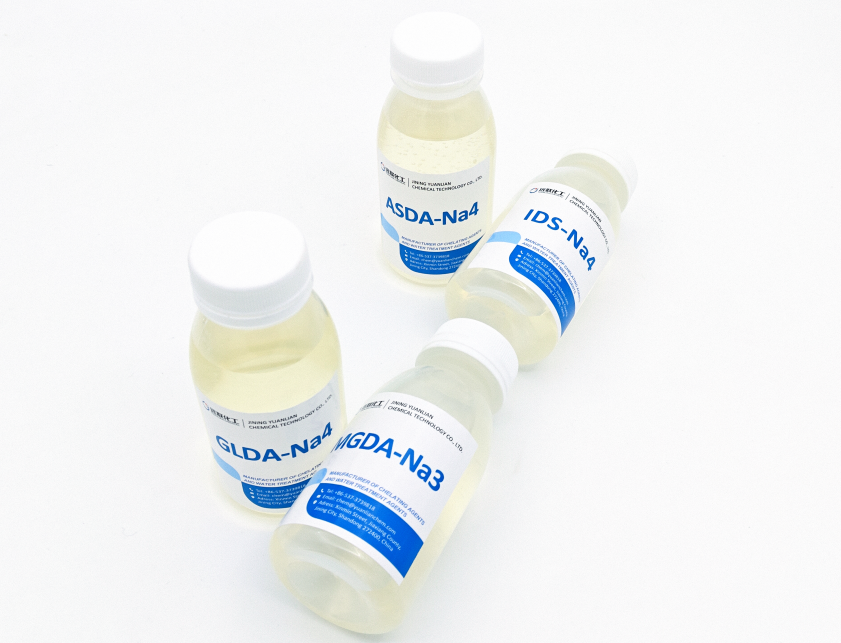
A Comparative Overview: EDTA vs. The Green Alternatives
The shift represents a technological upgrade, not a compromise. The table below summarises the critical distinctions.
| Feature | EDTA (Legacy Standard) | MGDA (Advanced Alternative) | GLDA (Advanced Alternative) |
|---|---|---|---|
| Biodegradability | Very low; persists in the environment. | Readily biodegradable (OECD 301D certified). | Readily biodegradable; derived from natural feedstocks. |
| Ecological Profile | Poor; potential for remobilisation of heavy metals. | Excellent; breaks down efficiently in wastewater treatment plants. | Excellent; fully mineralises in the environment. |
| Chelating Strength | Very strong across many metals. | Strong and effective; excellent for Ca, Mg, and heavy metals. | Very strong; often matches EDTA in efficacy for key applications. |
| pH Stability Range | Broad. | Exceptionally broad (pH 2-13.5); stable in highly alkaline formulations. | Broad and effective. |
| Solubility | Good. | Exceptionally high (>500 g/L), even in cold water. | Very high. |
| Primary Applications | Industrial cleaning, detergents, water treatment. | All-purpose cleaning, automatic dishwashing, institutional cleaners, bottle washing. | Personal care, cosmetics, home care detergents, agrochemicals. |
| Key Advantage | Proven, powerful chelation. | Optimal balance of power, stability, and biodegradability. | Powerful chelation with an excellent natural origin profile. |
Detailed Analysis of the Green Chelants
MGDA: The Robust and Versatile Performer
MGDA stands out for its exceptional stability across a vast pH spectrum, making it uniquely suited for aggressive formulations, including highly alkaline industrial cleaners and descaling agents where other chelants fail. Its superior cold-water solubility ensures high performance in modern, low-temperature detergent applications, a key market trend in Europe. Technically, it offers cleaning efficiency on par with EDTA in many applications but with a dramatically improved environmental footprint, supporting compliance with EU eco-label criteria.
GLDA: The Natural-Based Powerhouse
GLDA's primary appeal lies in its combination of a renewable origin (derived from plant-based glutamate) and strong chelating power. This makes it the preferred choice for brands emphasising natural, skin-friendly, and sustainable ingredient stories, particularly in consumer-facing products like personal care and premium detergents. Its high safety profile (gentle on skin and eyes) further expands its application scope. In performance, it effectively sequesters calcium and heavy metals, often achieving results comparable to EDTA in formulations where a natural derivative is a key requirement.
The European Regulatory and Market Context
The transition is accelerated by a clear regulatory direction within the EU. Substances of very high concern (SVHC) and those with persistent, bioaccumulative, and toxic (PBT) properties face increasing restrictions. While EDTA is not currently banned, its environmental persistence places it under scrutiny, making it a liability for future-proof formulations. In contrast, MGDA and GLDA, with their ready biodegradability, align perfectly with the goals of the European Green Deal and Circular Economy Action Plan, mitigating regulatory risk for manufacturers.
Strategic Sourcing for a Sustainable Transition
Adopting these innovative chelants requires a reliable supply chain partner that guarantees consistent quality, technical expertise, and a commitment to sustainability. This is where specialised producers like YuanlianChemical provide essential value. As a manufacturer focused on green chemical solutions, YuanlianChemical supplies high-purity MGDA and GLDA, supporting European formulators in navigating the complex shift away from EDTA. Their role is crucial in providing the material and application knowledge necessary for a successful reformulation.
Conclusion and Forward Perspective
The evidence is conclusive. MGDA and GLDA represent the next generation of chelation technology, offering equivalent or superior functionality without the environmental legacy of EDTA. MGDA provides robust, all-purpose performance with outstanding stability, while GLDA delivers powerful chelation from a natural foundation. For product developers and sustainability officers across Europe, integrating these biodegradable alternatives is no longer merely an environmental consideration but a strategic imperative for market relevance, regulatory compliance, and brand integrity. The future of chelation is effective, responsible, and sustainable.
Yuanlian Chemical specializes in the production of polyaspartic acid (PASP),tetrasodium iminodisuccinate(IDS), GLDA, MGDA etc. with stable quality and excellent quantity!

Contact us