



-

- 2025-12-17
Tetrasodium Iminodisuccinate: A High-performance Hydrogen Peroxide Stabilizer for Demanding Applications
Tetrasodium Iminodisuccinate (IDS-Na₄) represents the next generation of specialty chemicals designed for efficiency and environmental responsibility. As a superior, biodegradable chelating agent, it effectively addresses the limitations of traditional stabilizers in controlling hydrogen peroxide (H₂O₂) decomposition. This article details its mechanism of action, key advantages, and primary industrial applications, establishing it as the preferred choice for modern, sustainable manufacturing.
Understanding the Challenge with Hydrogen Peroxide
Hydrogen peroxide is a powerful and versatile oxidizing agent used extensively across industries for bleaching, disinfection, and chemical synthesis. However, its utility is often compromised by a key weakness: its tendency to undergo rapid, uncontrolled decomposition, especially in the presence of catalytic metal ions like iron (Fe²⁺/Fe³⁺) and copper (Cu²⁺). This premature breakdown leads to:
- Inconsistent process results
- Increased chemical consumption and operational costs
- Potential damage to materials (e.g., textile fibers, pulp)
- Loss of efficiency and process control
The IDS-Na₄ Solution: Advanced Stabilization through Chelation
Tetrasodium Iminodisuccinate directly tackles this problem by functioning as a highly effective chelating agent. Its molecular structure is engineered to form exceptionally stable complexes with the di- and trivalent metal ions that catalyze H₂O₂ decomposition. By "locking up" these free metal ions, IDS-Na₄ provides precise control over the peroxide reaction, ensuring it proceeds uniformly and efficiently at the desired rate.
Key Advantages and Performance Data
The transition to IDS-Na₄ from traditional phosphate or silicate-based stabilizers is driven by a combination of performance, operational, and environmental benefits, particularly valued in the European market.
| Feature | Tetrasodium Iminodisuccinate (IDS-Na₄) | Traditional Stabilizers (e.g., Silicates) | Phosphonate-based Stabilizers (e.g., EDTMP) |
|---|---|---|---|
| Core Mechanism | Selective chelation of catalytic metal ions (Fe, Cu) | General pH buffering & colloidal adsorption | Chelation & threshold inhibition |
| Stabilizing Efficacy | Excellent stability for H₂O₂ | Variable; can be less controllable | High |
| Environmental Profile | Readily biodegradable & eco-friendly; part of non-phosphorus formulations | Inorganic, but can cause silicate scales | Often poorly biodegradable; phosphorus can contribute to eutrophication |
| Operational Issues | Prevents scaling; compatible with strong alkalis and high temperatures | Causes hard, abrasive silicate deposits | Potential for calcium-phosphonate precipitation; increasing regulatory restrictions |
| Regulatory Alignment | Highly favored, aligns with EU Green Chemistry and circular economy goals | Accepted but discouraged due to scaling issues | Increasingly restricted due to environmental concerns |
Primary Industrial Applications
1. Textile Processing – Bleaching of Cotton and Wool
IDS-Na₄ is a cornerstone of modern, energy-efficient textile processing. It is highly effective in cold-batch bleaching operations for cotton, enabling excellent whiteness and absorbency at lower temperatures, thereby saving significant energy. Its gentle action also makes it suitable for bleaching delicate protein fibers like wool, protecting the material while delivering high-quality results.
2. Pulp and Paper Manufacturing
In pulp bleaching, IDS-Na₄ serves as a powerful stabilizer for hydrogen peroxide, improving brightness and yield. Beyond bleaching, it acts as an effective chelating agent to neutralize metal ions that affect pulp color, and is also used as a coating agent in papermaking processes.
3. Industrial & Institutional (I&I) Cleaning
As a powerful chelator for water hardness ions (calcium, magnesium) and heavy metals, IDS-Na₄ enhances the stability and performance of peroxide-based disinfectants, cleaners, and descaling formulations. It is also directly used in formulations for cleaning metal surfaces and pipes.
4. Water Treatment
Leveraging its strong chelation power and biodegradability, IDS-Na₄ functions effectively as a scale inhibitor and softening agent in industrial cooling and circulating water systems, helping to prevent efficiency-reducing deposits.
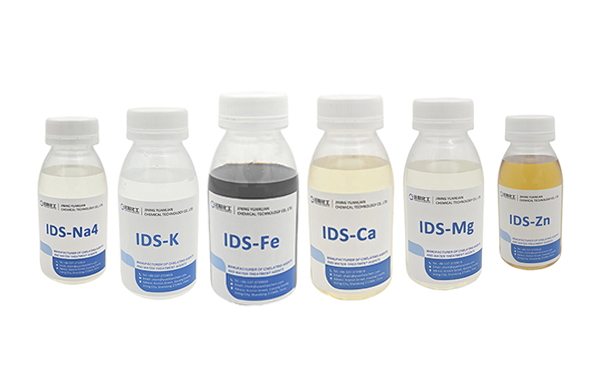
A Closer Look at Yuanlian Chemical's IDS-Na₄
Shandong Yuanlian Chemical Co., Ltd. offers a premium-grade Tetrasodium Iminodisuccinate product characterized by:
High Purity & Efficacy: Supplied as a white powder with a content of ≥92%, ensuring reliable performance.
Proven Technical Performance: The product demonstrates excellent stability for hydrogen peroxide, strong chelation power (especially for copper ions), and superior compatibility even under demanding high-pH and high-temperature conditions.
Sustainability Commitment: The product is defined by its easy biodegradability and low ecosystem toxicity, making it an ideal component for environmentally conscious formulations.
Conclusion
The shift towards Tetrasodium Iminodisuccinate is more than a technical upgrade; it's a strategic alignment with the future of sustainable industry. By offering unparalleled control over hydrogen peroxide processes, eliminating operational drawbacks like scaling, and providing an exemplary environmental profile, IDS-Na₄ delivers tangible value.
For formulators and manufacturers aiming to improve efficiency, ensure regulatory compliance, and meet the growing market demand for greener chemistry, adopting IDS-Na₄ is a clear and forward-thinking decision.
Frequently Asked Questions (FAQ)
Q1: Is IDS-Na₄ truly biodegradable and how does it compare to EDTA?
Yes, Tetrasodium Iminodisuccinate is classified as readily biodegradable, a key advantage over traditional chelators like EDTA, DTPA, and NTA, which are known for their persistence in the environment. It is specifically designed as a direct, more sustainable replacement for these older chemistries.
Q2: Can IDS-Na₄ be used in high-temperature or highly alkaline processes?
Absolutely. One of the standout technical features of IDS-Na₄ is its excellent resistance to strong alkalis and high temperatures. This makes it exceptionally reliable in demanding industrial settings, such as hot textile bleaching baths or aggressive cleaning formulations, where other stabilizers might fail.
Q3: What are the main industries that use IDS-Na₄ as an H₂O₂ stabilizer?
The textile industry for fabric bleaching, the pulp and paper industry for pulp bleaching, and the industrial cleaning sector for formulating stable peroxide-based products are the primary users. Its use is expanding into any application requiring controlled peroxide activation.
Yuanlian Chemical specializes in the production of polyaspartic acid (PASP),tetrasodium iminodisuccinate(IDS), GLDA, MGDA etc. with stable quality and excellent quantity!

Contact us