



-

- 2026-03-04
The Science of Precision: Navigating the Different Types of Chelated Micronutrients
In the high-stakes world of European commercial agriculture, the difference between a record harvest and a mediocre yield often comes down to the bioavailability of micronutrients. While traditional mineral salts were once the standard, chelated micronutrients have redefined efficiency by ensuring nutrients actually reach the plant's vascular system rather than getting locked in the soil.
Understanding which chelating agent to use is not just a matter of chemistry; it is a strategic economic decision.
1. EDTA: The Versatile Standard
Ethylenediaminetetraacetic acid (EDTA) remains the most widely used chelating agent globally. Its primary strength lies in its versatility for foliar applications and its stability in slightly acidic to neutral soils ( to ).
-
Best For: Foliar sprays and hydroponic systems with controlled pH.
-
Key Advantage: Cost-effective and highly soluble.
-
Limitation: In highly alkaline European soils (above ), EDTA-protected iron () tends to displace, losing its effectiveness.
2. EDDHA: The Solution for Alkaline Soils
For growers in regions with calcareous soils, EDDHA is the gold standard. It is specifically engineered to remain stable in extreme alkaline conditions, often up to .
-
Best For: Iron deficiency (Chlorosis) in high-pH soils.
-
The "Ortho-Ortho" Factor: When sourcing EDDHA, the "ortho-ortho" isomer content is the metric of quality. High ortho-ortho levels ensure a longer-lasting nutrient release in the soil.
-
Target Crops: Grapes, citrus, and high-value ornamentals.
3. DTPA: The Hydroponic Specialist
DTPA (Diethylene triamine pentaacetic acid) serves as the middle ground between EDTA and EDDHA. It is particularly favored in semi-closed hydroponic systems and greenhouse fertigation.
-
Stability Range: Effective up to .
-
Unique Profile: It is less sensitive to light than EDTA, making it ideal for nutrient solutions exposed to UV in greenhouse settings.
4. IDHA and Biodegradable Alternatives
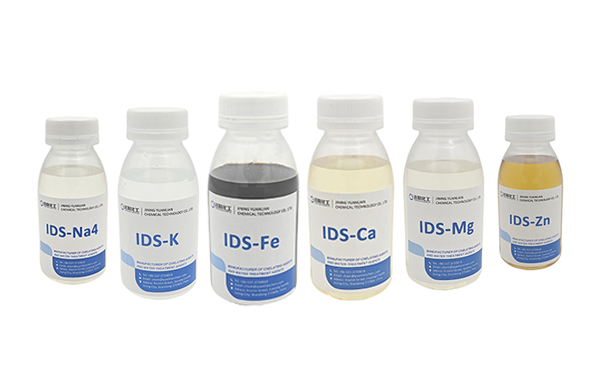
With the European Green Deal and stricter ECHA regulations, there is a growing shift toward "green chelates" like IDHA. These are designed to be fully biodegradable, preventing the long-term accumulation of synthetic agents in the soil and groundwater.
-
The Sustainable Choice: IDHA offers a high degree of safety for the environment while maintaining excellent solubility for , , and .
Comparative Stability of Chelated Micronutrients
Maximizing ROI with Chelated Nutrients
Choosing the right chelate is a balance of soil pH, crop stage, and application method. While the upfront cost of a chelated product is higher than a sulfate-based mineral, the Return on Investment (ROI) is realized through:
-
Lower dosage requirements due to superior absorption.
-
Reduced soil fixation, ensuring your inputs aren't wasted.
-
Rapid recovery from visible nutrient deficiencies.
For European distributors and large-scale growers, the transition to precision-chelated formulas is no longer an option—it is a requirement for sustainable, high-yield farming.
Yuanlian Chemical specializes in the production of polyaspartic acid (PASP),tetrasodium iminodisuccinate(IDS), GLDA, MGDA etc. with stable quality and excellent quantity!

Contact us