



-

- 2026-03-12
The Evolution of Chelating Agents: Navigating the Shift to Next-Gen Green Chemistry
The global market for chelating agents—essential for everything from water treatment to high-end cosmetics—is currently in the midst of a tectonic shift. In 2026, the industry has moved beyond the "stability at any cost" mindset. Today, the defining metrics are Readily Biodegradable (OECD 301B), Phosphorus-Free, and Carbon-Neutral Sourcing.
For procurement managers and R&D engineers, staying competitive means understanding the three core phases of chelation evolution.
1. The Legacy Era: The Era of Persistent Stability
For decades, the "Big Three"—EDTA, NTA, and Phosphonates—dominated the market. Their strengths were undeniable: unmatched chelation constants and low production costs.
However, their legacy has left an environmental footprint that is no longer acceptable under modern regulations like EU REACH.
-
The Problem: Poor biodegradability leading to heavy metal mobilization in groundwater and the eutrophication of aquatic ecosystems.
-
The Status in 2026: While still used in niche industrial processes, they are rapidly being phased out of consumer-facing products and eco-certified projects.
2. The Transition Era: The Rise of Amino Acid Derivatives
We are currently in the most active phase of the evolution: the replacement of traditional stabilizers with Amino Acid-based Chelating Agents. This transition is driven by the demand for "Clean Label" products in the EU and North America.
The New Leaders:
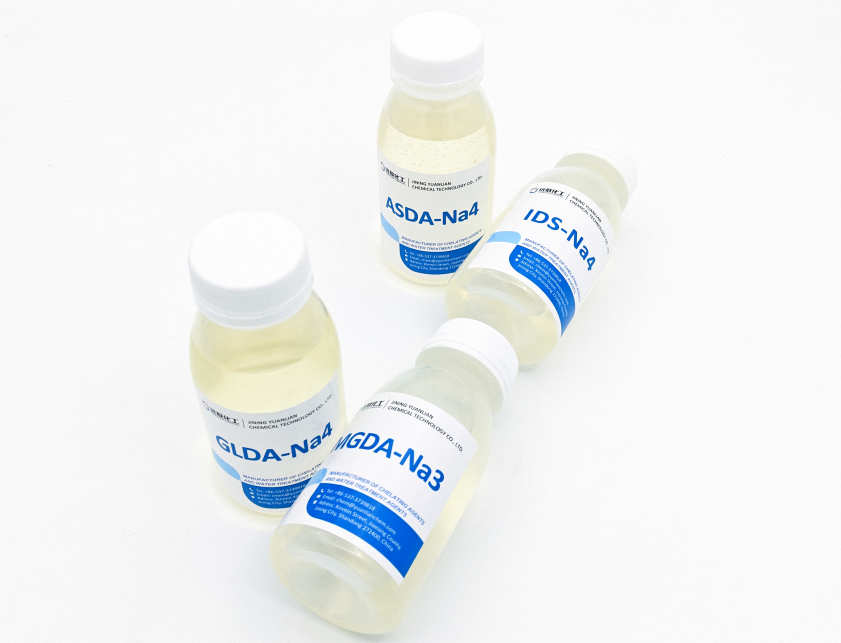
-
GLDA (Tetrasodium Glutamate Diacetate): Derived from L-glutamic acid, GLDA has become the premier choice for cosmetics and liquid detergents. Its high solubility and excellent skin compatibility make it the "green standard" for personal care.
-
MGDA (Trisodium Methylglycine Diacetate): Known for its exceptional performance at high temperatures and pH levels, MGDA is the backbone of modern, phosphate-free automatic dishwashing (ADW) liquids and industrial cleaners.
3. The Future Era: Functional & Bio-Polymers
Looking toward the late 2020s, the evolution is moving toward polymers that do more than just chelate. This is where "Smart Chelation" comes into play.
The Innovation Front:
-
PASP (Polyaspartic Acid): As a biodegradable polymer, PASP represents the peak of green chemistry. It mimics natural proteins, providing not only scale inhibition but also corrosion protection and dispersion. Its application has expanded from water treatment into sustainable agriculture as a fertilizer enhancer.
-
IDS (Iminodisuccinic Acid): A unique green chelator that excels in high-hardness environments and serves as a vital stabilizer in textile oxygen bleaching, ensuring fiber integrity while meeting strict ZDHC MRSL requirements.
4. Why 2026 is the Year of "Readily Biodegradable"
The evolution of chelating agents is no longer just a chemical trend; it is a regulatory requirement.
-
Water Scarcity: Modern cooling systems must run at higher cycles. This requires chelators that won't interfere with reverse osmosis (RO) membranes or wastewater recycling.
-
Microplastic Bans: As regulations against non-biodegradable polymers tighten, bio-based chelators offer a compliant, future-proof solution.
-
Consumer Awareness: "EDTA-Free" is now as powerful a marketing term as "Paraben-Free."
Conclusion: Partnering with the Future
At Shandong Yuanlian Chemical, we don't just supply chemicals; we provide the building blocks for a sustainable future. Our commitment to the R&D of GLDA, MGDA, PASP, and IDS ensures that our partners are always ahead of the regulatory curve and technical trends.
Transition to Green Chelation
Is your formulation ready for the next decade of environmental standards? Contact our technical experts to explore our range of high-purity, biodegradable chelating agents.
-
Email: [email protected]
-
Official Website:
www.yuanlianchem.com
Yuanlian Chemical specializes in the production of polyaspartic acid (PASP),tetrasodium iminodisuccinate(IDS), GLDA, MGDA etc. with stable quality and excellent quantity!

Contact us