


-

- 2026-03-26
GLDA vs EDTA: Which Chelating Agent Is Better?
For over half a century, EDTA (Ethylenediaminetetraacetic acid) has been the undisputed workhorse of chemical sequestration. However, as global industrial standards shift toward "Green Chemistry" and stricter environmental compliance (REACH), a high-performance successor has emerged: GLDA (Tetrasodium Glutamate Diacetate).
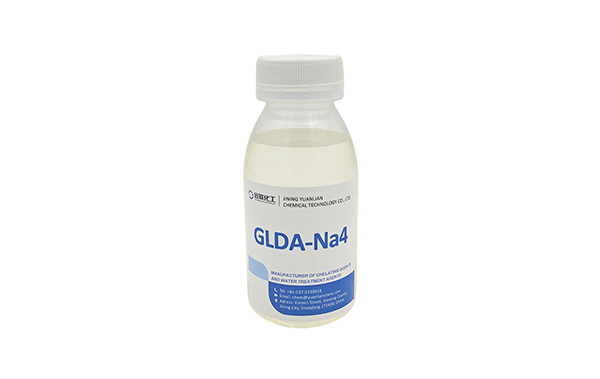
The question for formulators in 2026 is no longer just about sequestering power—it is about balancing performance, solubility, and ecological responsibility. This guide provides a technical comparison to help you determine which agent is better for your specific application.
1. Environmental Profile: The Deciding Factor
The most significant divergence between these two agents lies in their environmental persistence.
-
EDTA: Classified as a persistent organic pollutant. It does not degrade significantly in wastewater treatment plants or natural water bodies. Its longevity allows it to remobilize heavy metals from river sediments, posing a long-term ecological risk.
-
GLDA: Derived from natural L-glutamic acid, GLDA is readily biodegradable (OECD 301B). It breaks down quickly into harmless components, making it the preferred choice for companies aiming for "Eco-label" or "Green" certifications in Europe.
2. Technical Performance and Sequestering Power
While both are powerful aminopolycarboxylates, their behavior in formulations differs:
-
Chelation Capacity: EDTA has a slightly higher affinity for certain transition metals. However, GLDA is exceptionally effective at sequestering Calcium () and Magnesium (), which are the primary causes of water hardness.
-
pH Stability: Both agents are stable across a wide pH range. However, GLDA maintains superior performance in highly alkaline environments, making it more effective for heavy-duty industrial cleaning and CIP (Clean-in-Place) systems.
3. Solubility and Formulation Flexibility
For manufacturers of concentrated liquid products, solubility is a critical operational metric.
-
EDTA: Often limited by its lower solubility, especially in its acid form or as a sodium salt in concentrated formulations. It can sometimes precipitate at low temperatures or in highly concentrated "super-concentrates."
-
GLDA: Offers significantly higher solubility. As a standard 47% aqueous solution, GLDA remains stable even at low temperatures and high concentrations. This allows formulators to create smaller, more potent product packaging, reducing shipping costs and carbon footprints.
4. Safety and Regulatory Compliance
In the European market, regulatory pressure is the strongest driver for switching from EDTA to GLDA.
-
Toxicological Profile: GLDA is non-sensitizing and has a much lower toxicity profile compared to EDTA. It is not classified as a dangerous substance under GHS/CLP regulations for human health in typical concentrations.
-
Regulatory Scrutiny: EDTA is under constant evaluation by the ECHA (European Chemicals Agency). Many forward-thinking European brands have already moved to GLDA-Na4 to future-proof their supply chains against potential bans or increased environmental taxes.
Comparative Overview at a Glance
Conclusion: Which Is Better?
While EDTA remains a cost-effective choice for closed-loop systems where discharge is not an issue, GLDA is the superior choice for modern, sustainable formulations. Its combination of high solubility, excellent alkaline performance, and "green" credentials makes it the logical replacement for EDTA in the professional cleaning, textile, and agricultural sectors.
Yuanlian Chemical specializes in the production of polyaspartic acid (PASP),tetrasodium iminodisuccinate(IDS), GLDA, MGDA etc. with stable quality and excellent quantity!

Contact us