



-

- 2026-03-30
Comparative Analysis: Core Biodegradability Differences Between EDDS, EDTA, and GLDA
In the modern chemical landscape, the term "chelating agent" is no longer inseparable from "environmental persistence." As the European Green Deal and REACH regulations tighten their grip on non-biodegradable micro-pollutants, understanding the metabolic pathways and degradation kinetics of sequestering agents is critical.
This technical briefing focuses on the core biodegradability gaps between the traditional benchmark EDTA and its two primary sustainable successors: EDDS (Ethylenediamine Disuccinate) and GLDA (Glutamate Diacetate).
1. EDTA: The Legacy of Persistence
Ethylenediaminetetraacetic acid (EDTA) has long been the industrial standard due to its incredibly high stability constants. However, this same stability is its environmental downfall.
-
Metabolic Barrier: The synthetic nitrogen-carbon bonds in EDTA are highly resistant to enzymatic cleavage by common environmental bacteria.
-
Biodegradation Rate: Under standard OECD 301B tests, EDTA shows virtually 0% biodegradation within 28 days. It is classified as persistent.
-
Ecological Risk: Because it does not break down in wastewater treatment plants, EDTA acts as a carrier, remobilizing heavy metals from river sediments back into the aqueous phase.
2. EDDS: The "Chiral" Biodegradation Leader
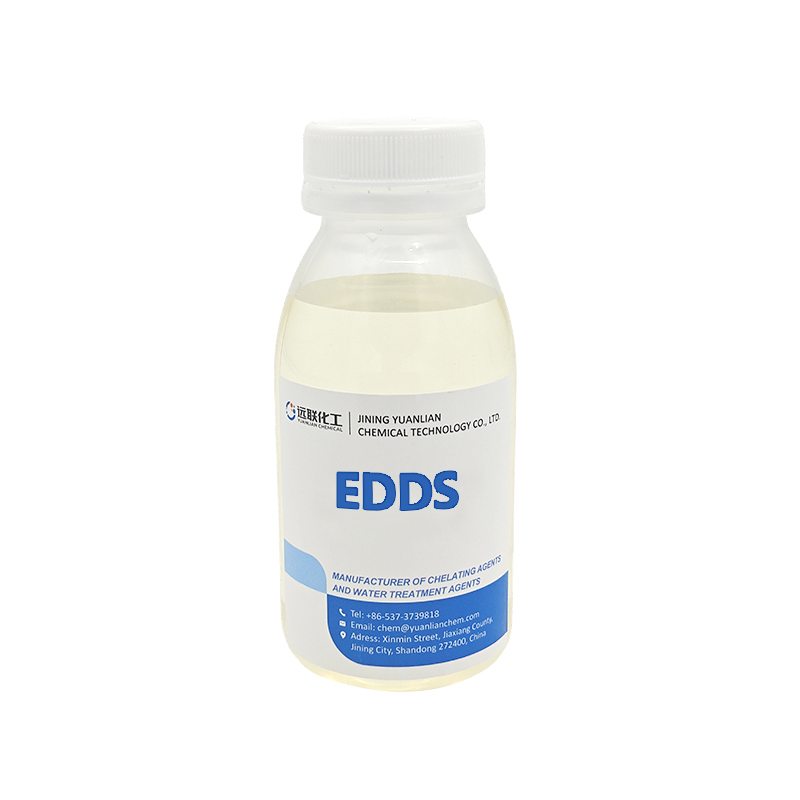
Trisodium Ethylenediamine Disuccinate (EDDS) is a structural isomer of EDTA, but its biological profile is fundamentally different due to its amino acid-based origin (L-aspartic acid).
-
Isomer Specificity: Only the [S,S]-isomer of EDDS is readily biodegradable. High-quality industrial EDDS is manufactured to be stereospecific to ensure maximum ecological safety.
-
Biodegradation Rate: EDDS typically achieves >80% mineralization within 20 days. It is recognized as "readily biodegradable" by international standards.
-
Primary Application: Its rapid degradation makes it the gold standard for personal care and soil remediation, where chemical residence time must be minimized.
3. GLDA: The High-Performance Bio-Based Workhorse
Tetrasodium Glutamate Diacetate (GLDA) is derived from L-glutamic acid, a naturally occurring amino acid. It represents the best balance between heavy-duty sequestration and environmental stewardship.
-
Degradation Pathway: GLDA is broken down by microbial enzymes into glutamic acid and acetic acid, which are then completely mineralized into and .
-
Biodegradation Rate: GLDA reaches >60% biodegradation within 28 days (OECD 301D), meeting the strict criteria for "readily biodegradable" labels.
-
Unique Advantage: Unlike EDDS, GLDA offers higher solubility and better performance in high-pH industrial cleaning environments while maintaining its green profile.
Technical Comparison Matrix: Biodegradability & Impact
Strategic Conclusion for 2026
For industries operating within the EU, the transition from EDTA is no longer a matter of "if," but "which."
-
Choose EDDS when rapid degradation and copper sequestration are paramount (e.g., high-end cosmetics, hair care, and soil washing).
-
Choose GLDA for high-volume industrial applications requiring strong calcium/magnesium chelation and high solubility (e.g., detergents, I&I cleaning, and textile processing).
By replacing EDTA with EDDS or GLDA, formulators effectively remove chemical persistence from their product lifecycle, ensuring long-term compliance and ecological integrity.
Yuanlian Chemical specializes in the production of polyaspartic acid (PASP),tetrasodium iminodisuccinate(IDS), GLDA, MGDA etc. with stable quality and excellent quantity!

Contact us