


-

- 2026-03-31
The Future of Sustainable Cleaning: Beyond Traditional Phosphonates with MGDA Technology
In the professional cleaning industry, the year 2026 marks a historic pivot point. For decades, phosphonates were the "silent heroes" of high-performance detergents, providing the essential sequestering power needed to tackle hard water and stubborn stains. However, as the European Green Deal and the Water Framework Directive intensify their focus on phosphorus-rich effluents and aquatic eutrophication, the industry is moving beyond the phosphonate era.
The future of high-performance, sustainable cleaning has arrived, and it is powered by Methylglycinediacetic acid (MGDA) technology.
1. The Performance Gap: Why MGDA is Outpacing Phosphonates
A common concern for formulators is whether a "green" alternative can match the heavy-duty chelating power of traditional chemicals. MGDA doesn't just match it—it often exceeds it, particularly in challenging environments.
-
Superior Scale Inhibition: MGDA is exceptionally effective at preventing calcium carbonate and magnesium scale, even in short-cycle industrial washing where rapid chelation is required.
-
Alkaline Stability: Unlike some organic acids, MGDA remains highly stable and active at high pH levels (up to pH 12+), making it the ideal builder for automatic dishwashing (ADW) and industrial CIP (Clean-in-Place) systems.
-
Peroxide Stabilization: MGDA excels at stabilizing bleaching agents, ensuring that oxygen-based cleaners maintain their potency throughout the wash cycle.
2. Environmental Integrity: The Zero-Footprint Goal
The primary driver for the transition to MGDA is its impeccable ecological profile.
-
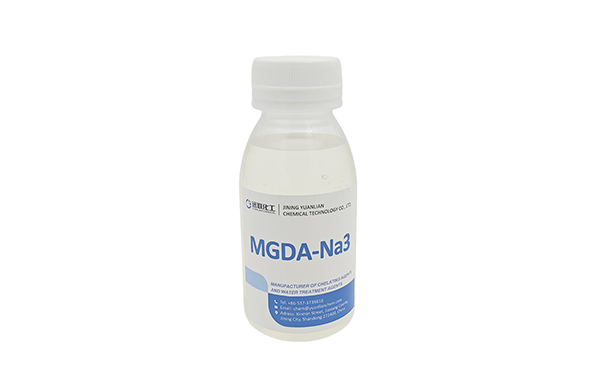
Readily Biodegradable: While some phosphonates are slow to degrade and can persist in water systems, MGDA is readily biodegradable according to OECD 301B standards. It breaks down quickly into harmless components, leaving no chemical legacy in the environment.
-
Phosphorus-Free (P-Free): By eliminating phosphorus from the formulation, MGDA directly addresses the issue of eutrophication (algal blooms) in European lakes and rivers, simplifying wastewater discharge permits for industrial facilities.
3. Formulating for 2026: The Strategic Advantage of MGDA
Integrating MGDA into your product line offers more than just environmental compliance; it provides a distinct market advantage:
-
High Solubility: MGDA is available in high-concentration liquid forms (up to 40% active content), which allows for the creation of "super-concentrates." This reduces packaging waste and lowers transportation-related carbon emissions.
-
Versatility Across Sectors: From professional laundry and kitchen hygiene to vehicle care and textile processing, MGDA’s broad compatibility with surfactants makes it a universal tool for the modern chemist.
-
Regulatory Future-Proofing: As ECHA (European Chemicals Agency) continues to scrutinize traditional aminopolycarboxylates and phosphonates, MGDA offers a safe, stable, and long-term solution that is fully REACH-compliant.
4. Economic Efficiency in Sustainable Systems
In 2026, sustainability is synonymous with efficiency. MGDA technology allows for:
-
Lower Dosage Rates: Due to its high chelation value, smaller amounts of MGDA are often required compared to traditional builders.
-
Enhanced ROI: Improved cleaning results at lower temperatures mean reduced energy consumption for the end-user, adding a powerful USP (Unique Selling Point) to your product.
Conclusion
The transition from traditional phosphonates to MGDA technology represents a sophisticated evolution in cleaning science. It proves that industrial power and environmental stewardship are no longer mutually exclusive. For brands aiming to lead the sustainable cleaning market in 2026, MGDA is not just an alternative—it is the essential engine of innovation.
Yuanlian Chemical specializes in the production of polyaspartic acid (PASP),tetrasodium iminodisuccinate(IDS), GLDA, MGDA etc. with stable quality and excellent quantity!

Contact us