



-

- 2026-04-01
Performance Analysis: How Green Chelants Perform in High-Temperature and Extreme pH Conditions
A common concern among industrial formulators is whether "green" chemistry can withstand the "redline" conditions of modern manufacturing. In sectors such as oilfield acidizing, high-pressure boiler cleaning, and automatic dishwashing (ADW), chelating agents must maintain structural integrity while subjected to thermal stress and aggressive pH levels.
Recent data for 2026 confirms that biodegradable chelants—specifically MGDA (Methylglycinediacetic acid) and GLDA (Glutamate Diacetate)—are not only environmentally superior but also technically resilient in these extreme environments.
1. Thermal Stability: Surviving the Heat
Traditional chelants like EDTA begin to decompose at temperatures above 150°C. In contrast, modern green chelants exhibit remarkable thermal endurance, making them ideal for high-pressure systems.
-
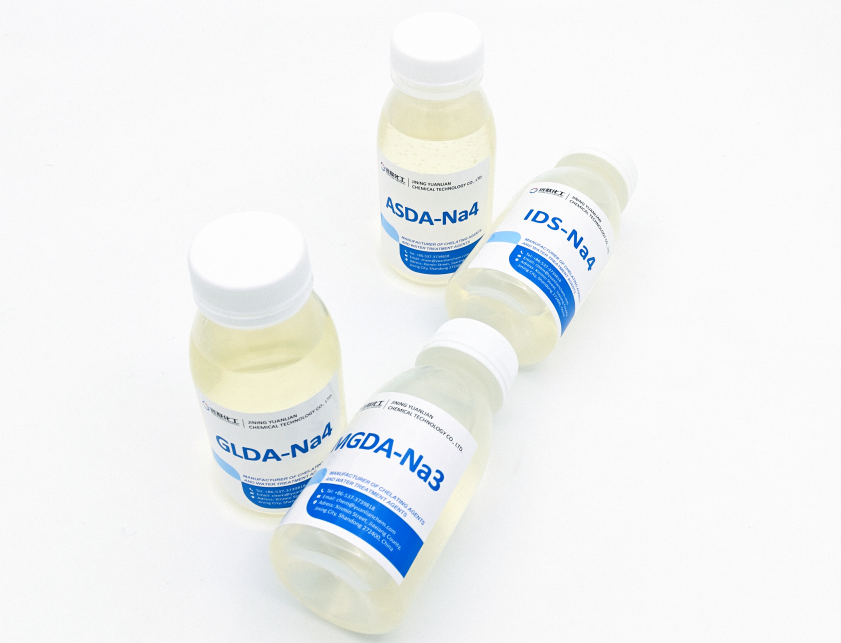
MGDA-Na₃: This molecule is a thermal powerhouse. Studies show it remains stable at temperatures up to 200°C, maintaining its sequestering power in steam generators and geothermal applications where other organic acids fail.
-
GLDA-Na₄: Performance testing in aqueous solutions at 170°C for 6 hours shows negligible degradation, especially under alkaline conditions. This makes it a preferred biodegradable alternative for cleaning boilers and heat exchangers.
2. The pH Spectrum: From Caustic to Acidic
Industrial processes rarely operate at a neutral pH. The versatility of a chelant is defined by its solubility and complexing constant across the entire logarithmic scale.
High-Alkaline Environments (pH 10–14)
In high-pH cleaning (such as CIP systems in the food industry), the risk of chelant precipitation is high.
-
GLDA offers unique solubility, remaining completely clear even in 28% NaOH solutions. Its ability to sequester Calcium () and Magnesium () remains consistent at pH 12, ensuring streak-free results in industrial bottle washing.
-
MGDA is widely recognized for its "Broad Spectrum" tolerance, maintaining effective chelation in environments up to pH 13.5.
Acidic Conditions (pH 2–4)
In acidic descaling or textile dyeing, many chelants lose their effectiveness as they become protonated.
-
GLDA stands out as the only strong chelate that allows for high-concentration solutions (up to 50%) to remain stable at pH 2. This prevents "salting out" in acidic formulations, a common failure point for EDTA-based products.
3. Comparative Performance: Chelation Value ()
Under extreme conditions, the "chelation value" is the ultimate metric of ROI. As temperatures rise, the rate of reaction increases, but so does the risk of molecular breakdown.
4. Strategic Implications for 2026 Formulations
For European manufacturers, the choice to use Yuanlian Chemical’s MGDA or GLDA under extreme conditions provides a dual advantage:
-
Operational Reliability: No loss of performance during high-temperature sterilization or caustic cleaning cycles.
-
Regulatory Ease: Meeting the OECD 301B "readily biodegradable" standards, even for products designed for heavy industry.
Conclusion
The myth that green chelants are "soft" has been debunked by 2026 industrial data. In the collision of high temperature and extreme pH, MGDA and GLDA provide the molecular toughness required for the most demanding applications. By integrating these advanced stabilizers, companies can achieve peak performance while fulfilling their commitment to a toxic-free, sustainable future.
Yuanlian Chemical specializes in the production of polyaspartic acid (PASP),tetrasodium iminodisuccinate(IDS), GLDA, MGDA etc. with stable quality and excellent quantity!

Contact us