



-

- 2026-04-21
Decoding OECD 301B: The 28-Day Ultimate Biodegradation Path of EDDS-Na₃
In the transition toward sustainable chemistry in 2026, OECD 301B has become the gold standard for measuring the "readily biodegradable" status of chemical substances. For formulators switching from persistent chelators like EDTA to eco-friendly alternatives, understanding the degradation kinetics of Trisodium Ethylenediamine Disuccinate (EDDS-Na₃) is crucial.
This article provides a deep technical dive into how EDDS-Na₃ achieves complete mineralization within the critical 28-day window.
What is the OECD 301B (CO₂ Evolution Test)?
The OECD 301B test measures the biodegradation of an organic compound by monitoring the amount of Carbon Dioxide () produced by microorganisms.
-
The "Readily Biodegradable" Threshold: A substance must reach 60% of its Theoretical CO₂ (ThCO₂) production within a 10-day window (starting when 10% degradation is reached) during the total 28-day test period.
Unlike EDTA, which fails this test, EDDS-Na₃ consistently passes, often exceeding 80% mineralization.
Step-by-Step: The 28-Day Degradation Path of EDDS-Na₃
The biodegradation of EDDS is a biological process primarily driven by specialized bacterial enzymes. Here is the technical breakdown:
Stage 1: The Induction Phase (Days 1–5)
During the first few days, microbial populations in the inoculum (usually activated sludge) undergo an adaptation period. The microorganisms recognize the [S,S]-isomer of EDDS as a nutrient source.
Stage 2: Enzymatic Cleavage (The "10-Day Window")
Once acclimated, the enzymes (specifically C-N lyases) begin the primary biodegradation:
-
C-N Bond Fission: The succinate groups are cleaved from the ethylenediamine backbone.
-
Intermediate Formation: EDDS breaks down into Aspartic Acid and Glyoxal-like intermediates, which are naturally occurring metabolic substances.
Stage 3: Mineralization (Days 10–28)
The intermediates enter the TCA Cycle (Krebs Cycle) within the microbial cells. Through cellular respiration, the organic carbon is converted into:
-
(measured in the test)
-
(Water)
-
Biomass (New microbial growth)
By day 28, the EDDS molecule has effectively ceased to exist as a synthetic chemical, leaving zero persistent residues in the aquatic environment.
EDDS-Na₃ vs. EDTA: A Comparative Outlook
Why Technical Buyers Choose Our EDDS-Na₃
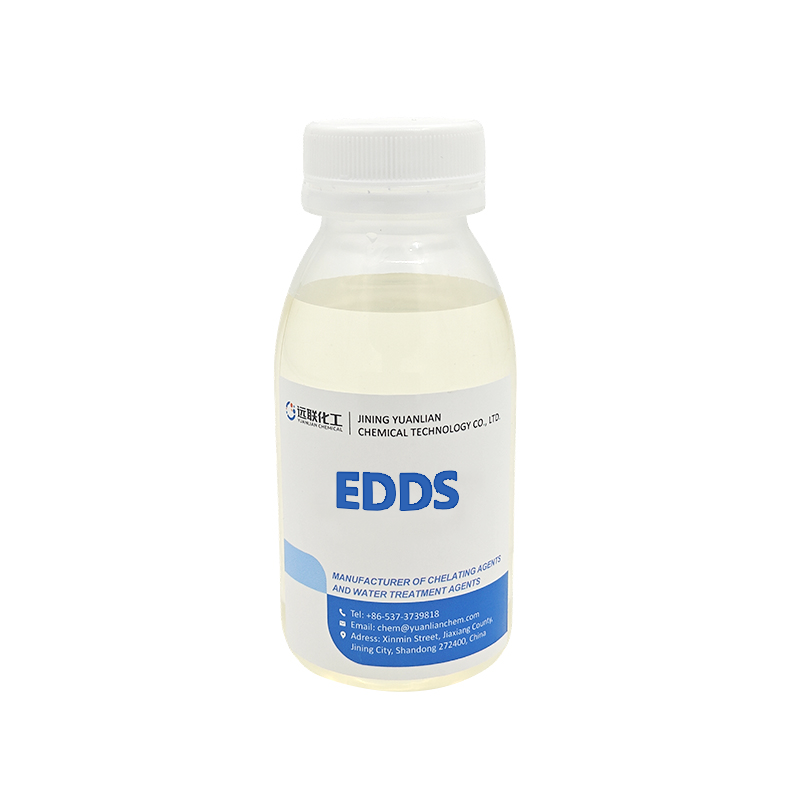
Not all EDDS is created equal. The biodegradation efficiency of EDDS depends heavily on the [S,S]-isomer content. Our production process ensures:
-
High [S,S] Isomer Ratio: Maximum microbial recognition for faster degradation.
-
Minimal Residuals: Low levels of byproduct impurities that could interfere with sensitive cosmetic or industrial formulas.
-
Verified Compliance: Full COA and OECD 301B test report summaries available for your regulatory filings.
Conclusion: Science-Backed Sustainability
Choosing EDDS-Na₃ isn't just about following a trend; it's about leveraging a chemically superior, biologically compatible sequestering agent. By understanding the OECD 301B path, formulators can confidently claim "Eco-Friendly" and "Readily Biodegradable" on their final products.
Ready to see the data? Contact our technical team to request the OECD 301B Study Summary for our EDDS-Na₃.
Yuanlian Chemical specializes in the production of polyaspartic acid (PASP),tetrasodium iminodisuccinate(IDS), GLDA, MGDA etc. with stable quality and excellent quantity!

Contact us