


-

- 2026-04-28
Analyzing PASP Compatibility and Stability under High-Temperature, High-Alkaline Conditions
As global oil and gas operations shift toward more aggressive secondary and tertiary recovery methods in 2026, the demand for "green" chemistry in produced water management has reached a critical peak. Traditional phosphonate or polymer-based inhibitors, while effective, face increasing scrutiny due to their environmental persistence and limited stability in extreme reservoir conditions.
Polyaspartic Acid (PASP), a biodegradable biomimetic polymer, has emerged as the premier solution for flow assurance. However, the true test of PASP lies in its performance within High-Temperature, High-Alkaline (HTHA) environments—conditions that typically compromise the chemical integrity of standard green inhibitors.
1. The HTHA Challenge: Why Conventional Inhibitors Fail
In deep-well injection and enhanced oil recovery (EOR), water chemistries are often characterized by temperatures exceeding 120°C and pH levels above 9.0. Under these stresses:
-
Thermal Degradation: Many organic inhibitors undergo decarboxylation or chain scission, rendering them ineffective at the bottom-hole.
-
Alkaline Sensitivity: High pH can trigger the premature precipitation of the inhibitor itself, particularly in the presence of high calcium concentrations (), leading to "pseudo-scaling."
2. Molecular Resilience: PASP’s Performance Under Stress
PASP is a polyamino acid characterized by a high density of active carboxyl and amide groups. Its thermal and chemical stability is rooted in its unique peptide-bond backbone.
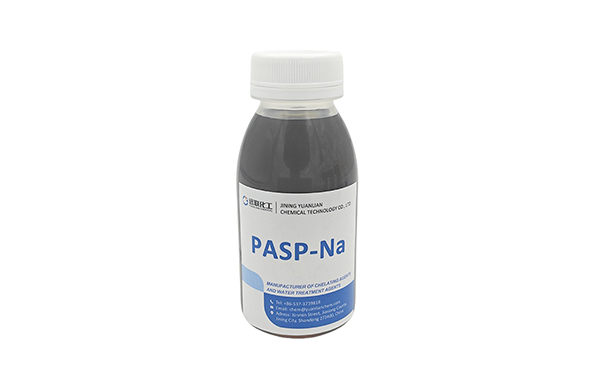
Thermal Stability at 120°C+
Laboratory simulations and field data from 2025–2026 confirm that PASP maintains its structural integrity at temperatures up to 150°C for extended periods. Unlike EDTA or some polyacrylates, PASP’s primary chain does not easily hydrolyze under geothermal stress, ensuring that the "chelation claw" remains functional from the injection wellhead to the production string.
Alkaline Compatibility and Scale Inhibition
In high-alkaline environments (pH 9–12), PASP exhibits superior solubility. Its mechanism of lattice distortion and threshold inhibition is actually enhanced by alkaline conditions:
-
Calcium Carbonate () Inhibition: PASP achieves an inhibition rate of >95% even in waters with high mineral saturation. It adsorbs onto the active growth sites of scale nuclei, forcing the crystals into unstable, non-adherent forms that are easily flushed through the system.
-
Calcium Sulfate () Control: PASP remains effective against sulfate scales, which are common in seawater injection projects.
3. Synergistic Corrosion Inhibition: Protecting Infrastructure
Beyond scale control, PASP functions as an effective, non-toxic corrosion inhibitor.
-
Film-Forming Capability: PASP molecules adsorb onto the metal surface (carbon steel), forming a thin, protective molecular layer. This barrier isolates the pipe wall from dissolved oxygen and corrosive ions ().
-
Synergy with Biocides: PASP is highly compatible with common oilfield biocides like THPS and Glutaraldehyde. This compatibility ensures that the mitigation of Microbially Induced Corrosion (MIC) is not compromised by the scale inhibition program.
4. 2026 Sustainability ROI: The Environmental Advantage
In the 2026 regulatory climate, "Green" is synonymous with "Operational Security." PASP offers a dual advantage for oilfield operators:
5. Strategic Implementation: Sourcing for 2026
Success in oilfield water treatment requires more than just a chemical; it requires a stable supply chain and consistent molecular quality. Yuanlian Chemical specializes in the production of high-purity, industrial-grade PASP, optimized specifically for the high-shear and high-temperature demands of the oil and gas industry. Our PASP solutions are designed to integrate seamlessly into existing chemical injection skids, providing a "drop-in" green upgrade for global operators.
Conclusion: Securing Flow Assurance in a Green Era
The analysis is clear: Polyaspartic Acid (PASP) is not merely a sustainable alternative; it is a technically superior choice for high-temperature, high-alkaline oilfield environments. By neutralizing scale and corrosion through biodegradable, HTHA-stable chemistry, operators can maximize equipment life and meet environmental mandates without sacrificing production efficiency.
Yuanlian Chemical specializes in the production of polyaspartic acid (PASP),tetrasodium iminodisuccinate(IDS), GLDA, MGDA etc. with stable quality and excellent quantity!

Contact us