


-

- 2026-04-30
Choosing the Right Chelate: Comparative Stability of EDTA, EDDHA, and IDHA at Different Soil pH Leve
Soil pH is the "master switch" of nutrient availability. As pH fluctuates, the strength of the bond between a chelating agent and a metal ion changes. If a chelate is unstable at a specific pH, the metal ion will be displaced by other ions (like Calcium) and precipitate, becoming unavailable to the crop.
1. EDTA (Ethylenediaminetetraacetic Acid)
The Traditional Industry Workhorse EDTA remains the most widely used synthetic chelate due to its cost-effectiveness and versatility in foliar applications and slightly acidic soils.
-
Optimal pH Range: 4.0 – 6.5
-
Stability Profile: EDTA is highly effective in acidic to neutral soils. However, as pH rises above 7.0, EDTA loses its affinity for Iron (). In calcareous soils, Calcium () ions outcompete the Iron for the EDTA "claw," causing the Iron to precipitate as Iron Hydroxide.
-
Best Use Case: Acidic soil drenching and broad-spectrum foliar sprays for Zinc, Manganese, and Copper.
2. EDDHA (Ethylenediamine-N,N'-bis(2-hydroxyphenylacetic acid))
The Solution for High-Alkaline Challenges When dealing with extreme alkalinity or calcareous soils (common in arid regions), EDDHA is the gold standard for Iron delivery.
-
Optimal pH Range: 4.0 – 10.0
-
Stability Profile: EDDHA is the most stable chelate currently available for Iron. Its molecular structure is specifically designed to shield the ion even in high-pH environments where other chelates fail. It remains 100% stable at a pH of 9.0 or higher.
-
Best Use Case: Soil application in alkaline/calcareous soils where Iron chlorosis is a persistent problem.
3. IDHA (Imidodisuccinic Acid)
The 2026 Sustainable Innovation IDHA represents the next generation of "Green" chelates. Unlike EDTA, which is environmentally persistent, IDHA is completely biodegradable while maintaining high technical performance.
-
Optimal pH Range: 4.0 – 7.5
-
Stability Profile: IDHA offers a stability window similar to EDTA but with a slightly better performance in neutral to mildly alkaline conditions. Its primary advantage is its biodegradability (OECD 301E), making it the preferred choice for 2026 ESG-compliant farming operations and sensitive hydroponic systems.
-
Best Use Case: Sustainable agriculture, eco-labeled liquid fertilizers, and environments where preventing chemical buildup in the soil is a priority.
Comparative Stability Summary Table
| Chelate Type | Primary Strength | Soil pH Limit (Iron) | Biodegradability |
|---|---|---|---|
| EDTA | Low cost, versatile | Up to pH 6.5 | Low |
| IDHA | Eco-friendly, high purity | Up to pH 7.5 | Excellent (>80%) |
| EDDHA | Maximum stability | Up to pH 10.0 | Moderate |
4. Strategic Selection: Making the Right Choice
Choosing the right chelate in 2026 requires a balance of soil chemistry and environmental goals:
-
Test Your Soil First: If your soil pH is >7.5, EDTA will likely fail for Iron delivery. You must switch to EDDHA.
-
Consider the Environment: For European or North American markets under strict 2026 environmental mandates, IDHA provides the necessary performance for Zinc and Manganese without the "persistent pollutant" label associated with EDTA.
-
Foliar vs. Soil: For foliar application, the pH of the leaf surface is generally neutral; here, EDTA and IDHA are often more efficient than EDDHA because they have smaller molecular weights and are absorbed faster.
Conclusion: Engineering Nutrient Success
The "best" chelate is the one that remains stable long enough for the plant to absorb its cargo. By matching your chelate selection—whether it is the robust EDDHA, the versatile EDTA, or the sustainable IDHA—to your specific soil pH, you ensure that your fertilizer investment translates directly into crop yield.
At Yuanlian Chemical, we specialize in the synthesis of high-purity chelating agents tailored for the 2026 global agricultural market. Our technical team can assist you in selecting the precise molecule to overcome your soil’s specific chemical hurdles.
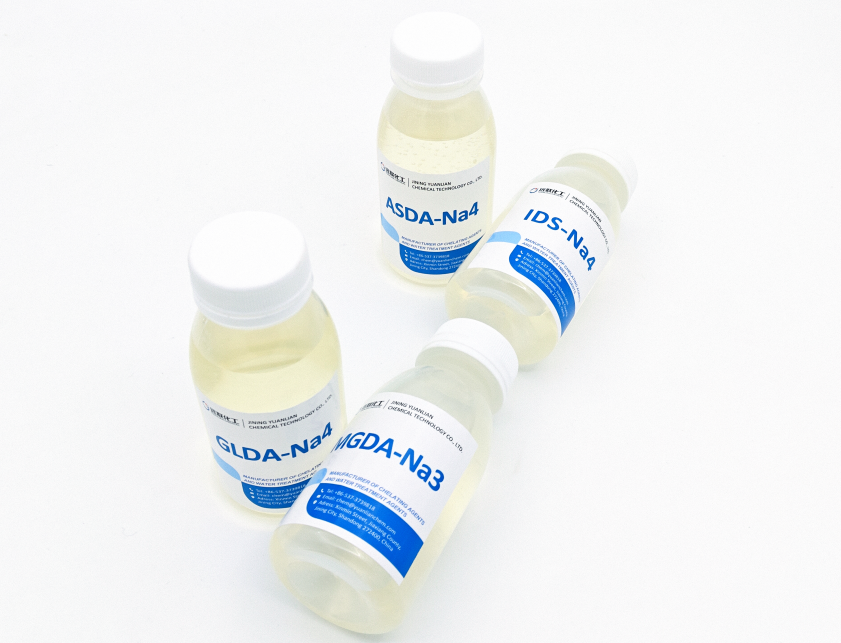
Yuanlian Chemical specializes in the production of polyaspartic acid (PASP),tetrasodium iminodisuccinate(IDS), GLDA, MGDA etc. with stable quality and excellent quantity!

Contact us