



PASP Technical Highlights:
- Mechanism: Excellent calcium carbonate dispersant that distorts crystal lattices to prevent hard scale formation.
- Scale Inhibition Rate: Achieves up to 100% efficiency against CaCO₃ in moderate conditions and maintains high performance in high-hardness water.
- Eco-Friendly: 100% biodegradable and non-toxic, meeting OECD 301B standards.
- Thermal Stability: Maintains structural integrity at temperatures up to 120°C, suitable for cooling towers and boilers.
Managing high-calcium water systems remains a critical challenge for industrial water treatment. As global focus shifts toward "Green Chemistry," Polyaspartic Acid (PASP) has become the premier choice for facilities balancing high performance with environmental compliance.
1. The Science: How PASP Inhibits Scale
Unlike traditional phosphonates, PASP is a green polymer with rich carboxylic acid groups. It works through chelation and dispersion. By adsorbing onto the surface of calcium carbonate micro-crystals, it interferes with their growth, keeping them in a soft, fluid state that is easily flushed from the system.
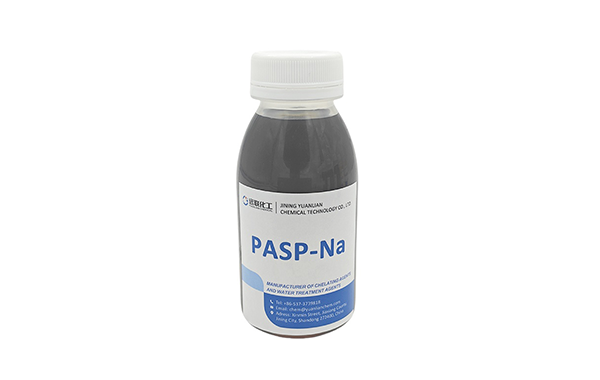
2. PASP vs. PBTCA: A Performance Comparison
In high-calcium environments, formulators often choose between PASP and PBTCA. While PBTCA is a strong phosphonate, PASP offers distinct advantages in the 2026 regulatory landscape:
| Feature | PBTCA (Phosphonate) | PASP (Polyaspartate) |
|---|---|---|
| Biodegradability | Poor | 100% (Green Chemistry) |
| Calcium Tolerance | Excellent | Very High (No precipitation) |
| Phosphorus Level | High (Eutrophication risk) | Zero Phosphorus |
| Corrosion Inhibition | Good | Synergistic with Phosphonates |
3. Thermal Stability of Polyaspartates
A common misconception is that bio-polymers lack thermal stability. However, high-quality PASP retains its efficacy at temperatures exceeding 100°C. This makes it ideal for:
- Cooling Water Systems: Maintaining heat exchange efficiency.
- Reverse Osmosis (RO): Preventing membrane scaling in concentrated brine.
- Agricultural Fertilizers: Acting as a nutrient absorption enhancer in varied climates.
Optimizing PASP for Industrial Use
To maximize the PASP scale inhibition rate, we recommend compounding PASP with other green agents. For example, the synergy between PASP and small amounts of PBTCA can provide near-perfect scale control in extremely high-hardness water while significantly reducing the total phosphorus discharge of the facility.
PASP Performance FAQ
Q: What is the typical scale inhibition rate of PASP for CaCO₃?
A: At a dosage of 4-6 mg/L, PASP can achieve over 90% inhibition of calcium carbonate scale in standard industrial water systems.
Q: Is PASP effective against Calcium Sulfate (CaSO₄)?
A: Yes. PASP is an effective dispersant for both calcium carbonate and calcium sulfate, as well as barium sulfate in oilfield applications.

Contact us