


-

- 2026-05-13
Sustainable Crop Nutrition: Enhancing Micronutrient Uptake with Fully Biodegradable IDS Chelates
In the pursuit of global food security and sustainable intensification, the efficiency of fertilizer application has become a focal point for European agronomy. Standard mineral salts often struggle with poor bioavailability, as metal ions like Zinc (Zn), Manganese (Mn), and Copper (Cu) easily precipitate in alkaline or calcareous soils. While traditional synthetic chelates like EDTA have long been the industry standard, their lack of biodegradability poses a long-term risk to soil health and water systems.
Iminodisuccinate (IDS) chelates represent a paradigm shift, offering a high-performance, "soil-friendly" alternative that aligns with the European Green Deal’s sustainability goals.
1. The Science of Bioavailability: How IDS Works
The primary challenge in crop nutrition is not the quantity of micronutrients applied, but their Nutrient Use Efficiency (NUE). In many soil types, free metal ions react with carbonates or phosphates, becoming "locked" and unavailable to the plant roots.
IDS chelated micronutrients solve this by "caging" the metal ion within a stable molecular structure. This prevents unwanted side reactions in the soil solution, keeping the nutrients in a soluble, mobile form that is easily absorbed by the root hairs or through foliar application.
2. Improving Nutrient Use Efficiency (NUE) for Zinc, Manganese, and Copper
Field data and laboratory trials indicate that IDS chelates significantly outperform inorganic salts in challenging environments:
-
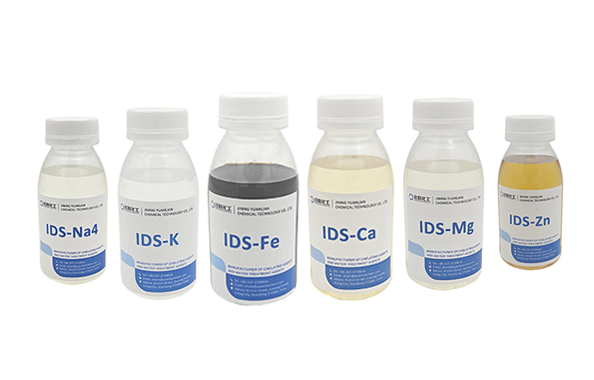
Zinc (Zn-IDS): Crucial for enzyme activation and growth hormone production. IDS prevents Zn from binding to phosphorus in the soil, ensuring steady uptake during critical growth phases.
-
Manganese (Mn-IDS): Essential for photosynthesis and nitrogen metabolism. IDS maintains Mn solubility even in high pH soils where Mn-deficiency is common.
-
Copper (Cu-IDS): Plays a vital role in lignin synthesis and pollen viability. The stable coordination of IDS ensures Copper is delivered without causing the phytotoxicity sometimes associated with free copper ions.
3. A "Zero-Footprint" Solution: Full Biodegradability
The defining advantage of IDS over conventional stabilizers like EDTA or DTPA is its environmental fate. As a fully biodegradable calcium chelate and micronutrient carrier, IDS is broken down by native soil microorganisms into harmless, natural components.
-
No Soil Accumulation: Unlike persistent synthetic agents, IDS does not accumulate in the rhizosphere or leach into groundwater.
-
Regulatory Compliance: Fully compliant with OECD 301B standards, IDS helps fertilizer manufacturers meet the increasingly stringent ecological requirements of the European market.
-
Safe for Beneficial Microbes: By providing a carbon source upon degradation, IDS supports a healthy soil microbiome rather than disrupting it.
4. Stability and Compatibility in Liquid Formulations
For producers of liquid fertilizers and fertigation mixes, Iminodisuccinate (IDS) offers excellent technical properties:
-
High Solubility: Ensures clear, sediment-free liquid concentrates.
-
Tank-Mix Compatibility: Works harmoniously with most NPK fertilizers and crop protection products, reducing the need for multiple passes in the field.
-
Broad pH Stability: Remains effective across a wide range of soil pH levels, making it a versatile tool for diverse European geographical regions.
Conclusion: Future-Proofing Agriculture
Transitioning to soil-friendly fertilizer additives like IDS is an investment in both crop yield and land value. By enhancing micronutrient uptake while ensuring the complete absence of toxic by-products, IDS chelates provide a bridge between high-productivity farming and environmental stewardship.
For fertilizer innovators and professional growers, IDS is not just a component—it is a commitment to the future of sustainable agriculture.
Technical Support & Sample Requests Are you looking to optimize your next-generation fertilizer formulation? Contact our agronomic technical team for stability data, dosage recommendations, and compliance documentation tailored to your specific regional requirements.
Yuanlian Chemical specializes in the production of polyaspartic acid (PASP),tetrasodium iminodisuccinate(IDS), GLDA, MGDA etc. with stable quality and excellent quantity!

Contact us