


-

- 2026-05-13
Performance Breakdown: IDS-Na₄ Stability Constants and Chelation Efficiency in High-Hardness Water
In the evolving landscape of European industrial cleaning and textile processing, the transition from persistent chelating agents like EDTA and NTA toward biodegradable alternatives is no longer just a trend—it is a regulatory and functional necessity. Among these, Iminodisuccinate Tetrasodium (IDS-Na₄) has emerged as a high-performance sequestering agent, particularly valued for its unique coordination chemistry and environmental profile.
But how does IDS-Na₄ behave when faced with the challenges of high-hardness water and varying pH levels? This technical analysis explores the IDS-Na₄ stability constants and its practical efficiency in metal ion sequestration.
1. Understanding the Stability Constant (log K) of IDS-Na₄
The effectiveness of a chelating agent is fundamentally dictated by its stability constant ($log K$). This value represents the strength of the bond between the ligand (IDS) and the metal ion.
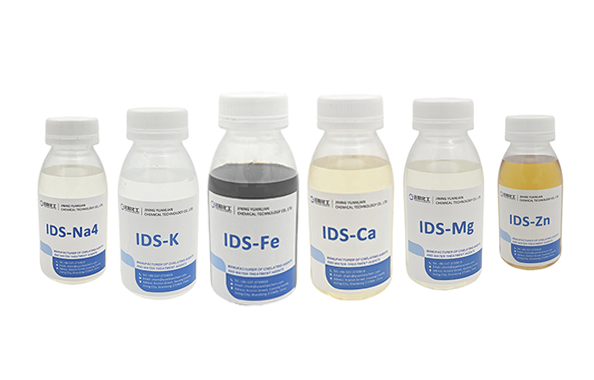
While EDTA is often cited for its high stability, IDS-Na₄ provides a more "selective" and environmentally balanced sequestration profile. Below are the typical stability constants for IDS-Na₄ with key problematic ions:
| Metal Ion | Stability Constant (log K) | Performance Context |
| Copper (Cu²⁺) | ~13.1 | Excellent for preventing oxidative degradation. |
| Iron (Fe³⁺) | ~15.2 | High efficiency in alkaline bleaching and cleaning. |
| Calcium (Ca²⁺) | ~7.0 | Effective control of water hardness. |
| Magnesium (Mg²⁺) | ~5.8 | Synergistic effect in detergent formulations. |
2. Metal Ion Sequestration in High-Hardness Environments
In many European industrial regions, water hardness ($CaCO_3$ concentration) can significantly interfere with chemical processes. IDS-Na₄ excels in these conditions through a pentadentate coordination mechanism.
-
Preventing Precipitation: IDS-Na₄ effectively prevents the formation of calcium and magnesium scales. Unlike phosphorus-based sequestering agents, IDS remains stable and active even at elevated temperatures and in high pH (alkaline) environments, where many conventional builders fail.
-
Iron Sequestration: The high affinity of IDS for $Fe^{3+}$ is a critical property for the textile and pulp industries. It prevents iron-induced catalytic decomposition of peroxide bleaching agents, ensuring fiber strength and brightness.
3. Synergistic Effects: Enhancing Surfactant Performance
One of the most significant Iminodisuccinate tetrasodium properties is its ability to boost the performance of primary surfactants.
In high-hardness water, calcium and magnesium ions often "deactivate" surfactants by forming insoluble salts (soap scum). By effectively sequestering these ions, IDS-Na₄:
-
Reduces the Critical Micelle Concentration (CMC).
-
Prevents soil redeposition on surfaces.
-
Lowers the total concentration of surfactants required, optimizing the Total Cost of Ownership (TCO) for the formulator.
4. Comparative Analysis: IDS vs. EDTA Performance
European manufacturers are under increasing pressure to meet REACH and OECD 301B standards. When comparing IDS vs. EDTA performance, the choice becomes clear:
-
Biodegradability: IDS is readily biodegradable (>70% within 28 days per OECD 301E), whereas EDTA is persistent in the environment.
-
Toxicology: IDS is non-toxic and is not classified as a sensitizer, making it safer for personal care and professional cleaning applications.
-
Performance Parity: In alkaline cleaning, IDS provides comparable sequestration power to EDTA for most transition metals, with the added benefit of being a sustainable "green" raw material.
5. Strategic Applications
Given its stability and efficiency, IDS-Na₄ is the recommended choice for:
-
I&I Cleaning: High-alkaline CIP (Cleaning-in-Place) and bottle washing.
-
Agriculture: As a biodegradable carrier for micronutrients (chelated fertilizers).
-
Textile Auxiliaries: Scouring and bleaching stabilizers.
Conclusion: Why Specify IDS-Na₄ for Your Formulation?
The technical advantage of IDS-Na₄ lies in its ability to balance robust chemical performance with environmental stewardship. As a manufacturer specializing in the innovation of raw materials, we ensure that our IDS-Na₄ solutions meet the rigorous purity and stability requirements of the European market.
For procurement managers and R&D labs looking to future-proof their product lines against environmental regulations without sacrificing cleaning power, IDS-Na₄ is the definitive solution.
Technical Support & Inquiries
Looking for detailed COA, MSDS, or application-specific dosage guidelines? Contact our technical team today to discuss how we can optimize your water treatment or detergent formulations.
Yuanlian Chemical specializes in the production of polyaspartic acid (PASP),tetrasodium iminodisuccinate(IDS), GLDA, MGDA etc. with stable quality and excellent quantity!

Contact us