



European textile mills are under unprecedented pressure. Between tightening EU wastewater regulations, rising energy costs, and consumer demand for sustainable fabrics, every stage of wet processing is being scrutinised. Bleaching and dyeing operations—traditionally heavy consumers of water, energy, and chemicals—are at the forefront of this transformation.
One critical but often overlooked factor is metal ion control. Iron, copper, and manganese ions present in process water or raw fabrics catalyse the decomposition of hydrogen peroxide, leading to uneven bleaching, fibre damage, and increased chemical consumption. Traditional sequestrants like phosphonates and EDTA effectively control these metals, but they come with environmental baggage.
Enter IDS (Iminodisuccinic acid) – a biodegradable, non-phosphorus chelating agent that stabilises peroxide, controls metal ions, and aligns perfectly with the European textile industry’s sustainability goals.
What Is IDS? Chemistry That Respects the Environment
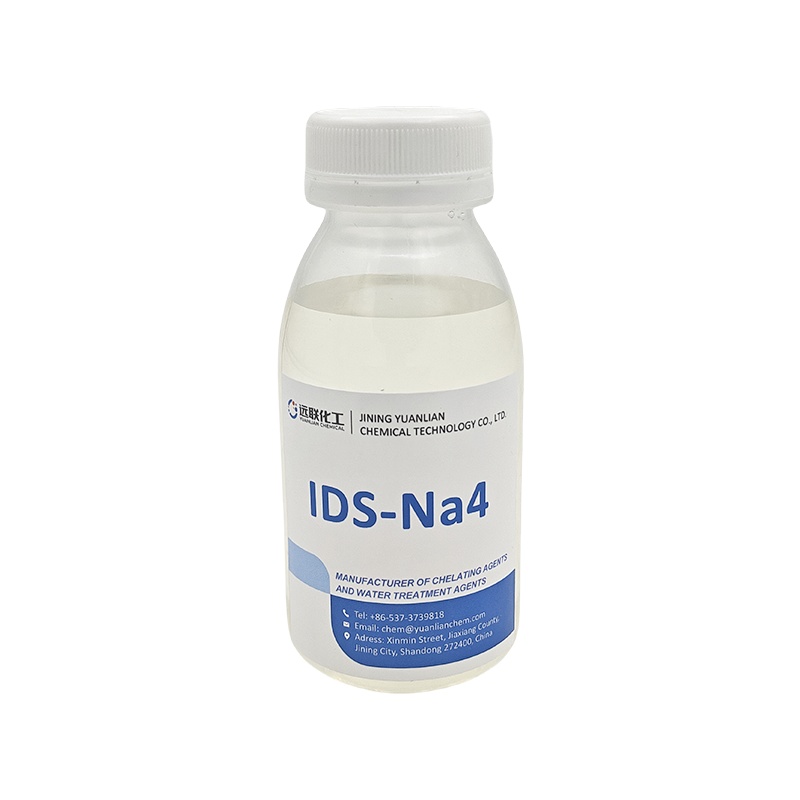
IDS (iminodisuccinic acid) is a tetrasodium salt chelating agent derived from maleic acid and ammonia. Its molecular structure features multiple carboxyl groups that form stable complexes with divalent and trivalent metal ions, including Fe²⁺, Fe³⁺, Cu²⁺, Mn²⁺, and Ca²⁺.
What sets IDS apart from traditional chelators is its excellent biodegradability. Unlike EDTA or DTPA, which persist in surface waters for weeks or months, IDS achieves over 80% degradation within 28 days (OECD 301B). Unlike phosphonates, it contains no phosphorus—eliminating the risk of eutrophication in receiving waters.
Key properties for textile processing:
-
Strong chelation of iron and copper (critical for peroxide stabilisation)
-
Stable across a wide pH range (3–12)
-
Effective at low dosages (typically 0.5–2 g/L)
-
Compatible with anionic and non-ionic surfactants
-
Non-toxic to aquatic organisms
Why European Textile Mills Are Switching to IDS
1. Superior Peroxide Stabilisation
Hydrogen peroxide is the workhorse of textile bleaching. But its effectiveness depends on controlled decomposition. Iron and copper ions—even at trace levels (parts per million)—catalyse uncontrolled peroxide breakdown, generating oxygen bubbles that cause pinholes, uneven whiteness, and fibre strength loss.
Traditional stabilisers like sodium silicate work but leave hard-to-remove deposits on machinery and fabric. Organic stabilisers like phosphonates are effective but environmentally problematic.
IDS solves this dilemma. By sequestering catalytic metal ions, IDS allows peroxide to decompose at a controlled, predictable rate. The result is:
-
Uniform whiteness across the fabric batch
-
Minimised fibre damage (higher tensile strength retention)
-
Reduced peroxide consumption (up to 15–20% savings)
-
No silicate scaling on rollers, jets, and heat exchangers
2. Metal Ion Control Throughout the Dyeing Cycle
Metal ions do not disappear after bleaching. They can re-enter the process via rinse water, hard water, or metal-containing dyes. In reactive and direct dyeing, calcium and magnesium ions form insoluble precipitates with dye molecules, leading to:
-
Uneven shade (skewing or spotting)
-
Poor dye exhaustion (higher dye consumption)
-
Reduced colour fastness
-
Hard-to-clean deposits on equipment
IDS effectively chelates calcium and magnesium across a wide pH range. It also controls iron and copper that can catalyse dye degradation or cause shade changes (especially problematic for pastel shades and whites).
3. Compliance with EU Environmental Regulations
The European textile industry operates under some of the world’s strictest environmental rules. Key frameworks include:
-
EU Industrial Emissions Directive (IED) – limiting chemical discharge
-
REACH Regulation (EC 1907/2006) – restricting persistent substances
-
EU Ecolabel for Textiles – rewarding biodegradable auxiliaries
-
Zero Discharge of Hazardous Chemicals (ZDHC) – eliminating priority substances
EDTA and phosphonates are increasingly restricted under these frameworks. IDS, by contrast, is:
-
Listed as a preferred chelating agent in ZDHC MRSL (Manufacturing Restricted Substances List)
-
Permitted under EU Ecolabel for textile processing
-
Fully REACH registered with no hazard classification
-
Readily biodegradable – no persistence concerns
For mills exporting finished fabrics to German, French, or Scandinavian brands, using IDS provides auditable proof of environmental responsibility.
Application Guidelines for IDS in Textile Processing
Bleaching (Peroxide Stabilisation)
| Parameter | Recommendation |
|---|---|
| IDS dosage | 0.5–1.5 g/L (depending on water hardness and iron content) |
| pH range | 10–11 (optimal for peroxide bleaching) |
| Temperature | 80–110°C (works in both kier boiling and continuous bleaching) |
| Addition point | Before peroxide, with thorough mixing |
Dyeing (Metal Ion Control)
| Dye type | IDS dosage | Function |
|---|---|---|
| Reactive dyes | 0.5–1.0 g/L | Prevents Ca/Mg precipitates, improves exhaustion |
| Direct dyes | 0.5–1.0 g/L | Improves levelness, reduces bath hardness |
| Acid dyes (wool, polyamide) | 0.3–0.8 g/L | Controls trace metals that affect shade |
After-Treatment and Soaping
IDS can also be used in soaping-off baths to remove metal ions that might otherwise catalyse dye degradation or affect fastness.
Comparison with Traditional Chelators in Textile Applications
| Parameter | EDTA | Phosphonates (e.g., HEDP) | Silicate | IDS |
|---|---|---|---|---|
| Biodegradability | Poor (non) | Very poor | Not applicable | Readily >80% |
| Phosphorus-free | Yes | No | Yes | Yes |
| Iron chelation | Excellent | Good | None | Excellent |
| Calcium chelation | Excellent | Good | Poor | Good |
| Peroxide stabilisation | Good | Good | Excellent | Very good |
| Silicate scaling risk | None | None | High | None |
| EU Ecolabel allowed | No | Restricted | Yes | Yes |
| ZDHC approved | No | Restricted | Yes | Yes |
For European mills, the choice is increasingly clear. EDTA and phosphonates may still offer slightly higher calcium chelation numbers, but the regulatory trajectory is against them. IDS provides the best balance of performance and compliance.
European Success Stories
A Portuguese textile finishing mill processing 50 tonnes of cotton knitwear per week replaced an EDTA-based stabiliser with IDS in their continuous bleaching line. Results after three months:
-
Peroxide consumption reduced by 18%
-
Whiteness index improved by 4 points (CIE)
-
No change in fabric strength
-
Wastewater COD (chemical oxygen demand) associated with chelator dropped significantly
-
Mill qualified for a major German brand’s supplier sustainability audit
A Spanish dyehouse specialising in reactive dyeing on organic cotton switched from phosphonates to IDS for metal ion control. They reported:
-
Improved dye exhaustion (reduced dye costs by 6%)
-
Fewer shade corrections (reduced reprocessing by 12%)
-
Passed ZDHC audit with zero non-conformities related to chelators
Consistent chemical quality is critical for such transitions. Yuanlian Chemical supplies high-purity IDS (tetrasodium iminodisuccinate) meeting EU textile industry specifications, with batch-to-batch consistency verified by third-party testing. Several Italian and German mills have already qualified Yuanlian as an approved supplier.
FAQ – Optimised for Voice Search and Quick Technical Answers
Is IDS as effective as EDTA for peroxide bleaching?
For iron and copper control, yes. IDS chelates these catalytic metals very effectively. For very high calcium hardness (>30°dH), you may need slightly higher IDS dosage than EDTA, but the difference is minimal in most European water conditions.
Is IDS safe for use on sensitive fibres like wool or silk?
Yes. IDS is mild and does not degrade protein fibres when used at recommended dosages. However, for wool bleaching, always test the specific formulation as peroxide pH must be carefully controlled regardless of chelator.
How does IDS compare to sodium gluconate?
Sodium gluconate is also biodegradable but has much weaker iron chelation. For peroxide stabilisation, IDS is significantly superior. Gluconate is better suited for simple alkaline cleaning, not high-performance bleaching.
Does IDS work in cold bleaching processes?
Yes. IDS is effective across a wide temperature range, from cold pad-batch (20–30°C) to high-temperature kier bleaching (110°C).
What is the typical IDS concentration in a ZDHC-compliant formulation?
ZDHC does not set specific concentration limits but requires that chelators be biodegradable. IDS concentrations typically range from 0.5–2 g/L active in the process bath. Discharged levels are well below ecotoxicity thresholds.
Beyond Bleaching: Additional Textile Applications for IDS
Pre-treatment (Desizing and Scouring)
IDS can be added to combined desizing/scouring baths to sequester hardness ions and prevent metal-catalysed oxidation of sizing agents. This improves bath life and reduces the need for fresh water.
Equipment Cleaning
IDS is highly effective at removing metal oxide scale (rust stains) from stainless steel dyeing machines. A periodic cleaning bath with 1–2 g/L IDS at 60–80°C restores heat exchanger efficiency and prevents redeposition of iron onto fabrics.
Wastewater Treatment
Because IDS is biodegradable, it does not accumulate in effluent treatment systems. This is a significant advantage over EDTA, which can persist through conventional activated sludge plants and end up in receiving waters.
Conclusion: IDS Is the Sustainable Choice for European Textile Processing
European textile mills no longer have to choose between process performance and environmental compliance. IDS (iminodisuccinic acid) delivers robust peroxide stabilisation, effective metal ion control, and full biodegradability—all without the regulatory risks associated with EDTA and phosphonates.
For bleaching, dyeing, and equipment cleaning, IDS provides a future-proof solution that meets the demands of ZDHC, EU Ecolabel, and major fashion brands’ sustainability criteria.
Actionable recommendations for textile formulators and mill managers:
-
Run a side-by-side trial – Compare IDS against your current chelator in the bleach bath. Measure whiteness, tensile strength, and peroxide consumption.
-
Check your ZDHC compliance – If you are still using EDTA or non-biodegradable phosphonates, prioritise replacement. IDS is a direct drop-in for most formulations.
-
Evaluate total cost – Factor in reduced peroxide use, fewer shade corrections, and lower regulatory risk. IDS often costs less than the sum of problems it solves.
-
Source from a reliable supplier – Consistency matters. Yuanlian Chemical provides high-purity IDS with full traceability, already trusted by textile mills across Italy, Spain, Portugal, and Germany.
The direction of European textile regulation is clear: persistent chemicals are on the way out. IDS is not just a safe alternative—it is a performance upgrade. Make the switch, and your dyeing operations will be cleaner, more efficient, and ready for the next decade of sustainability demands.

Contact us