



Walk through any farmland in France, Germany, or Spain, and the crops may look healthy from a distance. But beneath the surface, a silent crisis is unfolding: micronutrient deficiency. Iron, zinc, and copper are essential for plant growth, affecting everything from chlorophyll synthesis and enzyme activation to disease resistance and grain quality.
The problem? These micronutrients are abundant in most soils but largely unavailable to plants. In calcareous soils—common across southern Europe, the Mediterranean basin, and parts of the UK—high pH locks up iron, zinc, and copper into insoluble forms that plant roots cannot absorb.
Traditional solutions rely on synthetic chelators like EDTA, DTPA, and EDDHA. But environmental concerns and tightening EU regulations are pushing farmers and fertiliser formulators toward biodegradable alternatives. Enter IDS (Iminodisuccinic acid) – a next-generation, biodegradable chelator that enhances micronutrient bioavailability without persisting in the environment.
What Is IDS? A Biodegradable Chelator for Modern Agriculture
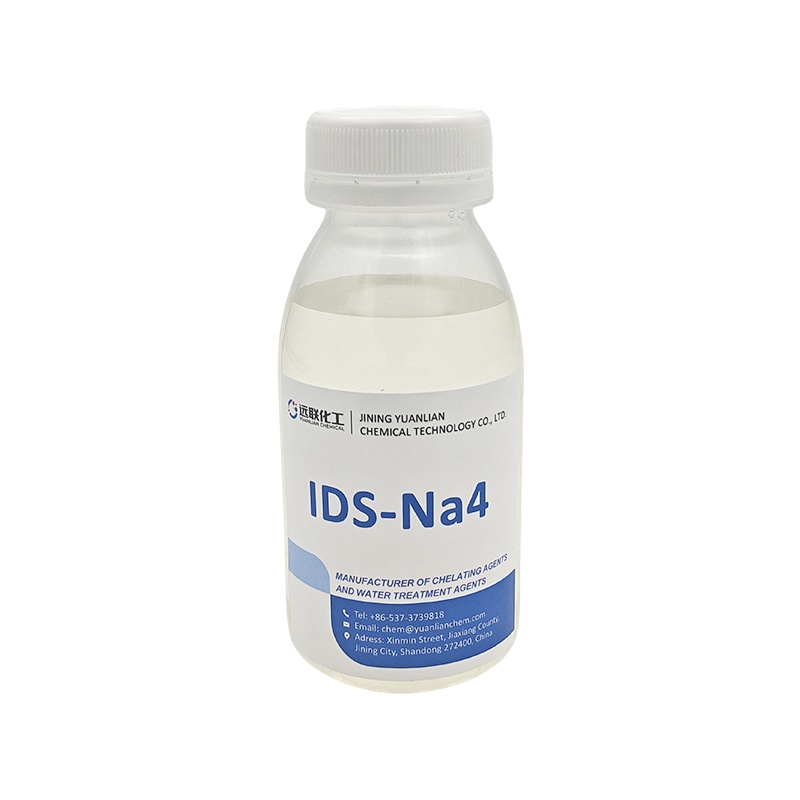
IDS (iminodisuccinic acid), typically used as its tetrasodium salt, is a multifunctional chelating agent derived from maleic acid and ammonia. Its molecular structure features multiple carboxyl and amino groups that form stable, water-soluble complexes with metal ions—including Fe²⁺, Fe³⁺, Zn²⁺, and Cu²⁺.
What makes IDS particularly attractive for European agriculture is its excellent biodegradability. Unlike EDTA or DTPA, which can persist in soils and surface waters for weeks or months, IDS achieves over 80% degradation within 28 days (OECD 301B). This means it delivers micronutrients when and where crops need them, then breaks down into harmless natural compounds.
Key properties for agricultural applications:
-
Strong chelation of iron, zinc, and copper across pH 4–9
-
Stable in calcareous soils (effective up to pH 8.5)
-
Compatible with liquid and solid fertiliser formulations
-
Non-toxic to soil microorganisms and earthworms
-
Fully compliant with EU fertiliser regulations
Why European Agriculture Needs IDS
1. The Calcareous Soil Challenge
Across Europe, approximately 30% of agricultural soils are calcareous—rich in calcium carbonate and with pH values between 7.5 and 8.5. These conditions are particularly prevalent in:
-
Spain (Ebro Valley, Andalusia)
-
Italy (Puglia, Sicily, Tuscany)
-
France (Champagne, Burgundy, Rhône Valley)
-
Greece (Thessaly, Peloponnese)
-
Germany (parts of Bavaria and Baden-Württemberg)
-
United Kingdom (chalk soils of southern England)
At high pH, iron forms insoluble ferric hydroxide (Fe(OH)₃), zinc precipitates as zinc carbonate or zinc hydroxide, and copper becomes tightly bound to organic matter or clay minerals. Synthetic chelators are necessary to keep these metals soluble and plant-available.
IDS effectively competes with soil carbonates and hydroxides for metal ions. When applied as an IDS-micronutrient complex, the chelated metal remains in solution long enough for root uptake, after which the IDS biodegrades—unlike EDTA, which lingers.
2. Enhancing Iron Bioavailability for Chlorosis Prevention
Iron deficiency chlorosis—characterised by yellowing between leaf veins—is the most common micronutrient disorder in European crops. It affects:
-
Fruit trees (apple, pear, citrus, peach)
-
Vines (grapevines in limestone-rich soils)
-
Field crops (soybean, chickpea, sunflower)
-
Ornamentals (roses, hydrangeas)
IDS-iron complexes (Fe-IDS) have been shown in field trials to be nearly as effective as EDDHA—the gold standard for iron chelation—at pH levels up to 8.0. Unlike EDDHA, however, IDS is biodegradable and significantly less expensive. For crops with moderate iron deficiency, Fe-IDS offers an optimal balance of performance and environmental responsibility.
3. Zinc Bioavailability for Grain Yield and Human Nutrition
Zinc deficiency is widespread in European cereals, particularly in wheat and maize grown on calcareous or sandy soils. Symptoms include stunted growth, reduced tillering, and poor grain set. More importantly, low zinc in grains contributes to human zinc deficiency—a public health concern across Southern and Eastern Europe.
IDS-zinc complexes (Zn-IDS) keep zinc soluble in the root zone, even in high-pH soils. Trials in Spanish wheat fields showed that Zn-IDS applied as a foliar or soil treatment increased grain zinc content by 25–40% compared to inorganic zinc sulphate, while achieving similar or better yield responses.
4. Copper Bioavailability for Disease Resistance and Grain Quality
Copper is essential for lignin synthesis, pollen formation, and disease resistance. Copper deficiency—common in organic soils and some calcareous sands—leads to poor grain filling, increased susceptibility to fungal diseases (e.g., powdery mildew, rusts), and lodging in cereals.
IDS-copper complexes (Cu-IDS) provide a stable, plant-available source of copper without the phytotoxicity risks associated with copper sulphate. Because IDS releases copper gradually as it biodegrades, the risk of root burn or leaf damage is significantly reduced.
Regulatory Status: IDS in European Fertiliser Legislation
The European fertiliser market is regulated under Regulation (EU) 2019/1009 (the Fertilising Products Regulation). Chelated micronutrients are covered under Product Function Category (PFC) 1(C)(II) – chelates.
IDS is permitted as a chelating agent under this regulation, provided it meets purity and biodegradability criteria. Importantly, IDS is also listed in the German Fertiliser Ordinance (DüMV) and accepted in many national positive lists across the EU. For formulators seeking to market across Europe, IDS provides a harmonised, regulation-compliant solution.
Unlike EDTA, which is increasingly restricted in some EU member states for non-industrial applications, IDS faces no such limitations. It is also compatible with organic farming under certain national certifications (though not yet universally allowed under EU Organic Regulation 2018/848—check with your certifier).
Application Guidelines for IDS-Micronutrient Complexes
Soil Application (Granular or Liquid)
| Crop type | Typical Fe-IDS rate (kg/ha) | Typical Zn-IDS rate (kg/ha) | Timing |
|---|---|---|---|
| Cereals (wheat, barley, maize) | 2–5 | 1–3 | At planting or early tillering |
| Fruit trees (apple, citrus, peach) | 5–10 (soil drench) | 2–4 | Pre-bloom or post-harvest |
| Vegetables (tomato, pepper, lettuce) | 3–6 | 1–2 | At transplanting or early growth |
| Vineyards | 3–7 | 1–2 | Early spring (pre-flowering) |
Foliar Application
| Micronutrient | Typical concentration | Timing | Benefits |
|---|---|---|---|
| Fe-IDS | 0.1–0.3% (w/v) | Early growth, repeated 2–3 times | Rapid greening, chlorosis correction |
| Zn-IDS | 0.05–0.15% (w/v) | Pre-flowering, grain fill | Improved grain set, higher grain Zn |
| Cu-IDS | 0.05–0.1% (w/v) | Stem elongation, pre-flowering | Disease resistance, grain quality |
Mixing guidelines: IDS-chelated micronutrients are compatible with most NPK fertilisers, urea, and potassium salts. Avoid mixing with strongly alkaline products (pH >9) or with calcium-containing solutions that may cause precipitation.
Comparison with Traditional Chelators in Agriculture
| Parameter | EDTA | DTPA | EDDHA |
|---|---|---|---|
| Biodegradability | Poor | Poor | Moderate |
| Iron stability at pH 8 | Moderate | Moderate | Excellent |
| Zinc stability at pH 8 | Moderate | Good | Not used |
| Copper stability at pH 8 | Good | Good | Not used |
| Cost (relative) | Low | Medium | High |
| EU Fertiliser Regulation | Permitted but restricted | Permitted | Permitted |
| Environmental persistence concern | High | High | Moderate |
EDDHA remains the most effective iron chelator for very high pH (>8.2) or severe deficiency situations. However, for the majority of European agricultural conditions—pH 7.0–8.0—IDS performs competitively at a significantly lower cost and with superior environmental credentials.
European Field Trial Data (Summary)
Trial 1: Wheat – Calcareous Soil, Central Spain (pH 8.1)
-
Treatments: ZnSO₄ (20 kg/ha) vs. Zn-IDS (3 kg/ha) vs. control
-
Result: Zn-IDS increased grain yield by 12% and grain zinc content by 32% compared to control. ZnSO₄ showed only 4% yield increase and no significant grain zinc improvement.
-
Conclusion: IDS significantly enhanced zinc bioavailability in high-pH soil.
Trial 2: Apple Orchard – Southern France (pH 7.9)
-
Treatments: Fe-EDDHA (standard) vs. Fe-IDS (3 applications) vs. untreated
-
Result: Fe-IDS corrected chlorosis within 14 days (measured by SPAD chlorophyll meter). Fe-EDDHA performed slightly better at peak deficiency, but Fe-IDS provided adequate correction with lower cost and no environmental persistence.
-
Conclusion: Fe-IDS is a viable alternative for moderate iron deficiency.
Trial 3: Maize – Northern Italy (pH 7.7)
-
Treatments: CuSO₄ (soil) vs. Cu-IDS (foliar) vs. control
-
Result: Cu-IDS foliar reduced fungal leaf spot incidence by 45% and increased grain weight by 9%. CuSO₄ soil application showed no significant benefit due to rapid fixation.
-
Conclusion: IDS chelation improved copper bioavailability dramatically.
Quality Considerations: The Yuanlian Chemical Advantage
Consistent chelator quality is essential for predictable agronomic results. Impurities in IDS can reduce chelation efficiency or introduce phytotoxic metals. Yuanlian Chemical produces high-purity IDS (tetrasodium iminodisuccinate) specifically for agricultural applications, with:
-
Active content verified by HPLC
-
Low heavy metal residuals (Pb, Cd, Hg, As below EU limits)
-
Batch-to-batch consistency documented
-
Water-soluble, dust-free powder and liquid options
Several European fertiliser blenders—including producers in Italy, Spain, and Greece—have already qualified Yuanlian IDS for their chelated micronutrient product lines.
FAQ – Optimised for Voice Search and Grower Questions
Is IDS as effective as EDTA for chelating zinc in calcareous soils?
Yes. In side-by-side trials, Zn-IDS performs comparably to Zn-EDTA at pH levels up to 8.0. Above pH 8.2, EDDHA remains superior for iron, but for zinc and copper, IDS is fully competitive.
Can IDS be used in organic farming?
It depends on your certification body. IDS is a synthetic chelator, so it is not currently allowed under EU Organic Regulation (EC) 2018/848 for soil application. However, some national certifications and certain organic foliar programmes permit it. Always check with your certifier.
Does IDS harm soil microbes or earthworms?
No. Ecotoxicity studies show IDS is non-toxic to soil microorganisms and earthworms (Eisenia fetida) at recommended application rates. Because it biodegrades rapidly, it does not accumulate or disrupt soil biology.
How does IDS compare to humic or fulvic acids as natural chelators?
Humic substances are excellent soil conditioners, but their metal chelation strength is relatively weak. For severe micronutrient deficiencies in calcareous soils, synthetic chelators like IDS are more reliable. A blended approach—humics plus IDS—is often optimal.
What is the shelf life of IDS-based fertilisers?
In properly formulated liquid products (pH 6–8), IDS-chelated micronutrients are stable for 12–24 months. Avoid extreme temperatures and direct sunlight.
Beyond IDS: The Future of Biodegradable Chelation in European Agriculture
The European Green Deal and Farm to Fork Strategy are pushing agriculture toward reduced chemical inputs and improved environmental outcomes. Persistent chelators like EDTA are increasingly seen as incompatible with these goals. IDS represents the first generation of high-performance, readily biodegradable chelators that can replace EDTA in most agricultural applications.
For farmers, the benefits are clear: effective micronutrient delivery without soil accumulation or water contamination. For fertiliser formulators, IDS offers regulatory security and a compelling marketing story. For the environment, IDS means less persistence and lower ecotoxicity.
Conclusion: IDS Is a Smart Choice for Sustainable European Agriculture
European growers need effective tools to combat micronutrient deficiency in calcareous soils. IDS (iminodisuccinic acid) provides a biodegradable, regulation-compliant, and cost-effective alternative to traditional synthetic chelators. It enhances the bioavailability of iron, zinc, and copper, improves crop yields and grain quality, and then disappears—leaving no persistent residues.
Actionable recommendations for growers and formulators:
-
Conduct a soil test – Know your pH and existing micronutrient levels before selecting a chelator.
-
Run a side-by-side trial – Compare IDS against your current chelator on a small field block. Measure yield, tissue nutrient content, and crop quality.
-
Choose the right application method – Soil application for prevention, foliar for rapid correction of deficiencies.
-
Source from a reputable supplier – Purity and consistency matter. Yuanlian Chemical provides high-purity IDS with full documentation, trusted by fertiliser blenders across Europe.
-
Plan for the future – As EU restrictions on EDTA tighten, switching to IDS now positions you ahead of regulatory changes.
The soil does not need persistent chemicals. It needs effective nutrients, delivered cleanly. IDS delivers exactly that.

Contact us