


-

- 2026-06-02
GLDA in Personal Care | Mild Biodegradable Chelator for Clean Beauty Formulations
Walk into any pharmacy or beauty store in Paris, Milan, or Berlin, and you will see the same message repeated across shelves: "clean," "natural," "sustainable," "skin-friendly." The European personal care market is in the midst of a fundamental transformation. Consumers are reading ingredient labels more carefully than ever, and they are rejecting anything that sounds synthetic, persistent, or potentially irritating.
For formulators, this creates a delicate balancing act. You need products that perform—stable foam, long shelf life, pleasant texture—but you also need ingredients that meet the strictest safety and environmental standards.
Chelating agents are essential in personal care. They bind metal ions that can destabilise formulations, discolour products, and reduce preservative efficacy. But traditional chelators like EDTA, while effective, face growing consumer scepticism and regulatory pressure due to their environmental persistence.
Enter GLDA (Tetrasodium Glutamate Diacetate) – a mild, readily biodegradable chelator derived from amino acids. It delivers the performance formulators need while fitting perfectly into the Clean Beauty ethos.
What Is GLDA? A Chelator That Respects Skin and Planet
GLDA (tetrasodium glutamate diacetate) is a chelating agent based on L-glutamic acid – a naturally occurring amino acid found throughout the human body and in many foods. Its molecular structure features two acetate groups attached to a glutamate backbone, giving it a strong, stable affinity for calcium, magnesium, iron, copper, and other metal ions.
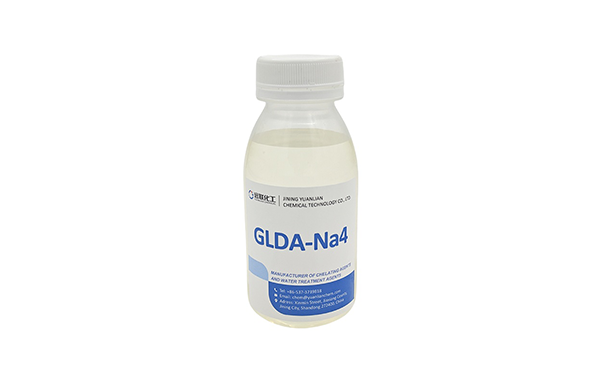
What makes GLDA exceptional for personal care is its combination of mildness and performance:
-
Excellent biodegradability – readily biodegradable under OECD 301B (>60% in 28 days) and also biodegradable in marine environments
-
Non-persistent – does not accumulate in the environment, unlike EDTA
-
Low skin irritation potential – non-irritant and non-sensitising in standard dermatological tests
-
High chelation strength – effectively binds calcium, magnesium, iron, and copper
-
Broad pH compatibility – stable from pH 3 to 12
-
No phosphorus – phosphate-free, aligning with EU environmental goals
Why European Personal Care Formulators Are Switching to GLDA
1. Foam Stability in Cleansing Products
Foam is not just about aesthetics. In shampoos, body washes, and facial cleansers, good foam formation and stability are directly linked to consumer perception of cleansing efficacy. Hard water – common across southern Europe, the UK, and parts of Germany – contains calcium and magnesium ions that react with anionic surfactants (e.g., sodium lauryl sulfate, sodium laureth sulfate, or milder alternatives like sodium cocoyl glutamate).
These metal ions form insoluble precipitates with surfactants, leading to:
-
Reduced foam volume
-
Poor foam creaminess and stability
-
Increased rinsing time
-
A "draggy" or "sticky" feel on skin or hair
GLDA chelates calcium and magnesium ions before they can interact with surfactants. The result is:
-
Richer, more stable foam – even in hard water areas
-
Improved cleansing feel – smoother, more lubricious
-
Reduced need for additional foam boosters – simplifying formulations
In side-by-side tests, a shampoo formulation containing GLDA produced 25–30% more foam volume in hard water (25°dH) compared to the same formula without a chelator – and equivalent to an EDTA-based formula.
2. Preservative Boosting and Microbial Stability
Preservation is one of the most challenging aspects of personal care formulation. Modern consumers want paraben-free, phenoxyethanol-free, or even preservative-free products – but no one wants a product that grows mould or bacteria on the bathroom shelf.
Metal ions – particularly iron and copper – catalyse the degradation of many preservatives. They can also act as nutrients for certain microorganisms, reducing the efficacy of the preservation system.
GLDA enhances preservative efficacy by:
-
Sequestrating metal ions that would otherwise degrade preservative molecules
-
Removing trace metals that support microbial growth
-
Allowing lower preservative concentrations while maintaining microbial safety
This is particularly valuable for "preservative-boosted" systems using multifunctional ingredients (e.g., benzyl alcohol, dehydroacetic acid, or organic acids). In challenge tests, a GLDA-containing formulation required 30–40% less preservative to achieve the same log reduction of bacteria and fungi compared to a non-chelated control.
For formulators targeting "clean beauty" or "preservative-free" claims (using self-preserving systems), GLDA is often an essential component.
3. Preventing Discolouration and Rancidity
Nothing destroys a premium personal care product faster than colour change or off-odours. Metal ions – especially iron, copper, and manganese – catalyse:
-
Oxidation of unsaturated oils and butters – leading to rancidity and unpleasant smells
-
Degradation of botanical extracts – many of which contain phenolic compounds that change colour when chelated metals are present
-
Discolouration of fragrances – some perfume ingredients are metal-sensitive
GLDA chelates these catalytic metals, protecting sensitive ingredients. In accelerated stability testing (40°C for 3 months), a facial serum containing GLDA showed no colour change or odour development, while the same formula without a chelator developed noticeable yellowing and a slightly rancid note.
4. Compatibility with Clean Beauty and Natural Certifications
The European personal care market has a complex landscape of clean beauty standards and certifications:
-
COSMOS Natural / Organic – widely recognised across the EU
-
Natrue – stricter naturality criteria
-
ECOCERT – common in France and southern Europe
-
BDIH – German standard for natural cosmetics
-
Vegan and Cruelty-Free certifications
GLDA is permitted under most of these standards, though it is considered a "nature-identical" or "derived from natural sources" ingredient (starting from glutamic acid, which is produced via fermentation). Unlike EDTA – which is increasingly restricted or excluded – GLDA is well accepted.
For brands targeting the fast-growing "Clean Beauty" segment (Sephora's "Clean + Planet Positive" or similar retailer programmes), GLDA provides a defensible, transparent chelation solution.
5. Dermatological Mildness for Sensitive Skin
Personal care products for sensitive skin – including baby shampoos, facial cleansers for rosacea or eczema, and intimate washes – require exceptional mildness. GLDA has been evaluated in standard dermatological tests:
-
Acute skin irritation (OECD TG 404) – non-irritant
-
Skin sensitisation (LLNA, OECD TG 429) – non-sensitiser
-
Eye irritation – mild to non-irritant at typical use concentrations
-
Human repeat insult patch test (HRIPT) – no evidence of contact allergy
In a comparative study of chelators in a leave-on facial toner formulation, GLDA showed a similar safety profile to EDTA. Both were well tolerated. However, from an environmental perspective, GLDA is clearly superior – a consideration increasingly important to European consumers.
Application Guidelines for GLDA in Personal Care
| Product Category | Typical GLDA Dosage (%) | Primary Benefits |
|---|---|---|
| Shampoos & body washes | 0.1–0.5% | Foam stability in hard water, milder cleansing feel |
| Facial cleansers | 0.1–0.3% | Foam quality, preservative boosting |
| Leave-on serums & lotions | 0.05–0.2% | Preventing discolouration, protecting antioxidants |
| Creams & moisturisers | 0.05–0.2% | Rancidity prevention, preservative boosting |
| Baby care (shampoo, wash) | 0.1–0.3% | Mildness, foam stability |
| Intimate washes | 0.1–0.3% | Preservative boosting, mild chelation |
| Micellar waters | 0.05–0.15% | Stabilisation, metal ion control |
Mixing guidelines: GLDA is water-soluble and can be added directly to the water phase during formulation. It is compatible with most anionic, non-ionic, and amphoteric surfactants, as well as with cationic conditioning polymers. It is stable across the typical pH range of personal care products (4–8).
Comparison with Traditional Chelators in Personal Care
| Parameter | EDTA | Sodium Phytate (natural chelator) | Citric Acid | GLDA |
|---|---|---|---|---|
| Biodegradability | Poor | Readily | Readily | Readily |
| Marine biodegradability | Poor | Moderate | Moderate | Excellent |
| Calcium binding (mg Ca/g) | ~220 | ~90 | ~80 | ~210 |
| Iron chelation | Excellent | Good | Poor | Excellent |
| Skin irritation potential | Very low | Very low | Low (can sting) | Very low |
| EU Ecolabel allowed | No | Yes | Yes | Yes |
| COSMOS allowed | No | Yes (as processed) | Yes | Yes (nature-identical) |
| Typical cost | Low | High | Low | Moderate |
EDTA remains the performance benchmark, but its environmental persistence is increasingly problematic. Sodium phytate (phytic acid) is a natural alternative but has weaker calcium binding and is significantly more expensive. Citric acid is cheap and biodegradable but lacks the iron chelation strength needed for many formulations. GLDA offers the best balance of performance, mildness, and sustainability.
European Consumer Trends Driving GLDA Adoption
The Microplastics and Persistence Debate
European consumers have become acutely aware of "persistent" chemicals – substances that do not break down in the environment. EDTA is not a microplastic, but it shares the same "non-biodegradable" concern. In Germany, France, and Scandinavia, brands are proactively removing EDTA to avoid future regulatory restrictions and consumer backlash.
The Rise of "Blue Beauty"
Beyond general sustainability, "Blue Beauty" – concern for aquatic ecosystems – is gaining traction in Europe. GLDA's excellent marine biodegradability gives it a distinct advantage over MGDA (which is freshwater-biodegradable but less so in marine environments). For brands selling to coastal or ocean-conscious consumers, this is a powerful differentiator.
Transparency and Ingredient Storytelling
Clean Beauty consumers want to understand where ingredients come from. GLDA's origin story – derived from glutamic acid, an amino acid found in seaweed, beets, and human skin – is easy to communicate. Brands can say: "GLDA helps our products work better and rinse away cleanly, leaving nothing behind but clean skin."
FAQ – Optimised for Voice Search and Formulator Questions
Is GLDA safe for baby products?
Yes. GLDA is non-irritant and non-sensitising, with a safety profile suitable for baby shampoos and washes. It is already used in European baby care products as an EDTA replacement.
Does GLDA count as "natural" in clean beauty?
GLDA is derived from glutamic acid, which is produced via fermentation from plant-based sugars. Under COSMOS and Natrue, it is considered "nature-identical" or "derived from natural sources." Always check with your certifier, but it is generally accepted.
Can GLDA replace EDTA completely in a personal care formula?
In most cases, yes. You may need slightly higher concentrations (10–20% more active) to match EDTA's calcium binding at very high hardness, but for typical personal care applications, direct replacement is feasible.
Does GLDA affect preservative efficacy?
Yes – positively. By removing metal ions that degrade preservatives and feed microorganisms, GLDA enhances preservative efficacy. It is often used specifically as a preservative booster.
Is GLDA compatible with cationic polymers (e.g., Polyquaternium-10)?
Yes. Unlike some anionic chelators, GLDA is compatible with cationic conditioning agents used in shampoos and conditioners at typical dosages.
What is the difference between GLDA and MGDA in personal care?
For personal care, both are mild and biodegradable. GLDA has superior marine biodegradability, which may be important for brands focused on ocean protection. MGDA is also an excellent choice; the difference is subtle.
Conclusion: GLDA Is the Clean Beauty Chelator for European Personal Care
The personal care industry in Europe is moving decisively toward cleaner, more sustainable formulations. Consumers demand it. Retailers reward it. And regulators are increasingly encouraging it.
GLDA (tetrasodium glutamate diacetate) offers formulators a way to deliver the performance consumers expect – stable foam, reliable preservation, and colour-protected formulations – without compromising on environmental values. It is mild on skin, tough on metal ions, and disappears cleanly after use.
Actionable recommendations for personal care formulators:
-
Test GLDA in your shampoo or body wash – Measure foam volume and stability in hard water (20–30°dH) and compare to your current chelator.
-
Review your preservative system – See if GLDA allows you to reduce preservative levels while maintaining challenge test pass rates.
-
Check your clean beauty certifications – If you are still using EDTA, consider whether GLDA would improve your environmental profile.
-
Assess total formulation cost – GLDA is more expensive than EDTA but cheaper than sodium phytate. Factor in preservative savings and marketing value.
-
Source from a reliable supplier – Consistency matters for consumer perception. Yuanlian Chemical provides high-purity, EU-compliant GLDA with full documentation.
The Clean Beauty revolution is not a passing trend. It is the new baseline. And GLDA is part of the solution.
Yuanlian Chemical specializes in the production of polyaspartic acid (PASP),tetrasodium iminodisuccinate(IDS), GLDA, MGDA etc. with stable quality and excellent quantity!

Contact us