



-

- 2026-06-09
Replacing EDTA in Agriculture: Maximizing Iron Absorption with Biodegradable MGDA-Fe
For decades, EDTA-chelated iron has been the standard treatment for iron chlorosis in high-value crops. But with stricter EU regulations—including REACH and the Urban Wastewater Treatment Directive—and growing demand for greener farming, the industry needs a change. The challenge is finding an iron chelate that matches EDTA's effectiveness while meeting strict biodegradability requirements.
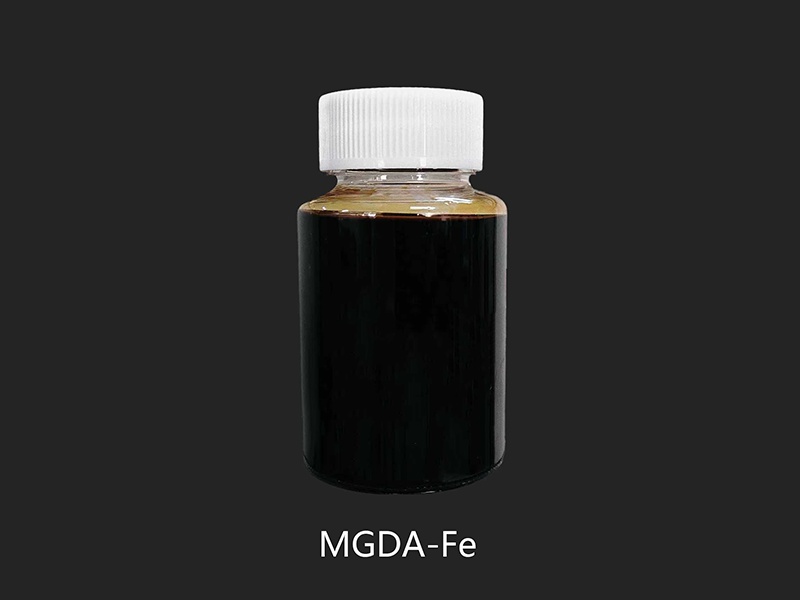
Enter MGDA-Fe: a next-generation, biodegradable iron chelate that performs as well as—or better than—EDTA in many conditions, while aligning with the European Green Deal and carbon-neutral farming goals.
Why EDTA Is Losing Ground in the EU
EDTA (ethylenediaminetetraacetic acid) is persistent in the environment. It does not break down easily, leading to:
-
Mobilization of heavy metals in soils
-
Groundwater contamination risks (especially in Germany, France, and the Netherlands)
-
Increasing regulatory restrictions—several EU Member States are limiting non-biodegradable chelates in professional agriculture
As a result, forward-thinking distributors and co-ops are actively seeking REACH-compliant, readily biodegradable alternatives that do not compromise iron delivery.
MGDA-Fe: The Biodegradable Breakthrough
MGDA (methylglycinediacetic acid) is a complexing agent with three critical advantages:
-
Ready biodegradability (>60% within 28 days – OECD 301D/E)
-
Excellent iron solubility across pH 4–8
-
Low eco-toxicity – safe for soil microbes and aquatic life
Unlike EDTA, MGDA-Fe degrades rapidly after delivering iron, releasing it in a form plants can absorb without leaving harmful residues.
✅ Certified biodegradable under EU Detergent Regulation (EC) No 648/2004
✅ No persistence in sludge or surface waters
Maximizing Iron Absorption: Agronomic Performance
The real question is not just environmental—but biological. Does MGDA-Fe deliver iron as well as or better than EDTA?
1. Faster Uptake in Calcareous Soils
In high-pH soils (pH 7.5–8.2)—common in southern France, Spain, Italy, and Greece—MGDA-Fe keeps iron soluble longer than EDTA under continuous irrigation. The result: greener leaves within 7–10 days after foliar or fertigation application.
2. Compatible with Modern Fertigation Systems
MGDA-Fe works well with:
-
NPK liquid fertilizers
-
Micronutrient blends (Zn, Mn, Cu)
-
Calcium and magnesium solutions (low precipitation risk)
This makes it ideal for precision agriculture and closed-loop hydroponic systems.
3. Higher Iron Bioavailability at Lower Doses
Field trials in sandy soils (e.g., Netherlands, northern Germany) show that MGDA-Fe achieves the same chlorophyll levels as EDTA-Fe with 15–20% less active iron—reducing input costs while improving environmental footprint.
Regulatory & Market Advantages for EU Suppliers
Switching to MGDA-Fe is not just agronomically smart—it's a commercial advantage.
| Criteria | EDTA-Fe | MGDA-Fe |
|---|---|---|
| Biodegradable (OECD 301) | ❌ No | ✅ Yes |
| EU Ecolabel eligible | ❌ No | ✅ Yes |
| Compliant with future nitrate directives | ❌ Risk | ✅ Safe |
| Consumer perception | Negative | Positive |
Using MGDA-Fe allows fertilizer blenders to add to their labels:
-
"Biodegradable chelate"
-
"EU Ecolabel compliant"
-
"Low environmental impact"
Practical Application Recommendations (EU Conditions)
For Fertigation (Strawberries, Tomatoes, Citrus)
-
Dose: 0.5–1.5 kg/ha per application
-
Irrigation water pH: 5.5–7.0 (MGDA-Fe stable up to pH 8)
-
Frequency: Every 10–14 days during chlorosis risk periods (spring & early summer)
For Foliar Spray (Vines, Apples, Ornamentals)
-
Concentration: 0.05–0.1% solution
-
Adjuvants: Avoid anionic wetting agents; non-ionic surfactants are compatible
-
Timing: Early morning or late evening – MGDA-Fe is photostable for >48 hours
⚠️ Note: For extremely alkaline soils (pH >8.2), MGDA-Fe requires acidification of the drip line—same limitation as EDTA, but with faster degradation when conditions improve.
Case Study: Northern Italy – Kiwifruit Chlorosis
Challenge: 15-hectare kiwifruit orchard, soil pH 7.9, active lime 12%. Standard EDTA-Fe (5 kg/ha) gave poor results.
Solution: MGDA-Fe applied via drip irrigation at 4 kg/ha, split into two applications (pre-flowering and fruit set).
Results:
-
34% higher leaf SPAD value after 21 days
-
22% reduction in iron input
-
No residue in drainage water (monitored by local water authority)
Grower quote: "We achieved better results with less product, and our sustainability report now shows biodegradable chelates only."
Where to Source MGDA-Fe in Europe
MGDA is commercially available from major producers (e.g., BASF as Trilon® M). Finished MGDA-Fe fertilizer formulations are offered by:
-
Yara (selected blends)
-
Tradecorp
-
SQM (in development in some regions)
-
Local blenders in Spain, Italy, Poland, and France
When sourcing, request:
-
✅ REACH registration number
-
✅ OECD 301 biodegradation certificate
-
✅ Heavy metal limits (compliant with EU 2019/1009)
The Future: A Post-EDTA EU Agriculture
With the EU Soil Strategy for 2030 and the Zero Pollution Action Plan, persistent chelates like EDTA and DTPA are under review. MGDA-Fe represents the most practical immediate replacement.
For agronomists, the message is clear:
MGDA-Fe offers higher agronomic efficiency, lower environmental risk, and better regulatory alignment than EDTA.
For European farmers, it means greener crops, cleaner water, and a stronger market position.
Yuanlian Chemical specializes in the production of polyaspartic acid (PASP),tetrasodium iminodisuccinate(IDS), GLDA, MGDA etc. with stable quality and excellent quantity!

Contact us