



-

- 2026-06-15
How Polyaspartic Acid (PASP) Enhances Fertilizer Efficiency and Crop Yield
A Practical Solution for European Growers Facing Rising Input Costs
Ask any farmer in Germany, France, or the Netherlands what keeps them up at night right now, and you will hear the same answer. Fertiliser prices. Nitrogen, phosphate, potash—everything has become more expensive. At the same time, environmental regulations under the EU Green Deal are pushing growers to cut nutrient runoff and use inputs more efficiently.
The old approach of applying more fertiliser to get better yields no longer works. It costs too much, and the regulators are watching.
So what is the alternative? Polyaspartic acid (PASP) has been quietly used in agriculture for years, but only recently have European growers started paying attention. It is not a fertiliser. It is something better—a biodegradable polymer that makes fertilisers work harder.
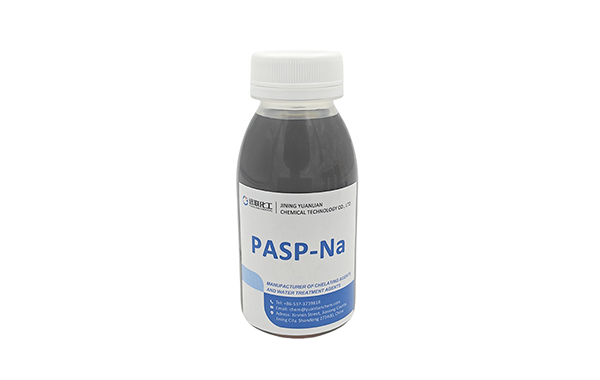
What Is Polyaspartic Acid?
PASP is a water-soluble, biodegradable polymer. Chemically, it mimics natural proteins because it is made from aspartic acid—an amino acid found in all living things.
What makes it special for agriculture is its ability to chelate nutrient ions. Think of it as a carrier. It grabs onto calcium, magnesium, iron, zinc, and other nutrients, keeping them soluble and available to plant roots. Without something like PASP, those ions can precipitate out of the soil solution or become fixed in forms that crops cannot access.
Key properties for agriculture:
| Property | Value |
|---|---|
| Biodegradability | Ready (OECD 301) |
| Water solubility | Complete |
| Non-toxic | No hazard classification |
| Stability in soil | Days to weeks (sufficient for crop uptake) |
Unlike synthetic polymers that persist in the soil, PASP breaks down into harmless natural components. That matters for European growers who face increasing scrutiny on soil health.
How PASP Improves Fertiliser Efficiency
1. Reduces Nutrient Loss
When you apply fertiliser, a significant portion never makes it into the crop. Nitrogen volatilises. Phosphorus gets fixed by calcium and iron in the soil. Potassium leaches below the root zone.
PASP reduces these losses by keeping nutrients in a plant-available form. Studies have shown that PASP can reduce nitrogen leaching by 20–30% and phosphorus fixation by similar margins. That means more of what you apply actually feeds the crop.
2. Enhances Nutrient Uptake
Even when nutrients are present in the soil, roots cannot always access them. PASP acts as a nutrient carrier, moving ions toward the root surface. Research on corn and wheat has shown that PASP-treated fertiliser can increase nitrogen uptake efficiency by 15–25% compared to conventional fertiliser alone.
3. Supports Root Development
There is some evidence that PASP stimulates root growth indirectly. When nutrients are more available, roots do not need to work as hard to find food. The result is a healthier, more extensive root system that can access water and nutrients deeper in the soil profile. For drought-prone regions like southern Europe, that is a real advantage.
Impact on Crop Yield
The proof is in the field results. Here is what European trials have shown.
Winter wheat (Germany): Growers using PASP-coated urea achieved 8–12% higher yields compared to standard urea at the same nitrogen rate. Protein content also improved slightly.
Corn (France, Italy): PASP added to starter fertiliser increased early-season growth and final grain yield by 7–10%. The effect was most pronounced in sandy, low-organic-matter soils.
Vegetables (Spain, Netherlands): Tomato and pepper trials showed better fruit set and fewer nutrient deficiencies when PASP was included in the fertigation programme.
These are not lab-scale miracles. These are commercial field results.
Environmental Benefits That Matter in Europe
The EU Fertilising Products Regulation (2019/1009) encourages technologies that reduce nutrient losses and lower the environmental footprint of farming. PASP fits squarely within that framework.
Less nitrogen runoff. That means fewer algal blooms in waterways like the Baltic Sea and the Dutch delta.
Lower fertiliser use. If PASP allows you to cut nitrogen rates by 10–15% while maintaining yield, your input costs drop and your carbon footprint shrinks.
No soil buildup. Because PASP is readily biodegradable, it does not accumulate in the soil season after season. Growers can use it every year without concern.
How to Use PASP in Practice
Coated fertilisers. Many European fertiliser blenders now offer PASP-coated urea, NPK blends, or micronutrient packages. The coating is applied at 0.5–2% of the fertiliser weight.
Liquid fertiliser additives. For growers using fertigation, PASP can be added directly to the nutrient tank at a rate of 1–5 litres per hectare per application, depending on concentration.
Foliar sprays. PASP is also effective in foliar formulations, helping nutrients penetrate the leaf surface and remain available longer.
What to Look for When Buying PASP
Not all PASP is the same. For agricultural use, focus on:
Molecular weight. Low to medium molecular weight (2,000–10,000 Da) works best for nutrient chelation and uptake.
Solubility. Should be fully water-soluble with no residues.
Biodegradability data. OECD 301 certification is the standard.
Heavy metal limits. Contaminants can damage soil microbiology. Request a Certificate of Analysis.
REACH compliance. If you are buying from outside the EU, ensure your supplier has registration in place.
The Bottom Line
European agriculture is being asked to do more with less. Less fertiliser, less runoff, less environmental impact. But also less cost.
Polyaspartic acid is not a magic solution. It is a practical tool. It helps fertiliser work harder, reduces nutrient losses, and supports better yields without adding persistence or toxicity to the soil.
For growers tired of watching expensive fertiliser wash away or lock up in the soil, PASP is worth a serious look.
Yuanlian Chemical specializes in the production of polyaspartic acid (PASP),tetrasodium iminodisuccinate(IDS), GLDA, MGDA etc. with stable quality and excellent quantity!

Contact us