



-

- 2026-06-25
Unlocking Phosphorus and Nitrogen: How Polyaspartic Acid Enhances Crop Uptake
The Nutrient Availability Problem in Modern Agriculture
Applying fertiliser does not always mean crops get the nutrients they need. A significant portion of applied nitrogen and phosphorus never reaches the plant. Nitrogen volatilises into the air or leaches below the root zone. Phosphorus reacts with calcium, iron, and aluminium in the soil, forming insoluble compounds that roots cannot access.
This inefficiency is not just a cost issue. It is an environmental concern. Excess nitrogen and phosphorus in waterways contribute to eutrophication and algal blooms. European growers face tightening regulations on nutrient runoff, making every kilogram of fertiliser count.
Polyaspartic acid (PASP) offers a practical way to address both problems. It is a biodegradable polymer that helps plants access more of the nutrients already in the soil, reducing waste and improving crop performance.
What Is Polyaspartic Acid?
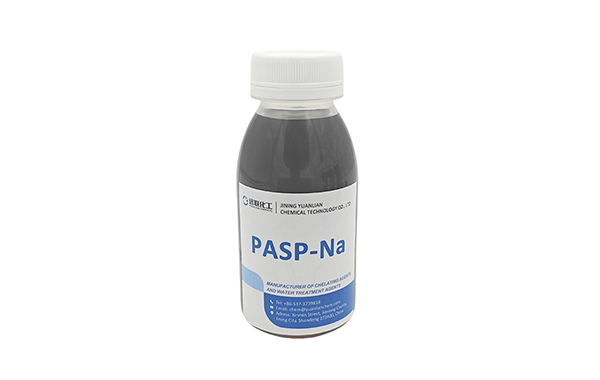
PASP is a water-soluble polymer derived from aspartic acid, an amino acid found naturally in proteins . It is produced commercially from L-aspartic acid and is fully biodegradable, breaking down into carbon dioxide and water over a growing season without leaving harmful residues .
The polymer carries negatively charged chemical groups that attract positively charged nutrient ions—ammonium, potassium, calcium, magnesium—from the surrounding soil . This draws nutrients toward the root zone, where plants can absorb them. Phosphates, which are negatively charged, may be carried along with their positively charged counterparts .
What makes PASP particularly valuable is its dual action. It not only concentrates nutrients around roots but also helps release phosphorus that would otherwise remain tightly bound to soil particles .
How PASP Enhances Nitrogen Uptake
Nitrogen is the most limiting nutrient in most cropping systems. PASP has been shown to improve nitrogen use efficiency through several mechanisms.
Increased nitrogen assimilation. Research on maize seedlings demonstrated that PASP applied as a foliar spray significantly increased biomass and nitrogen accumulation, especially under low nitrate conditions . The effect was linked to increased nitrate reductase activity—the enzyme responsible for converting nitrate into a form plants can use . In rice, PASP application increased nitrogen use efficiency by 13.20% and grain yield by 20.46% .
Reduced nitrogen losses. A field study on rice found that PASP application reduced ammonia volatilisation by 17.22% compared to conventional fertilisation . Nitrous oxide emissions decreased by 25.29% . The polymer also increased nitrogen retention in the 30–60 cm soil layer, reducing leaching losses .
Enhanced soil nitrogen availability. Research using ¹⁵N tracer techniques showed that urea combined with PASP promoted crop uptake of both fertiliser nitrogen and native soil nitrogen . Medium and high doses of PASP increased nitrogen uptake by 10.84–18.25% while reducing nitrogen loss by 5.41–14.58 percentage points .
Improved soil microbiology. PASP application has been shown to reshape the soil bacterial community, attracting nitrification-related bacteria that reduce nitrogen loss and beneficial genera involved in the nutrient cycle, pathogen suppression, and hormone production .
How PASP Enhances Phosphorus Uptake
Phosphorus presents a different challenge. Unlike nitrogen, which moves through the soil with water, phosphorus is largely immobile. It forms insoluble compounds with calcium (in calcareous soils) or iron and aluminium (in acidic soils), making it unavailable to crops.
Dislodging bound phosphorus. PASP may help release phosphorus bound to soil particles, making it accessible to plant roots . This is particularly valuable in low to moderately fertile soils where phosphorus fixation limits crop growth .
Improved phosphorus fertiliser efficiency. Research on PASP-modified phosphorus fertilisers showed increased soil alkaline phosphatase activity by 6.55–7.04%, improving phosphorus availability . Middle and high molecular weight PASP formulations increased soil available phosphorus by 15.10% and 11.21%, respectively, compared to conventional phosphorus fertiliser . PASP-modified phosphorus fertilisers improved phosphorus fertiliser apparent use efficiency by 3.24–4.44 percentage points .
Balanced nutrient uptake. PASP application not only improves nitrogen and phosphorus uptake but also enhances potassium absorption. In rice studies, PASP increased potassium uptake, supporting overall crop growth . In wheat, PASP application increased nitrogen, phosphorus, and potassium uptake by significant margins, with medium molecular weight PASP showing the best results .
Molecular Weight Matters
PASP is available in different molecular weight fractions, and the choice affects performance.
Research has shown that medium molecular weight PASP (3–5 kDa) provides the best balance for promoting root growth and overall nutrient uptake in wheat . High molecular weight PASP (>10 kDa) performs well for nitrogen retention and yield improvement, with urea enhanced with high molecular weight PASP increasing wheat yield by 9.77% and nitrogen use efficiency by 2.54 percentage points .
Peptide bonds and carboxyl groups are the key structural features that drive PASP's effectiveness. Higher molecular weight PASP contains more peptide bonds, while medium molecular weight PASP contains more carboxyl groups. Both contribute to enhanced root growth and nutrient absorption .
Practical Applications
Coated fertilisers. PASP can be applied as a coating on urea or other granular fertilisers. The polymer slows nitrogen release and reduces losses .
Fertiliser additives. Liquid PASP can be blended with liquid fertilisers or added to irrigation water. Application rates typically range from 10–50 mg/L, depending on the crop and soil conditions .
Foliar sprays. PASP applied as a foliar spray can stimulate nitrogen assimilation and improve crop response to subsequent soil-applied nutrients .
The Bottom Line
Polyaspartic acid is not a fertiliser. It is a tool that makes fertiliser work harder. By concentrating nutrients around roots, reducing nitrogen losses, and improving phosphorus availability, PASP allows growers to achieve better yields with less input.
For European agriculture facing rising fertiliser costs and tightening environmental regulations, PASP offers a practical, science-backed solution.
Yuanlian Chemical specializes in the production of polyaspartic acid (PASP),tetrasodium iminodisuccinate(IDS), GLDA, MGDA etc. with stable quality and excellent quantity!

Contact us