



-

- 2026-07-03
Advanced Micronutrient Delivery: Formulating High-Stability Zinc and Iron Chelates with PASP
The Challenge of Micronutrient Availability
Zinc and iron deficiencies are among the most common nutrient limitations in European cropping systems. The problem is not usually a lack of these elements in the soil—it is that they are not in forms plants can access. In alkaline or calcareous soils, which cover large areas of southern and eastern Europe, zinc and iron form insoluble precipitates that remain locked in the soil profile. In neutral and alkaline conditions, iron exists largely as insoluble ferric oxides and hydroxides that roots simply cannot absorb.
Traditional chelating agents like EDTA have been the standard solution. They keep micronutrients soluble and available. But EDTA does not break down in the environment. It persists in soil and water, and European regulators are increasingly restricting its use. For formulators looking to develop sustainable micronutrient products, the question is not whether to move away from EDTA, but what to use instead.
Polyaspartic acid (PASP) offers a compelling alternative. It is a biodegradable polymer that forms stable complexes with iron, zinc, and other essential micronutrients, keeping them soluble and plant-available across a wide range of soil conditions.
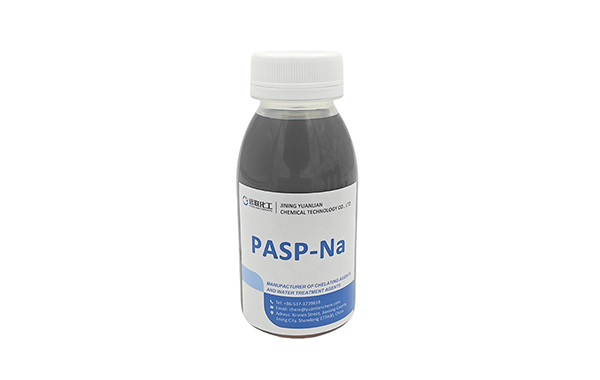
How PASP Chelates Micronutrients
PASP is a water-soluble polymer built from aspartic acid units. Its molecular structure contains carboxyl groups and amide bonds that act as chelating sites, binding metal ions into stable, water-soluble complexes . The polymer has a strong affinity for both heavy metals (iron, zinc, copper, manganese) and alkaline earth metals (calcium, magnesium) .
The chelation mechanism is straightforward. The carboxyl groups on the PASP chain coordinate with metal ions, surrounding them and preventing them from reacting with other soil components. This keeps the micronutrients in solution long enough for plant roots to absorb them. Research has demonstrated that PASP can effectively bind iron (Fe³⁺) and zinc (Zn²⁺), among other metals, making them more available to crops .
A recent study on PASP hydrogels demonstrated the practical application of this chelation ability. Researchers loaded copper and zinc ions into biodegradable PASP hydrogels as micronutrient sources, confirming that the polymer can effectively deliver these metals to plants .
Stability and Performance in Formulation
For a chelate to be useful in commercial fertiliser formulations, it must remain stable across a range of conditions. PASP performs well on this front.
pH tolerance. PASP maintains its chelating ability across the pH range relevant to most agricultural soils and nutrient solutions. Unlike some chelates that lose efficacy at higher pH values, PASP continues to bind metal ions effectively in alkaline conditions—precisely where zinc and iron deficiencies are most common .
Temperature stability. PASP remains chemically stable at the temperatures encountered during fertiliser production, storage, and field application. This makes it suitable for both liquid formulations and coated granular products.
Water solubility. The sodium salt form of PASP is fully water-soluble, allowing it to blend easily into liquid fertilisers and fertigation systems without clogging or precipitation .
Slow-release capability. Unlike EDTA, which releases its metal load relatively quickly, PASP can provide a degree of slow-release functionality. This means micronutrients remain available to plants over a longer period, improving uptake efficiency and reducing waste .
Molecular Weight Considerations
Not all PASP behaves identically in formulation. Research has shown that molecular weight affects chelation performance.
Studies on immobilized polyaspartic acid have demonstrated that metal binding capacity increases with chain length . The molecular weight of PASP influences both the chelating strength and the availability of the polymer-metal complex to plants.
For zinc and iron chelate formulations, medium to high molecular weight PASP generally provides the best balance of stability and availability. Formulators should verify the molecular weight profile of their PASP source and adjust formulation parameters accordingly.
PASP vs EDTA: A Practical Comparison
The case for PASP rests on performance and environmental profile.
| Property | PASP | EDTA |
|---|---|---|
| Biodegradable (OECD 301) | Yes | No |
| Iron chelation strength | Strong | Strong |
| Zinc chelation strength | Strong | Strong |
| Slow-release capability | Yes | Limited |
| Soil improvement | Yes | No |
| Environmental persistence | None | High |
For European formulators targeting EU Ecolabel certification or responding to retailer sustainability requirements, the biodegradability difference is decisive.
Practical Formulation Guidelines
For formulators developing PASP-based zinc and iron chelates:
Recommended concentration. PASP is typically used at 0.5–1.5% in liquid fertiliser formulations . For solid or coated products, application rates depend on the nutrient load and release profile.
Chelate preparation. PASP readily complexes with zinc and iron ions when mixed in aqueous solution. The process does not require heating or special equipment.
Compatibility. PASP is compatible with most common fertiliser components, including nitrogen, phosphorus, and potassium sources . It also works alongside biostimulants and other agricultural additives.
pH adjustment. For zinc and iron chelates, maintaining the formulation pH in the range of 7–9 ensures optimal stability. At lower pH values, the chelate may release the metal prematurely.
The Bottom Line
PASP offers a biodegradable, effective alternative to EDTA for formulating high-stability zinc and iron chelates. It binds metal ions strongly, keeps them soluble across a wide pH range, and provides a degree of slow-release functionality. And it biodegrades completely—no persistence, no regulatory headaches.
For European formulators developing sustainable micronutrient products, PASP is a practical, science-backed solution.
Yuanlian Chemical specializes in the production of polyaspartic acid (PASP),tetrasodium iminodisuccinate(IDS), GLDA, MGDA etc. with stable quality and excellent quantity!

Contact us