


-

- 2026-07-07
Optimizing Slump Retention: Amino Acid Retarders for Gypsum Self-Leveling Mortar
In the modern dry-mix construction sector, calcium sulfate-based self-leveling underlayments (screeds) are rapidly gaining market share over traditional cementitious alternatives. Their minimal shrinkage, excellent thermal conductivity for underfloor heating, and self-stress-relieving properties make them highly favored under European construction guidelines.
However, achieving an optimal floor finish relies on a critical rheological window: slump retention. The mortar must maintain high fluidity (slump flow) for an extended period—typically between 45 to 60 minutes—to ensure uniform self-leveling before the initial set occurs.
When configuring these highly fluid systems, selecting the appropriate retarder is essential. While traditional organic acids are often chosen to delay setting times, they frequently undermine slump retention and final mechanical performance. This guide examines how advanced amino acid technology resolves these challenges in gypsum self-leveling mortar formulations.
1. The Slump Retention Challenge in Self-Leveling Formulations
Gypsum self-leveling systems generally incorporate either alpha-pyrocaust (calcium sulfate alpha-hemihydrate, α-CaSO4 · 0.5H2O) or synthetic variants like Flue-Gas Desulfurization (FGD) gypsum. The primary formulation challenge is maintaining the structural fluidity introduced by polycarboxylate ether (PCE) superplasticizers over an extended application window.
Traditional retarders, such as citric acid, interact aggressively with the system:
- Adsorption Competition: Citric acid molecules compete with PCE superplasticizers for adsorption sites on the early-stage calcium sulfate crystal nuclei. This displaces the superplasticizer, leading to a sudden drop in early slump flow.
- Erratic Viscosity Spikes: The non-selective inhibition of crystal growth causes an unstable hydration curve, often resulting in sudden viscosity spikes mid-application, which can create visible surface waves and uneven floor levels.
2. The Mechanism of Amino Acid Slump Optimization
Synthesized amino acid retarders operate via a linear, crystal-selective mechanism that works in harmony with high-efficiency superplasticizers.
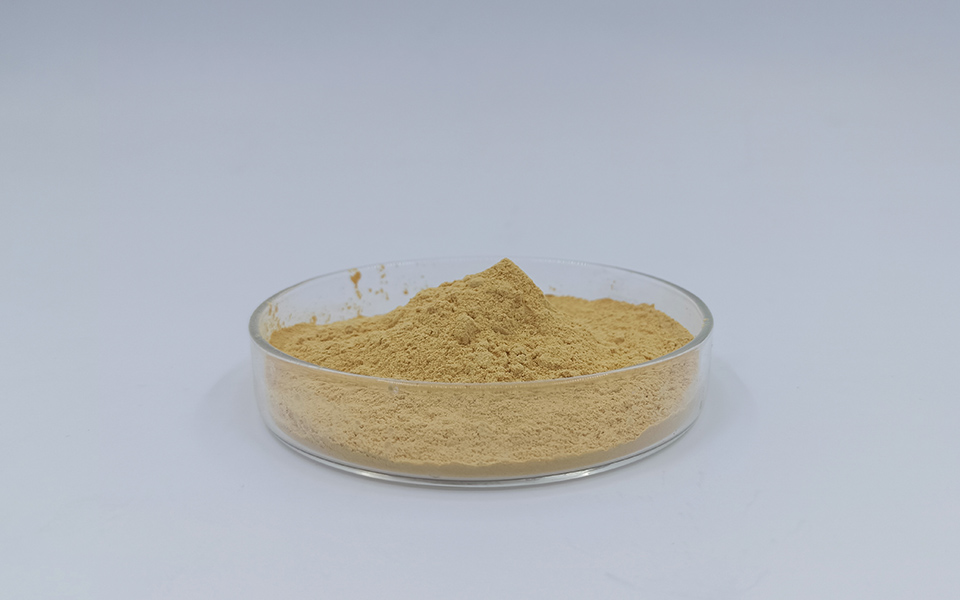
Rather than chelating calcium ions indiscriminately, the multi-functional groups of the amino acid form a temporary, stable complexation layer on the surfaces of the hemihydrate particles. This delays the initial dissolution rate without altering the spatial distribution or performance of the PCE polymers.
As a result, the mortar maintains its target slump flow smoothly throughout the entire workability window. Once this temporary barrier breaks down, hydration proceeds rapidly and uniformly, avoiding the delayed strength development associated with traditional organic acids.
3. Upstream Manufacturing Support: Yuanlian Chemical
For large-scale dry-mix mortar producers supplying the European marketplace, matching additive performance with strict supply chain consistency is essential. Yuanlian Chemical, an established manufacturer specializing in high-purity biodegradable additives, supports the construction chemical sector with a robust infrastructure optimized for industrial demand:
- Dedicated R&D Infrastructure: Yuanlian Chemical operates a specialized laboratory focused on cementitious and gypsum rheology. This allows the engineering team to optimize granular size distributions and linear retarding profiles specifically for complex, multi-component self-leveling formulations.
- Scale and Consistency: Utilizing advanced automated production lines, the company maintains a stable domestic and export manufacturing capacity, ensuring that every batch exhibits exact chemical purity and uniform active content.
- Technical Customization Services: Recognizing that natural alpha-hemihydrate, FGD gypsum, and phosphogypsum carry varying localized impurities, Yuanlian Chemical provides dedicated technical consultation and matching services to tailor retarder behavior to specific industrial substrates.
4. Formulation Synergy with Dry-Mix Additives
Advanced amino acid retarder powders integrate seamlessly into modern self-leveling dry-mix formulations, providing several key operational benefits:
Compatibility with Defoamers and PCEs
In self-leveling mortars, maintaining a defect-free, mirror-like surface requires pristine air-void management. Amino acid chemistries exhibit zero surface activity, ensuring they do not destabilize powder defoamers or interfere with the electrosteric dispersion of PCEs.
Elimination of Surface Pinholes and Cracking
Because hydration proceeds uniformly across the entire cross-section of the floor layer, shrinkage stresses are minimized. This significantly reduces the risk of surface skinning, pinholes, or micro-cracking during the critical curing phase.
Environmental Alignment
Completely biodegradable and free of toxic chlorides or volatile organic compounds (VOCs), these additives allow finished dry-mix formulations to align smoothly with indoor air-quality standards and European eco-label expectations.
5. Strategic Evaluation
Optimizing slump retention in gypsum self-leveling mortars requires a careful balance between extended fluidity and stable mechanical development. Switching from traditional competitive retarders to advanced amino acid technologies enables formulators to maintain a flat, predictable viscosity curve over 60 minutes. Supported by the specialized manufacturing, R&D capabilities, and tailored technical services of partners like Yuanlian Chemical, dry-mix producers can confidently deliver high-performance flooring solutions that satisfy the most rigorous modern application standards.
Yuanlian Chemical specializes in the production of polyaspartic acid (PASP),tetrasodium iminodisuccinate(IDS), GLDA, MGDA etc. with stable quality and excellent quantity!

Contact us