


-

- 2026-07-30
GLDA (Tetrasodium Glutamate Diacetate) – The Complete Guide to the Biodegradable Chelating Agent
As global environmental regulations tighten, industrial formulators and procurement managers face mounting pressure to eliminate persistent synthetic chelating agents. Legacy sequestering agents like Ethylene Diamine Tetraacetic Acid (EDTA) and Nitrilotriacetic Acid (NTA) present significant aquatic toxicity and persistence risks. With REACH restrictions, EU Ecolabel criteria, and microplastic/bioaccumulation limitations enforcing strict environmental compliance, the chemical industry is accelerating its transition toward sustainable alternatives. Tetrasodium Glutamate Diacetate (GLDA) has emerged as a premier bio-based solution. Derived from natural, renewable L-glutamic acid, GLDA combines strong multivalent cation chelation, exceptional thermal and pH stability, and rapid environmental degradation with a zero-phosphorus profile. This comprehensive guide delivers essential technical parameters, structural performance comparisons against legacy chelates, multi-industry applications, global sourcing insights, and handling protocols to support your technical evaluation. Tetrasodium Glutamate Diacetate belongs to the aminopolycarboxylate family. It is synthesized through the carboxymethylation of L-glutamic acid followed by complete sodium neutralization. Commercial GLDA is primarily supplied as a high-purity, aqueous liquid solution to ensure maximum ease of dosing and continuous liquid blending operations. Selecting the optimal chelating agent requires evaluating complexation constants, thermal thresholds, and environmental fate. Under standard OECD 301D (Closed Bottle Test) conditions, GLDA achieves >80% biodegradation within 28 days, satisfying the criteria for "Ready Biodegradability." Soil and water microorganisms easily cleave its natural amino acid backbone. In contrast, EDTA exhibits persistent environmental stability (<20% degradation over 28 days), accumulating in aquatic ecosystems and mobilizing toxic heavy metals in riverbed sediments. Note on Stereochemistry: The rapid biodegradation of GLDA depends strictly on using pure L-glutamic acid as the raw material. The natural L-enantiomer is rapidly recognized and metabolized by environmental bacteria. Chelating performance is measured by binding capacity per unit weight. Due to its optimized molecular mass and spatial arrangement of carboxylic ligand groups (-COO-Na+), GLDA offers superior binding stoichiometry: Calcium Binding Capacity = (Mass of Bound Ca2+) / (Mass of Active Chelating Agent) This 18% higher calcium binding efficiency allows formulators to reduce total chelating raw material usage, delivering lower formulation costs alongside environmental compliance. GLDA possesses synergistic antimicrobial capabilities. Gram-negative bacteria protect their outer cell membranes using divalent cations (Ca2+ and Mg2+) to bridge lipopolysaccharide (LPS) structures. By sequestering these stabilizing surface cations, GLDA disrupts the bacterial outer membrane, increasing its permeability to active preservatives. Incorporating GLDA into personal care or industrial formulations can reduce required preservative dosages by up to 50%, boosting efficacy against Escherichia coli and Pseudomonas aeruginosa at acidic to neutral pH (pH 4.0–6.0). GLDA is widely used as a zero-phosphorus builder and scale controller in homecare and institutional cleaning formulations: In personal care, GLDA stabilizes formulations without causing skin irritation or environmental bioaccumulation: GLDA serves as an environmentally safe chelating ligand for agricultural micronutrient delivery: Recent dust suppression research highlights GLDA as a performance enhancer in industrial wetting solutions. When combined with non-ionic or anionic surfactants, GLDA dissolves mineral incrustations on coal particle surfaces. This chemical action increases coal surface polarity and lowers water contact angles down to 18°, enabling rapid wetting and high-efficiency dust suppression in mining and bulk transport operations. The global GLDA market is experiencing rapid expansion driven by strict environmental mandates restricting EDTA, NTA, and phosphates. When establishing supply chains for GLDA, procurement teams evaluate both primary international innovators and large-scale synthesis specialists: For most liquid detergents, personal care products, and water treatment formulations, procuring GLDA in liquid form (38% to 47% active content) provides optimum cost efficiency. Aqueous GLDA eliminates the energy-intensive spray-drying costs required for solid powders, offering a lower carbon footprint and seamless pump-and-meter liquid production. GLDA liquid solutions are alkaline (pH 10.0–12.0). Standard industrial handling protocols apply:Introduction
Section 1: Chemical Identity & Key Specifications
1.1 CAS Numbers & Synonyms
       COONa
         |
       CH-N(CH2COONa)2
         |
       CH2
         |
       CH2
         |
       COONa
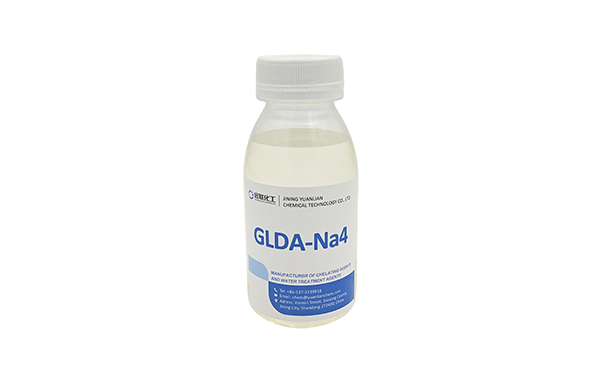
1.2 Product Forms & Specifications
┌─────────────────────────────────────────────────────────────┐
│                 Commercial GLDA Formats                     │
├──────────────────────────────┬──────────────────────────────┤
│    Liquid Solution Grade     │      Powder / Solid Grade    │
│  (Primary Commercial Supply) │   (Specialized / Dry-Blend)  │
├──────────────────────────────┼──────────────────────────────┤
│ • Active Content: 38% - 47%  │ • Active Content: ≥ 88%      │
│ • Clear, pale yellow liquid  │ • Fine, off-white powder     │
│ • Instant aqueous dilution   │ • Reduced shipping volume    │
└──────────────────────────────┴──────────────────────────────┘
Section 2: How GLDA Outperforms EDTA, NTA, and MGDA
                         BIODEGRADABILITY & ECOLOGICAL PROFILE
                      High / Rapid ◄────────────► Low / Persistent
                  ┌──────────────────────────────────────────────┐
  CHELATION       │ GLDA (186 mg Ca²⁺/g)   │ EDTA (158 mg Ca²⁺/g) │
  CAPACITY  High  │ MGDA (165 mg Ca²⁺/g)   │                      │
                  ├────────────────────────┼──────────────────────┤
            Low   │ Citrate                │ NTA (Carcinogenic)   │
                  └────────────────────────┴──────────────────────┘
Parameter / Feature
GLDA (Tetrasodium Glutamate Diacetate)
EDTA (Tetrasodium EDTA)
NTA (Trisodium NTA)
MGDA (Trisodium MGDA)
Primary CAS
51981-21-6
64-02-8
5064-31-3
164462-16-2
Origin / Carbon Source
Bio-based (L-Glutamic Acid)
Synthetic / Petrochemical
Synthetic / Petrochemical
Bio-based / Synthetic
OECD 301D Biodegradability
>80% in 28 days (Ready)
<20% in 28 days (Persistent)
>60% (Suspicious breakdown)
>80% in 28 days (Ready)
Calcium Chelation Capacity
186 mg Ca2+/g
158 mg Ca2+/g
160 mg Ca2+/g
165 mg Ca2+/g
Thermal Stability
Stable up to 170°C
Degrades >150°C
Degrades >130°C
Stable up to 150°C
Acidic Solubility (pH 1.0)
High (~35 wt%)
Very Poor (<0.1 wt%)
Low
Moderate
Regulatory Profile
EU Ecolabel / COSMOS Approved
Restricted / Listed
Class 2B Carcinogen Risk
EU Ecolabel Compliant
2.1 Biodegradability: Ready vs. Persistent
2.2 Calcium Chelation Capacity: 18% Higher Than EDTA
2.3 Thermal Stability & Wide pH Solubility
Solubility at pH 1.0:
GLDA: [====================================] ~35.0 wt%
EDTA: [*] <0.1 wt% (Precipitates)
2.4 Unique Preservative Boosting Function
[Bacterial Cell Membrane] ──(Ca²⁺/Mg²⁺ Bridges)──> [Intact Outer Shield]
                                   │
                           + [GLDA Chelation]
                                   │
                                   ▼
[Disrupted Membrane] ──(Increased Permeability)──> [50% Less Preservative Required]
Section 3: Industrial Applications
3.1 Detergents & Industrial Cleaning
3.2 Personal Care & Cosmetics
3.3 Water Treatment & Boiler Systems
3.4 Agriculture & Micronutrient Fertilizer Synergist
3.5 Emerging Applications: Coal Dust Suppression
Section 4: Sourcing Guide – Market Dynamics & Selection Criteria
4.1 Global Market Overview
Global Market Distribution (Regional Demand):
Asia-Pacific: [==================] 38.6%
Europe:       [============] 28.2%
North America:[==========] 22.5%
Rest of World:[====] 10.7%
4.2 Key Global Manufacturers & Supply Options
4.3 Liquid Grade Selection Criteria
Section 5: Storage, Handling & Safety
5.1 Storage Conditions & Stability
5.2 Handling Protocols & Personal Protective Equipment (PPE)
Conclusion & Next Steps
Tetrasodium Glutamate Diacetate (GLDA) represents the modern benchmark for green chemistry performance. Delivering >80% OECD 301D biodegradability, 18% higher calcium binding capacity than EDTA, high thermal endurance up to 170°C, and versatile solubility across the full pH spectrum, GLDA allows formulators to transition away from legacy EDTA/NTA products without sacrificing operational performance.
Whether upgrading industrial detergent lines, developing eco-certified cosmetic products, or optimizing high-temperature water treatment programs, GLDA provides a scalable, sustainable, and highly effective chelating platform.
Request Technical Documentation & Evaluation Samples
Our technical team provides comprehensive support for product testing, formulation replacement, and supply chain evaluation.
Yuanlian Chemical specializes in the production of polyaspartic acid (PASP),tetrasodium iminodisuccinate(IDS), GLDA, MGDA etc. with stable quality and excellent quantity!

Contact us