



-

- 2026-07-31
Tetrasodium Glutamate Diacetate (GLDA-Na₄) – The Complete Guide to CAS 51981-21-6
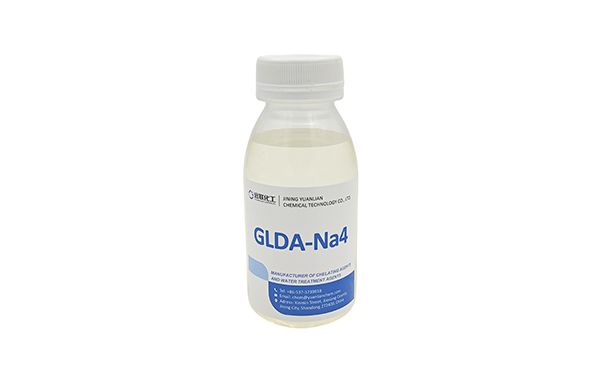
Strict environmental mandates and tight chemical compliance regulations across European and North American markets are forcing industrial formulators to evaluate their raw material selections. Traditional, non-biodegradable chelating agents—most notably Ethylene Diamine Tetraacetic Acid (EDTA) and Nitrilotriacetic Acid (NTA)—face mounting scrutiny under REACH regulations, EU Ecolabel benchmarks, and microplastic guidelines due to their environmental persistence and heavy metal mobilization risks. Tetrasodium Glutamate Diacetate (GLDA-Na₄) has become the primary, sustainable alternative in industrial chelation. Synthesized from natural L-glutamic acid, GLDA-Na₄ combines rapid biodegradability, zero phosphorus content, and strong multivalent metal ion sequestration. It maintains high stability in extreme thermal and pH environments where traditional chelates degrade. This comprehensive technical guide details the chemical specifications, comparative binding data, multi-industry applications, global supply market dynamics, and handling procedures for GLDA-Na₄ (CAS 51981-21-6). Tetrasodium Glutamate Diacetate belongs to the aminopolycarboxylate family. It is produced through the carboxymethylation of bio-based L-glutamic acid, followed by neutralization with sodium hydroxide. Commercial GLDA-Na₄ is supplied primarily as a liquid solution for direct integration into continuous manufacturing, with a solid format available for specialized dry-blend formulations. Selecting an effective chelating agent requires assessing complexation stability constants, operating temperature thresholds, and environmental fate. Under standard OECD 301D testing guidelines, GLDA-Na₄ achieves >60% biodegradation within 28 days, fulfilling the criteria for "Ready Biodegradability." Because it is synthesized using natural L-glutamic acid, environmental bacteria recognize and metabolize its peptide-like backbone. Conversely, EDTA resists biological breakdown (<20% degradation over 28 days). It persists in aquatic environments, where it can remobilize toxic heavy metal ions from riverbed sediments into public water sources. Additionally, approximately 56% of the carbon atoms in GLDA-Na₄ originate from renewable plant material, reducing reliance on petrochemical feedstocks. Recent technical evaluations confirm that GLDA-Na₄ maintains high binding affinity in low-pH and high-temperature environments where legacy aminopolycarboxylates fail: In environmental remediation and sediment treatment, GLDA-Na₄ demonstrates superior extraction efficiency for cadmium (Cd2+), copper (Cu2+), and nickel (Ni2+) compared to EDTA. It forms stable, soluble chelate complexes without leaving toxic, non-degradable chemical residues in treated soil matrixes. GLDA-Na₄ is widely used as a phosphate-free builder and sequestering agent across homecare, commercial laundry, and institutional cleaning markets: GLDA-Na₄ is used in personal care formulations as a bio-based chelating agent and preservative booster: Recent dust-suppression technologies combine GLDA-Na₄ with specialty surfactants to suppress coal dust. GLDA-Na₄ dissolves inorganic mineral incrustations on coal particle surfaces, increasing surface polarity. This synergistic action reduces the water contact angle down to 18°, enabling rapid coal particle wetting and improved dust control during mining and bulk transport. The global market for biodegradable chelating agents continues to expand rapidly, driven by environmental regulations restricting EDTA, NTA, and phosphates. When establishing supply chains for GLDA-Na₄, procurement managers choose between international brand innovators and high-capacity chemical manufacturers:Introduction
Section 1: Chemical Identity & Key Specifications
1.1 CAS Numbers & Synonyms
       COONa
         |
       CH-N(CH2COONa)2
         |
       CH2
         |
       CH2
         |
       COONa
1.2 Product Forms & Specifications
Section 2: How GLDA Outperforms Traditional Chelating Agents
                         BIODEGRADABILITY & ECOLOGICAL PROFILE
                      High / Rapid ◄────────────► Low / Persistent
                  ┌──────────────────────────────────────────────┐
  CHELATION       │ GLDA-Na₄               │ EDTA                 │
  PERFORMANCE High│ (186 mg Ca²⁺/g)        │ (158 mg Ca²⁺/g)      │
                  ├────────────────────────┼──────────────────────┤
              Low │ Citrate                │ NTA                  │
                  │                        │ (Carcinogen Risk)    │
                  └────────────────────────┴──────────────────────┘
Parameter / Feature
GLDA-Na₄ (Tetrasodium Glutamate Diacetate)
EDTA (Tetrasodium EDTA)
NTA (Trisodium NTA)
HEDTA (Trisodium HEDTA)
Primary CAS
51981-21-6
64-02-8
5064-31-3
139-89-9
Renewable Carbon Content
~56% (Bio-based)
0% (Petrochemical)
0% (Petrochemical)
0% (Petrochemical)
OECD 301D Biodegradability
>60% in 28 days (Ready)
<20% in 28 days (Persistent)
>60% (Ecotoxicity concerns)
Poor (<20%)
Calcium Chelation Capacity
186 mg Ca2+/g
158 mg Ca2+/g
160 mg Ca2+/g
150 mg Ca2+/g
Thermal Stability
Stable up to 170°C
Degrades >150°C
Degrades >130°C
Degrades >140°C
Acidic Iron Sequestration
Superior at pH 1.0 & 3.0
Precipitates at low pH
Moderate
Lower binding affinity
Regulatory Standing
EU Ecolabel / COSMOS Approved
Restricted / REACH Watchlist
Class 2B Carcinogen Risk
Restricted
2.1 Biodegradability: Ready vs. Persistent
2.2 Chelation Performance in Harsh Conditions
2.3 Heavy Metal Ion Removal Efficiency
Section 3: Industrial Applications
3.1 Detergents & Industrial Cleaning
[Hard Water Ions (Ca²⁺/Mg²⁺)] + [GLDA-Na₄]
                 │
                 ▼
[Soluble GLDA-Metal Complex] ──> Prevents Scale & Spotting ──> Maximizes Surfactant Performance
3.2 Personal Care & Cosmetics
3.3 Water Treatment & Oilfield Applications
3.4 Agriculture & Soil Remediation
3.5 Emerging Applications: Coal Dust Suppression
Section 4: Global Market & Sourcing Guide
4.1 Market Overview & Growth Trends
Global Biodegradable Chelates Market:
2025 Market Value:  USD 200M - 400M
Projected CAGR:     6.5% - 9.5% (2025-2030)
GLDA Segment CAGR:  7.5% - 11.0%
4.2 Key Manufacturers & Global Supply Options
4.3 Liquid vs. Powder Sourcing Strategy
Section 5: Storage, Handling & Safety
5.1 Storage Conditions & Handling Guidelines
5.2 Safety & Ecotoxicological Profile
Conclusion & Next Steps
Tetrasodium Glutamate Diacetate (GLDA-Na₄, CAS 51981-21-6) represents a high-performance, sustainable solution in industrial chelation. With its >60% OECD 301D biodegradability, 186 mg Ca2+/g binding capacity, thermal stability up to 170°C, and excellent acidic chelation capabilities, GLDA-Na₄ allows formulators to replace legacy EDTA and NTA systems without sacrificing operational performance.
Whether you are reforming commercial detergents, formulating eco-certified personal care products, or developing downhole oilfield chemical systems, GLDA-Na₄ provides a scalable, compliant green chemistry platform.
Request Technical Documentation & Evaluation Samples
Our technical service team provides support for formula conversions, compatibility testing, and supply chain management.
Yuanlian Chemical specializes in the production of polyaspartic acid (PASP),tetrasodium iminodisuccinate(IDS), GLDA, MGDA etc. with stable quality and excellent quantity!

Contact us