


-

- 2026-08-20
Polysuccinimide (PSI) Supplier Guide: The Raw Material Behind PASP
Most buyers of biodegradable water treatment chemicals never meet polysuccinimide. They order sodium polyaspartate, it arrives as a liquid, and the polymer that sat upstream in the production chain stays invisible. Yet anyone who makes PASP themselves, or wants a polymer that releases slowly over time, buys polysuccinimide directly. It is a small market, the product is a powder rather than a solution, and the specifications matter more than the price sheet suggests.
This guide covers what polysuccinimide is, who buys it, and what to check before you commit to a supplier.
What Polysuccinimide Is and Why It Sells as a Solid
Polysuccinimide, abbreviated PSI, is the cyclic imide polymer formed when L-aspartic acid is heated and loses water. It is the key intermediate in the industrial route to sodium polyaspartate: the thermal polycondensation step produces PSI, and alkaline hydrolysis then opens the imide rings to give water-soluble PASP.
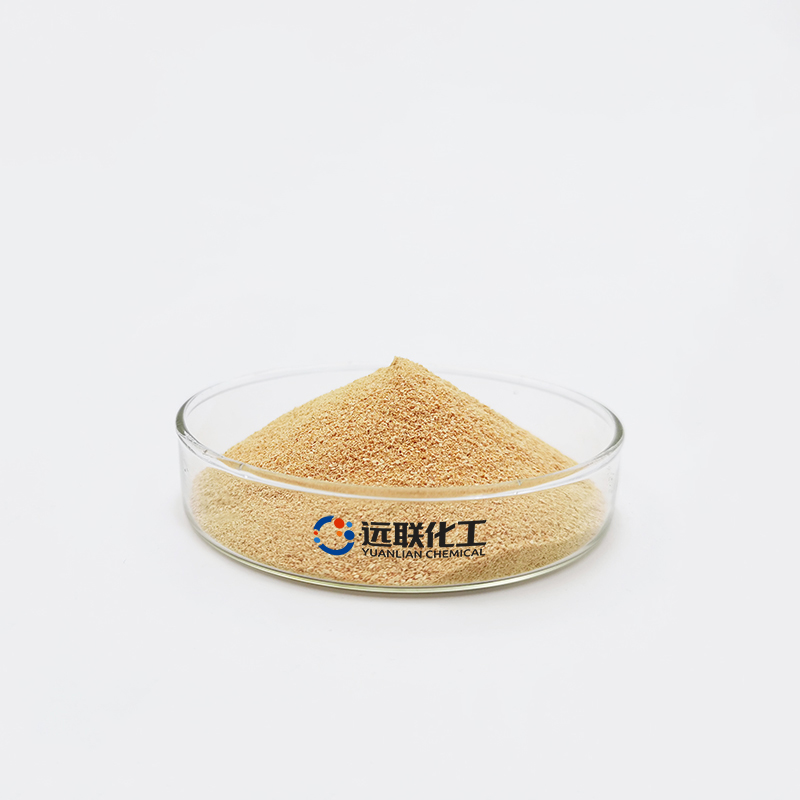
PSI is supplied as a beige to light brown powder, most commonly listed under CAS 31586-29-5 with the repeat unit (C4H3NO2)n. Commercial grades typically fall in the molecular weight range of 10,000 to 50,000 g/mol. It is almost insoluble in water, which sounds like a drawback until you realise it is the point: in contact with water, PSI hydrolyses slowly and releases polyaspartic acid over an extended period. That sustained-release behaviour is what opens the door to applications that a pre-dissolved liquid cannot reach.
Who Buys PSI and What They Do with It
Four groups of buyers make up most of the demand.
First, formulators who hydrolyse PSI in-house to produce their own PASP solutions, often because they want to control molecular weight or neutralise with potassium instead of sodium. Second, water treatment programmes that dose solids rather than liquids, relying on PSI's slow hydrolysis for scale inhibition that lasts weeks rather than hours. Third, producers of gypsum and cement additives, where the polymer modifies setting behaviour and improves dispersion. Fourth, specialty chemical companies that open the imide rings with amines to build polyaspartamide derivatives for personal care, agriculture and controlled-release systems.
If your purchase order says "PSI powder" and nothing else, you are leaving money on the table. The grade defines what you can do with it.
The Specifications That Actually Matter
Five figures separate a usable PSI batch from an expensive problem.
**Molecular weight and inherent viscosity.** Viscosity, usually quoted between 0.15 and 0.35 dL/g, is the practical window on molecular weight. It determines the chain length of the PASP you will make from it, and therefore the performance profile of the final product.
**Moisture content.** This is the one to watch. Water opens imide rings, so moisture that gets in during production or storage hydrolyses the polymer inside the bag. Good material ships at 3 per cent moisture or less.
**Ash content.** Ash reflects process cleanliness and catalyst residue. A figure at or below 0.5 per cent is the norm from a well-run plant.
**Appearance and colour.** Beige to light brown is standard. Consistent colour between batches is a useful early signal that the process has not drifted.
**Residual monomer.** Low levels of unreacted aspartic acid matter in applications with tight impurity limits, such as personal care and fertiliser.
Ask the supplier to state these on the certificate rather than in a separate brochure. The certificate is the document that travels with the batch.
Two further details are worth a phone call rather than an email. Ask how the supplier defines conversion, the share of aspartic acid that ends up in the polymer chain, and ask what happens if a batch fails the agreed specification on arrival. The answers tell you whether you are dealing with a manufacturer that stands behind the material or a trader that will pass the argument on to someone upstream.
Storage and Handling: The Part Buyers Forget
PSI punishes neglect. Because it hydrolyses in the presence of moisture, storage is not a minor detail. Keep it sealed, in a cool and dry place, away from humidity and direct sunlight. Under proper conditions most producers quote a shelf life of around 36 months, but that figure assumes the packaging stays intact.
Standard packaging is 25 kg cardboard drums or 500 kg FIBC bags, with smaller custom packs available for trials. Handle it with the usual dust precautions: a mask and reasonable ventilation. Prolonged exposure to a humid environment is the single most common cause of a PSI batch that arrives fine and degrades in the warehouse.
What a PSI Certificate of Analysis Should Show
The certificate for PSI should carry more than the batch number and a pass stamp. Look for the viscosity range, moisture, ash and appearance, with the test method named for each. A certificate that lists results but no methods is a certificate you cannot verify. Ask also for the molecular weight band, since this is what determines the PASP grade you can produce.
Batch-to-batch consistency matters more than the absolute numbers. Ask for the last three certificates for the same grade and compare the viscosity spread. A tight window means the polycondensation is controlled; a wide one means every drum you buy will behave slightly differently.
Sourcing from an Integrated Producer
There is a structural argument for buying PSI from a manufacturer that also makes PASP. A producer running both steps of the route controls molecular weight from the polycondensation stage, and that control shows up in the consistency of the PSI itself.
Yuanlian Chemical, the Shandong-based manufacturer behind this site, produces polysuccinimide powder at a molecular weight range of 10,000 to 50,000 g/mol with moisture at or below 3 per cent and ash at or below 0.5 per cent, then hydrolyses the same intermediate into its own PASP liquid lines. Its annual capacity across chelating agents and polymers exceeds 12,000 tonnes, the plant holds ISO 9001 certification, and samples plus per-batch CoAs are available on request. If you are buying PSI as a raw material, that kind of integration is a practical answer to the question of where the material came from and whether it will be the same next month.
Frequently Asked Questions
Why would a buyer choose PSI powder over ready-made PASP liquid?
The main reasons are transport efficiency, storage stability and formulation control. Powder ships dry, stores for years rather than months, and lets the buyer decide the final salt form and concentration by controlling their own hydrolysis step.
Does PSI dissolve in water?
Not quickly. It is almost insoluble in water and hydrolyses gradually, releasing polyaspartic acid over time. That slow conversion is exactly what makes it useful for sustained-release applications, but it also means it cannot simply be stirred into a tank like a liquid polymer.
Is polysuccinimide biodegradable?
Yes. PSI is derived from a natural amino acid, and its hydrolysis products are polyaspartic acid and ultimately carbon dioxide, water and inorganic nitrogen compounds. Its environmental profile is the reason it keeps appearing in green formulations.
Final Word
Polysuccinimide is a small molecule in the catalogue and a big one in the production chain. Check the viscosity, guard the moisture, read the certificate, and buy from a producer that controls the whole route. Do that and the powder does what the data sheet promises.
Yuanlian Chemical specializes in the production of polyaspartic acid (PASP),tetrasodium iminodisuccinate(IDS), GLDA, MGDA etc. with stable quality and excellent quantity!

Contact us