



-

- 2026-08-27
PASP-Na Storage and Shelf Life: A Buyer's Handling Guide
The performance of a water treatment chemical is set in the factory, but its useful life is decided in the warehouse. Sodium polyaspartate (PASP-Na) is a stable polymer, yet it still pays to store it correctly and to check what arrives on the dock. This article covers the practical side that spec sheets rarely mention: storage conditions, shelf life, freezing, transport classification and delivery checks.
What Form the Product Arrives In
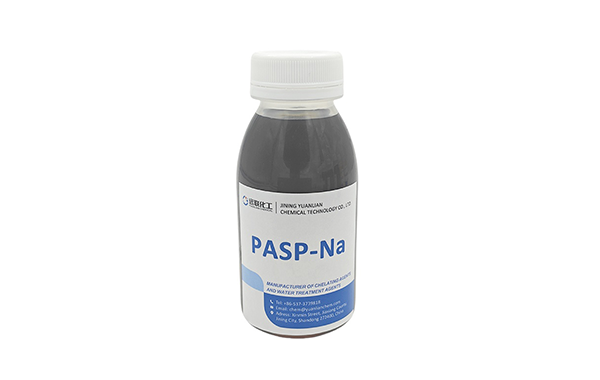
PASP-Na is usually supplied as a clear to light-amber aqueous solution at around 30 to 40 per cent active polymer, in drums or IBCs. Some grades are available as powder where the application calls for it. The active content is stated on the Certificate of Analysis, and the exact figure matters because dosing calculations in water treatment are based on active polymer, not on the as-supplied weight.
Recommended Storage Conditions
Store PASP-Na in sealed original containers, away from direct sunlight, in the range of roughly 5 to 40 °C. The solution is stable under those conditions and does not need refrigeration. Keep the containers away from strong oxidising agents and acids, and keep the bungs sealed between uses so the surface does not pick up dust or lose water by evaporation. Indoors is preferable to outdoors: a warehouse wall that faces the sun in summer can push the contents of a steel IBC well past 50 °C inside.
Shelf Life and How It Shows
Under sealed original packaging, liquid grades generally keep for 12 months or longer, and the recommended shelf life for each grade is stated on the specification sheet. Ageing shows up slowly: a gradual darkening of colour or a slight drift in active content, rather than a sudden failure. A batch stored within the recommended conditions will normally perform to specification across its stated life.
Freezing: What Happens and What to Do
An aqueous solution of PASP-Na can freeze during winter transport or in unheated storage. A frozen drum is not a ruined drum. Thaw the container slowly at ambient temperature, mix or roll the drum to homogenise the contents, and check the appearance before use. What shortens the life of the product is repeated freeze-thaw cycling, which stresses the container and concentrates the solution unevenly. For a site that regularly faces winter conditions, heated or indoor storage removes the question entirely.
Transport and Dangerous Goods Classification
Liquid PASP-Na grades are generally classified as non-dangerous goods for transport under ADR, which keeps shipping straightforward and avoids the paperwork of hazardous cargo. The classification is stated in section 14 of the safety data sheet, and the buyer should confirm that it matches the mode of transport used. For drum and IBC shipments, standard freight handling applies.
What to Check on Delivery
On receipt, compare the delivery against the Certificate of Analysis. Check that the batch number on the drums matches the paperwork, note the appearance, which should be clear and free of sediment or cloudiness, and record the condition of the containers. If a delivery may have been exposed to freezing in transit, set those drums aside and thaw them before sampling. A quick active-content check by the buyer's own laboratory, or a simple bottle test, closes the loop.
How to Tell If a Batch Has Deteriorated
Four signs are worth attention: visible sediment or haziness that does not clear on mixing, a strong colour shift from the usual light amber, a container that has leaked or bulged, and a batch number that does not match the Certificate of Analysis. None of these is common in a well-managed warehouse, but catching them early beats finding out during a cooling tower upset. When in doubt, contact the supplier before using the batch.
Stock Rotation and Batch Records
Water treatment chemicals are bought in quantity and used slowly, which makes rotation part of the job. Use the oldest batch first, and note the batch number when a drum or IBC goes into service, so that if a problem appears later the supplier can trace it to a specific production run.
A simple stock sheet with delivery date, batch number, quantity and container number takes ten minutes to keep and answers most questions before they become problems. Sites that run several grades should store them with clear separation and labels, because a PASP-Na drum misplaced among polymer grades of similar appearance is a mistake waiting for a dosing pump.
FAQ
How long does PASP-Na last in storage?
Under sealed original packaging and recommended conditions, liquid grades generally keep for 12 months or longer. The exact shelf life for each grade is stated on the specification sheet.
What happens if PASP-Na freezes?
Thaw the container slowly at ambient temperature, mix or roll it to homogenise, and check appearance before use. The product can normally be used after a single freeze-thaw cycle. Repeated cycles should be avoided.
Is PASP-Na hazardous for shipping?
Liquid grades are generally classified as non-dangerous goods under ADR. Section 14 of the safety data sheet states the classification, and the buyer should confirm it for the chosen transport mode.
What temperature should PASP-Na be stored at?
Roughly 5 to 40 °C, in sealed original containers, away from direct sunlight, oxidising agents and acids. Refrigeration is not required.
Can I use a batch that is past its stated shelf life?
Check appearance, active content and container condition first, and run a small performance test if the application is critical. Where there is any doubt, contact the supplier before use.
How do I verify the active content on receipt?
A simple drying or refractometer check against the value on the Certificate of Analysis gives a quick confirmation. For formal records, a sample can be sent to a laboratory for confirmation.
Making the Most of the Batch
Handling and storage are the part of the supply chain that the buyer controls, and a few simple checks keep the product performing as specified from the first drum to the last. For the specification sheet, storage guidance and delivery terms, contact [email protected] or call +86-537-3739818. Full product details are available at the company website: https://www.yuanlianchem.com
Yuanlian Chemical specializes in the production of polyaspartic acid (PASP),tetrasodium iminodisuccinate(IDS), GLDA, MGDA etc. with stable quality and excellent quantity!

Contact us