



-

- 2026-09-21
Chelating Agents for Ceramics and Glass: A Buyer's Guide
A tile plant in Castellón runs a body slip at 34% solids. The ball mill wears, the local water carries 180 mg/L of calcium carbonate, and the frit batch varies week to week. One month the spray dryer draws more gas than the last; the slip thickens, the operator adds water, and the drying line eats more energy for the same tonne of bisque. Nobody suspects the chelating agent, because it was specified once and forgotten.
That is the usual pattern. In ceramics and glass, the chelant is a small line on the formulation, then the first thing blamed when viscosity drifts or a glaze blooms. This note is about what it actually does on the floor, which molecule fits which job, and how to buy it without finding the gap during a rejected glaze run.
Where the metal comes from
Clay is never pure. Ball-clay and kaolin carry iron and titanium; the process water adds calcium and magnesium; frit and glaze raw materials bring their own load; and the mills, pumps and agitators shed iron and chrome as they wear. Each ion does something unwelcome:
- Calcium and magnesium flocculate the slip, so it needs more water to flow and more energy to dry.
- Iron and copper catalyse colour shifts in certain frits and stain white bodies.
- Stray metal in the glaze suspension drives pinholes, scum and an uneven fired surface.
A chelating agent does not take the metal out. It holds it in a ring so it cannot react. The difference between held and free is the difference between a steady slip and a complaint.
What it does in the body slip
The slip is where most of the money sits, because water is energy. A deflocculant plus a chelating agent lets the same body run at higher solids with the same viscosity, which means less water to drive off in the dryer. Plants that tie up the calcium and magnesium hold their rheology across a wider water-hardness range and stop chasing the slip with water every time the well changes.
The chelant also keeps iron from catalysing organic additives and from spotting the bisque. For a white or light-coloured body, that control is the difference between a saleable tile and a second.
What it does in the glaze and frit
Glaze is less forgiving than body. A few ppm of stray copper or iron in a frit can shift a pastel toward grey, and free calcium in the suspension drops out as scum on the ware. The chelating agent keeps those ions in solution through milling, storage and application, so the fired surface stays clean.
In frit production the melt is sensitive to metal-catalysed colour; selective control of copper and iron during milling and batching protects the shade. This is where a copper-selective molecule earns its place, not as a bulk hardness builder but as a targeted stain preventer.
Glass: batch, cullet and the melt
Glass carries the same problem into the melt. Iron in the sand or the refractory stains clear glass green and drives the furnace to run hotter to burn it out; chromium from worn refractories gives a stubborn tint that the customer rejects. A chelating agent in the batch preparation or the cullet wash ties up those ions before they reach the tank, so the furnace works on glass, not on metal.
Recycled cullet is the harder case. It arrives dirty — labels, caps, organics, and a film of calcium and metal — and a pre-wash that chelates the metal keeps the recycled fraction usable instead of downgraded. Plants that control the cullet metal hold their colour specification on mixed feed without slowing the line.
The descale story repeats here too: lehr belts, annealing rolls and the water sides of the cooling system all deposit, and the same chelant that cleaned the ceramic mill cleans the glass line.
Tile adhesive, grout and the cement side
Cement-based tile adhesives and grouts are a different rheology problem. Stray calcium and the soluble salts in sand and cement affect open time, workability and the efflorescence that shows on the joint after the job. A chelating agent in the dry mix or the slurry controls those ions so the adhesive stays workable and the finished joint stays clean.
The chloride question matters here. Some chelant routes leave chloride in the product, and chloride in a cement system drives corrosion of any embedded metal and worsens efflorescence. If the grade is made by a route that carries chloride, the buyer should know the number and decide whether it fits the application. Ask for it on the certificate, not in a footnote.
Descaling the equipment
Kiln furniture, ball mills, agitators and the spray-dryer circuit all scale with use. A chelating cleaner takes that deposit back into solution without the aggressive acid that attacks the steel. Plants that run a periodic chelant wash hold heat-transfer and keep the mill liners honest longer. The same molecule that stabilises the slip can clean the line — but the dose and contact time for cleaning are a different specification from the dose for the slip, and the two should not be confused.
Which molecule, which job
- GLDA-Na4 and MGDA-Na3 cover the slip, the glaze suspension and the equipment wash. Both hold calcium and magnesium across the pH range a ceramic plant lives in, both survive the alkaline side, and both biodegrade under OECD 301, which matters when a customer audits the effluent.
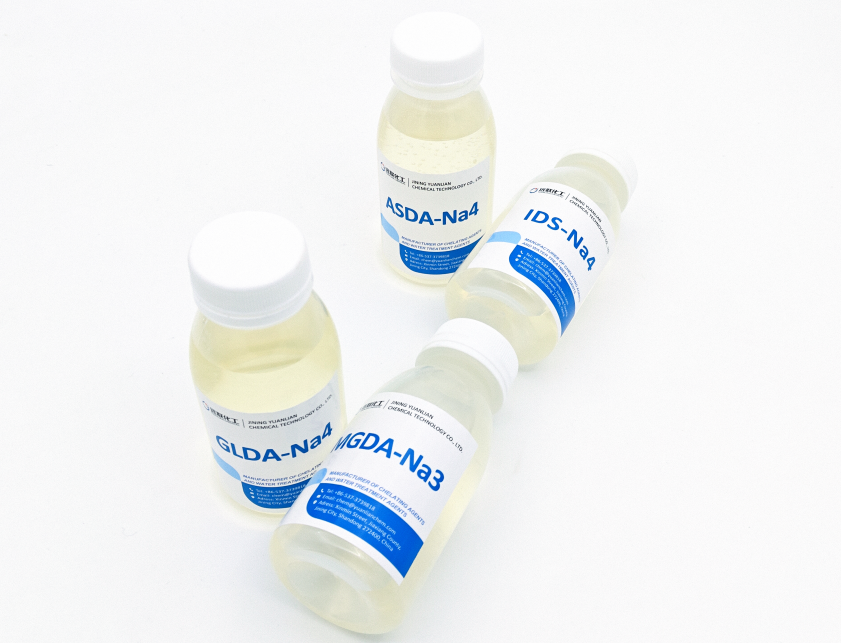
- IDS-Na4 earns its place where copper and iron selectivity drives the fault — certain frits and white bodies where a stray ppm stains the shade. Used as a bulk builder it is the wrong tool.
- EDTA is still specified in older recipes. Its persistence and the questions it raises under restricted-substance programmes are why many plants are moving off it. The swap is not one-for-one; re-balance the deflocculant and screen before you commit.
What to put in the purchase specification
- Active content stated as supplied and per gram of active, because the two are not the same figure and quotes that hide behind one of them cause arguments later.
- Iron, copper and chloride limits in ppm. A chelant that arrives carrying the metal it was meant to remove, or chloride it was meant to avoid, is selling the problem back to you.
- Residual intermediate by a named method, not "passes spec."
- Effect on rheology, confirmed by your own viscosity check on the actual slip, not the supplier's data sheet.
- Biodegradability by OECD 301, with the test reference, if the effluent is part of your permit.
The certificate of analysis should name the test method for every line. A CoA that says "clear liquid" without a method is a colour description, not a quality record.
Questions to put to a supplier before ordering
- What is the active content as supplied and per gram of active, and which method defines it?
- What are the iron, copper and chloride limits, and do you test every batch or by composite?
- Can you show an OECD 301 biodegradability report for the exact grade?
- What packing is available — drum, IBC, bag-in-box — and what does that do to landed cost per kilogramme?
- What is the realistic lead time to a named European port, and do you hold stock for repeat orders?
Frequently asked questions
Will a chelating agent let me run the slip at higher solids? It helps, by holding the hardness so the deflocculant works. The actual gain depends on your clay and your water; confirm by a viscosity and drying check, not by the leaflet.
Can I use the same grade for the slip and the mill wash? Different jobs, different doses. The slip needs a low, steady level tied to metal load; the wash needs enough contact strength to dissolve scale. Screen each separately.
Does chloride in the chelant really matter for tile adhesive? For any cement system with embedded metal or a visible joint, yes. Ask for the chloride figure and weigh it against the job.
Is EDTA still acceptable? Older recipes use it, but its persistence and the audit questions are pushing plants to biodegradable options. Move on a screened trial, not a sudden swap.
How do I check a new grade without stopping the line? Run it on a side stream of the real slip at your real water hardness, measure viscosity and a fired sample, then scale to a partial batch before full conversion.
Chelating agents are cheap insurance against rejected glaze and wasted dryer gas, but only if the grade is matched to the metal and the supplier can prove what is in the drum. For the wider selection across molecules, the technical library carries the method detail, and our notes on chelants in industrial cleaning cover the equipment side.
Yuanlian Chemical specializes in the production of polyaspartic acid (PASP),tetrasodium iminodisuccinate(IDS), GLDA, MGDA etc. with stable quality and excellent quantity!

Contact us