



-

- 2026-10-14
PASP for Seed Treatment: Better Emergence and Stand
A field that emerges unevenly rarely recovers the lost ground. Patches of thin stand mean lower competition with weeds, more passes with the sprayer and a yield map with cold spots that persist for the whole season. European growers manage this risk through seed quality, drilling depth and seed-bed conditions, and an increasing number are looking at the seed treatment step as a place to add resilience. Sodium polyaspartate (PASP-Na) has moved into that conversation as a biodegradable polymer that supports the early life of the seedling rather than acting on the pest or disease side of the treatment.
Why emergence decides the season
The first three weeks after drilling set the ceiling on what the crop can later achieve. A seedling that breaks the surface late enters a canopy it can never fully close, and a row with gaps lets light and moisture reach weeds first. The losses are quiet: not a clear failure, but a few percent here and there that add up across the rotation. Seed treatments have traditionally carried fungicides and insecticides, yet the physical environment around the seed, the moisture film and the local nutrient pocket, also shapes whether the radicle finds what it needs before the reserves run out.
What sodium polyaspartate adds to the seed
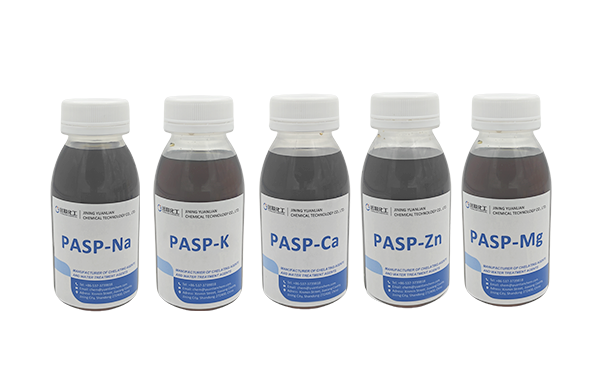
PASP-Na is a polycarboxylate made from the amino acid aspartic acid, and it is supplied in grades suited to agricultural use. In a seed application it is not a protectant against pathogens; it is a conditioner of the micro-environment around the germinating seed. Its carboxylate groups hold a small, steady reserve of moisture and of available nutrients close to the seed, so the seedling has a more forgiving start when the seed bed is dry or uneven. The polymer is water-soluble, readily biodegradable and free of phosphorus, which keeps it outside the nutrient-loading questions that surround some soil inputs.
Supporting germination under variable seed beds
Drilling conditions are rarely ideal across a whole field. A cold, wet corner slows metabolism, while a dry ridge lets the seed wait too long for moisture. Work with polyaspartate-treated seed has pointed to steadier radicle growth and a tighter spread of emergence time, which matters because a uniform stand is easier to manage than a uniform delay. The effect is most visible where the seed bed is marginal, and it is least visible where conditions are already favourable, an honest pattern that a short on-farm check will confirm more reliably than a single laboratory figure.
Seedling vigour and early canopy
Vigour in the first leaves determines how quickly the crop begins to capture light and suppress weeds. A seedling that establishes earlier tends to root more deeply before stress arrives, which carries through to later drought tolerance and to a more even maturity at harvest. Polyaspartate does not replace the genetics of the variety or the quality of the seed lot, but it widens the window in which a good seed can express its potential. For a grower, that translates into fewer reseeds and a stand that needs less corrective input.
Fitting it into an existing treatment
On most farms the polymer enters through the seed dressing or the slurry used at treating time, blended with the existing fungicide and insecticide package rather than replacing it. The usual approach is a modest rate matched to the seed size and the treatment volume, applied during the commercial treating pass so there is no extra operation in the shed. Because the molecule is compatible with standard seed-treatment chemistry, the practical barrier is low; the agronomic question is simply whether the local seed-bed risk justifies the addition, which a side-by-side drill strip answers directly.
Reading the trade against other improvers
Growers can choose from polymer seed coatings, biological primers and nutrient seed dressings, each with a different mechanism and a different regulatory file. Polyaspartate's position is that it is a simple, biodegradable conditioner with no phosphorus and no persistent residue, so it does not add to the environmental accounting that already weighs on intensive rotations. It is not a cure for poor seed quality or a substitute for correct drilling depth, and it will not rescue a field that was drilled into a cloddy seed bed. What it offers is a low-burden way to give the seedling a steadier start.
A practical route into the field
Begin with a treated and untreated drill strip in the same field, keeping the variety, the drilling date and the depth identical. Score emergence count and uniformity at the two-to-three leaf stage, and watch weed pressure and later canopy cover in the same zones. Set the review criterion before drilling, and keep the batch certificate so any later question about the product starts from a known input. A comparison that ends with a stand count and a canopy note either justifies the treatment or stops it cleanly, without a second season of doubt.
What to ask a supplier
Ask for the agricultural grade specification, the biodegradation evidence under OECD 301B, and the tank-mix compatibility note with your existing seed-treatment products. Confirm the recommended rate range for your seed size and the heavy-metal profile against the EU fertilising product ceilings, because a free-from claim only counts on the document. Request a sample treated on your own seed lot where possible, since the behaviour on a specific variety is the result that matters to your drilling plan. The company website carries the product details: https://www.yuanlianchem.com
Frequently asked questions
Is PASP a seed protectant against disease? No. It conditions the moisture and nutrient environment around the seed; disease and pest protection come from the fungicide and insecticide in the same treatment.
Does it add phosphorus to the land? No. The polymer carries no phosphorus, so it does not add to the nutrient load regulated under the Nitrates Directive.
How is it applied to seed? Most often as a component of the seed dressing or treating slurry, blended with the existing treatment package during the commercial pass.
Will it improve a poor seed lot? It widens the window for a good seed to establish, but it cannot compensate for low viability or incorrect drilling; those fundamentals still set the floor.
Give your seedlings a steadier start with a biodegradable seed conditioner. For the agricultural-grade specification, the OECD 301B report and a sample for your seed lot, contact [email protected] or call +86-537-3739818. Full product details are at the company website: https://www.yuanlianchem.com
Yuanlian Chemical specializes in the production of polyaspartic acid (PASP),tetrasodium iminodisuccinate(IDS), GLDA, MGDA etc. with stable quality and excellent quantity!

Contact us