



-

- 2026-10-15
MGDA-Na3 for Industrial and Institutional Cleaning
Industrial and institutional (I&I) cleaning runs harder than the home. Higher soil loads, hotter and more alkaline washes, and metal surfaces that must come out spotless put a chelating agent through its paces. MGDA-Na3 (trisodium methylglycine diacetate) has become a standard choice in this segment because it holds its strength under alkaline, high-temperature and magnesium-heavy conditions where milder chelants ease off. This guide sets out where it fits for an I&I formulator or buyer, how it compares with the alternatives, and the points to lock down before a production run.
The I&I cleaning problem
A commercial kitchen, a launderette, a food plant or a metal workshop all share the same enemy: hardness metals and catalytic trace metals that defeat the cleaner. Calcium and magnesium precipitate surfactants and builders, iron and copper catalyse the breakdown of bleach and fragrance, and the result is film, spots and lost active. The chelating agent is the quiet workhorse that keeps those metals in solution so the surfactant and the alkali can do the cleaning. In I&I, where the wash is hot, alkaline and concentrated, the chelant must survive to the end of the cycle.
Where MGDA-Na3 fits in the formula
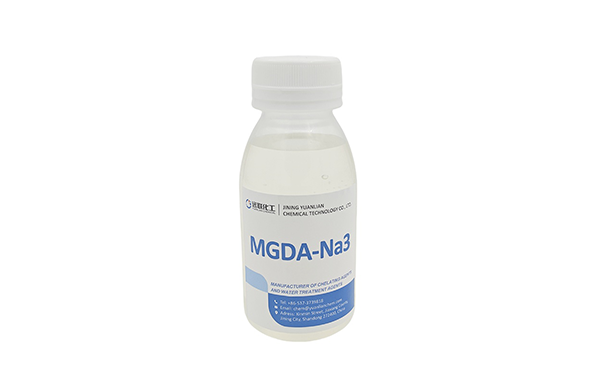
MGDA holds calcium, magnesium, iron and copper across the alkaline pH and the temperatures that I&I products use, which is why it sits in machine dishwashing, institutional laundry, food-service degreasers, metal-cleaning baths and all-purpose floor and surface cleaners. Its magnesium affinity is the property that earns it the work, because magnesium is the ion behind filmed glassware, dull fabric and scale on heating elements. The molecule is not the cleaner itself; it is the condition that lets the cleaner and the bleach perform, which is why it is dosed as a support additive rather than a headline claim.
Reading it against EDTA and phosphonates
EDTA chelates hard but persists in the environment and draws scrutiny under chemical policy. Phosphonates control scale well but face discharge limits in sensitive catchments and add phosphorus to the load. MGDA offers a middle path: strong chelation, ready biodegradation and a clean regulatory standing for the high-throughput systems I&I relies on. It is not a one-number swap for EDTA, because the binding profile and the pH comfort differ, so a short performance trial at the intended use condition settles the level rather than a copied specification.
Food-service and food-plant use
In food-service degreasers and in food and beverage plant cleaning, the chelant meets a higher hygiene and residue bar. MGDA's biodegradability and low aquatic toxicity support the discharge consent and the environmental claims on the safety data sheet, and its alkaline and oxidiser tolerance let it share a formula with chlorine or peracid sanitisers. As with any input that contacts food areas, the finished product still carries the local food-contact and residue rules, so the chelant is a sensible building block rather than the sole determinant of compliance.
Metal and hard-surface cleaning
For metal parts washers and hard-surface cleaners, the chelant keeps dissolved metals from redepositing as a film and stops iron stains on stainless steel. It also stabilises the alkaline builder so the solution stays clear in a concentrated, long-shelf-life pack. The complex stays in solution and is carried away in the rinse, which is what leaves a clean, spot-free surface rather than a haze that needs a second pass. Because the chelant holds its grip as the bath heats, the dose can often be tuned down without losing the finish, which is where the cost case usually closes.
Grade choice and qualification
Most I&I lines use MGDA-Na3 at a defined active content in water, with colour, chloride and by-product load as the deciding factors in a clear or near-clear product. Ask for a certificate of analysis that names the active assay, the pH, the colour and the heavy-metal ceiling, and run a bench trial in your own base at the intended pH, temperature and hardness. A glassware spot test or a simple clarity check reveals whether the chosen level holds the metal through the cycle, and catches any interaction with the preservative or the perfume early.
Tank-mix, dilution and storage
MGDA is a liquid and blends with the caustic, the surfactant and the builder common in alkaline I&I products. It stays intact through dilution and through the hot, alkaline wash, and it tolerates the oxidiser in oxygen-bleach and sanitiser systems. Storage follows normal practice for an alkaline salt solution, sealed and away from acidic materials and extreme heat. Cold-weather viscosity is worth noting in a concentrated blend, but the chelant is stable in the pack under normal conditions.
A practical route into the line
Fix the use pH, the hardness and the temperature, then compare foam, rinse clarity and scale or stain with and without the chelant at the candidate level. Watch the result across the shelf life you intend to claim, not only at day one, because a clear product is unforgiving about slow precipitation. Set the acceptance criterion before the trial, and keep the batch certificate so any later question starts from a known input. A comparison that ends with a clarity and a stain note either justifies the switch or stops it cleanly.
What to ask a supplier
Request the grade specification, the OECD biodegradation evidence, the REACH registration status and the heavy-metal certificate. Ask for the active content range and the compatibility notes with your surfactant, builder and oxidiser, and for a reference from a formulator with a similar product. Confirm that the supplier holds a consistent molecular-weight and impurity band across deliveries, because a clean I&I product leaves no room for batch drift. The company website carries the product details: https://www.yuanlianchem.com
Frequently asked questions
Does MGDA-Na3 suit machine dishwashing? Yes. Its magnesium affinity and alkaline, heat stability suit the hot, harsh conditions of I&I dish and laundry.
Can it replace EDTA in an I&I formula? It can where biodegradability matters, but run a performance trial because the binding profile differs.
Is it safe for food-plant cleaning? It supports discharge consent and environmental claims, but the finished product must still meet local food-contact and residue rules.
Which active content should I specify? Match the grade to your base viscosity and colour; ask for the certificate that names active assay, pH and heavy metals.
Specify a biodegradable chelant built for harsh I&I conditions. For the grade specification, the OECD biodegradation report and a sample for your base, contact [email protected] or call +86-537-3739818. Full product details are at the company website: https://www.yuanlianchem.com
Yuanlian Chemical specializes in the production of polyaspartic acid (PASP),tetrasodium iminodisuccinate(IDS), GLDA, MGDA etc. with stable quality and excellent quantity!

Contact us