


-

- 2026-10-23
GLDA-Na4 in Agriculture: A Fertiliser Buyer's Guide
GLDA-Na4 is the tetrasodium salt of glutamic acid diacetic acid, a biodegradable chelating agent derived from glutamic acid. In agriculture it is valued for two connected jobs: it keeps micronutrients such as iron, zinc, manganese and copper in a plant-available form, and it stops the calcium and magnesium in hard water from spoiling a fertiliser tank mix. For a buyer building a clean, reliable nutrition programme, that double action is what makes the agent worth a place in the specification rather than a bulk input.
What GLDA-Na4 brings to a fertiliser programme
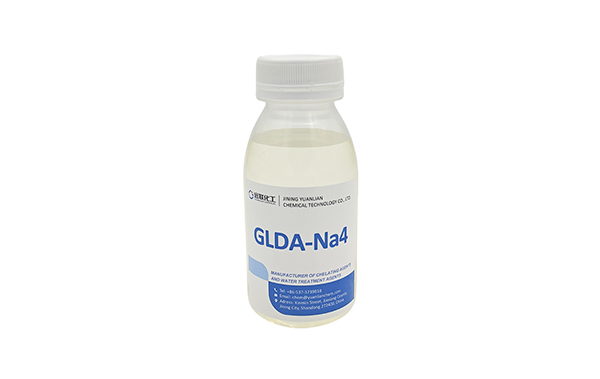
A fertiliser blend often fails in the tank before it ever reaches the crop. Hard water, high pH and reactive phosphate all push free metal nutrients out of solution, leaving sediment and blocked lines. GLDA-Na4 holds those metals in a soluble complex and also ties up calcium and magnesium that would otherwise react. The result is a stable mix that stays homogeneous through dilution and application, which protects both the nutrient and the equipment.
Choosing the right grade and active content
GLDA-Na4 is normally supplied as an aqueous solution with a defined active percentage. For a buyer, the practical questions are the active content, the salt balance, the clarity of the liquid and the heavy-metal impurity profile, because fertiliser products carry their own contaminant limits. Request the certificate of analysis and confirm the chelant strength against the agreed specification before the first full order, since batch consistency matters more than a low headline price.
Preventing hardness problems in the tank
Hard irrigation water is a quiet source of trouble. As the fertiliser concentrate is diluted, calcium and magnesium can precipitate with phosphate or with the micronutrient salts, forming scale and haze. GLDA-Na4 sequesters those hardness ions, keeping the mix clear and preventing the gradual build-up that clogs emitters and nozzles. This is one of its strongest fits, because the agent is particularly effective against calcium and magnesium, the very ions that cause most fertigation faults.
Use in calcareous and alkaline soils
On calcareous and alkaline ground, free iron and zinc drop out of solution quickly, so the crop can show deficiency even where the nutrient was applied. GLDA-Na4 helps here by keeping the chelated micronutrient mobile as it moves toward the root zone. The response is most visible on sensitive crops such as citrus, vines, pome and stone fruit and many vegetables grown on lime-rich soils, where greening and normal leaf development improve during the early season.
Fertigation and liquid feeding
Because GLDA-Na4 stays in solution during dilution, it suits fertigation and liquid feeding well. The chelated nutrient is delivered evenly through the irrigation system, and the hardness control protects the laterals and drippers at the same time. When setting up a programme, check the pH and hardness of the actual source water, because the dose that works in soft water may need adjustment where calcium load is high.
Foliar application for quick correction
When deficiency is already showing as chlorosis, foliar application gives the fastest visual correction by placing the chelated nutrient directly on the leaf. GLDA-Na4 is suitable for this route provided the tank mix is clean and the spray is timed to avoid scorch under strong sun. A foliar pass handles the acute symptom, while a soil or fertigation programme addresses the underlying availability problem over the season.
Compatibility with other inputs
GLDA-Na4 sits comfortably in neutral and alkaline fertiliser systems, but very acidic descalers, certain cationic adjuvants and extreme hardness can still shift behaviour. Build the mix in the correct order with steady agitation, and run a jar test whenever the formulation is new. Compatibility faults show up as cloudiness or precipitate, and those are far cheaper to catch in a beaker than across a field.
Regulatory and labelling notes for EU buyers
Micronutrient fertiliser products placed on the EU market fall under the Fertilising Products Regulation (EU) 2019/1009 where a fertilising claim is made, and the term "chelate" has a defined meaning under that framework. GLDA-Na4's biodegradability supports the environmental intent of the rules, but the finished product still needs the correct contaminant limits, claim language and label text. Confirm whether the material is bought as a fertilising product or as a technical input for onward formulation, because the document set changes accordingly.
Questions to ask a supplier
Before ordering, ask for the active content and the method behind it, the impurity profile, the recommended storage conditions and shelf life, and the biodegradation data supporting any environmental statement. A supplier who shows consistent batches and transparent documentation reduces risk more than one offering a price that varies from load to load. Sample grades for a bench trial are worth requesting before a full campaign.
Frequently asked questions
Is GLDA-Na4 suitable for organic programmes? Organic certification follows scheme-specific rules rather than a single EU list, so confirm acceptance with the certifier before use. The agent is biodegradable, but approval depends on the standard applied to the final product.
How does it compare with EDTA? EDTA is effective but persists in the environment, whereas GLDA-Na4 degrades through biological pathways, which is why it is preferred where environmental load is a concern.
Can it be used in hard irrigation water? Yes, and this is one of its strengths, because it sequesters calcium and magnesium that would otherwise precipitate the nutrient or scale the system.
What crops respond most clearly? Crops prone to iron and zinc deficiency on alkaline soils, including citrus, vines, pome and stone fruit, olives and many vegetables, tend to show the clearest response.
GLDA-Na4 offers a biodegradable way to keep micronutrients available and tank mixes stable where hard water and alkaline soils would otherwise cause trouble. To discuss grades, sample formulations or a trial for your crop programme, contact [email protected] or call +86-537-3739818. Explore the wider catalogue at https://www.yuanlianchem.com.
Yuanlian Chemical specializes in the production of polyaspartic acid (PASP),tetrasodium iminodisuccinate(IDS), GLDA, MGDA etc. with stable quality and excellent quantity!

Contact us