



-

- 2026-10-28
ASDA-Na4 in Household Detergents: A Formulator Guide
Hard water is the quiet enemy of every household cleaner. Calcium and magnesium in the supply react with surfactants and with the soil itself, leaving scale, greyed fabrics and a film on glass and tiles. A chelating agent is the usual answer, but formulators now weigh more than binding strength: biodegradability, aquatic toxicity and the direction of EU detergent policy all shape the shortlist. ASDA-Na4, the tetrasodium salt of aspartic acid diacetate, has moved onto that shortlist because it binds the hardness ions that spoil cleaning while carrying a favourable environmental profile. This guide looks at where it earns its place in laundry, dish and surface products, and what a buyer should check before specifying it.
Why formulators look at ASDA-Na4 for cleaning
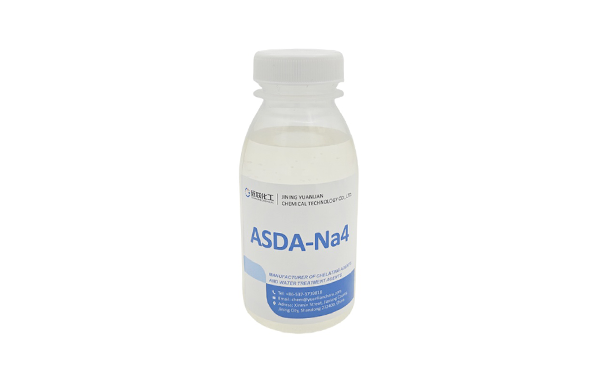
The appeal of ASDA-Na4 starts with its chemistry. It is built from aspartic acid, an amino acid already familiar to formulators, and it sequesters calcium and magnesium without relying on phosphorus or persistent structures. In a wash, that means fewer soap scums, brighter colours and less redeposited soil on fibres. At the same time, regulators and retailers are tightening the rules on what may go down the drain, so a readily biodegradable chelant with low aquatic toxicity fits the brief better than older options. For a purchasing manager, the question is not only performance but the confidence that the choice will remain compliant as policy moves. ASDA-Na4 answers both sides of that question, which is why it appears in more reformulation projects each year.
Hard-water performance where it matters
Most European and many Asian supply networks sit in hard or very hard water regions, and that is exactly where chelants earn their cost. ASDA-Na4 keeps calcium and magnesium in solution through the wash, so the surfactant can do its job rather than being tied up in insoluble complexes. On laundry, this shows up as cleaner rinsing and less stiffness after drying; on surfaces, as fewer water spots and a clearer finish. The effect is steady across the typical alkaline pH of cleaning products, which matters because a chelant that only works in a narrow window forces awkward formulation compromises. Buyers specifying for a known hard-water market should treat ASDA-Na4 as a direct candidate rather than a niche additive.
Laundry, automatic dishwashing and surface cleaners
The three main household segments use the agent differently. In laundry, it supports the main wash and protects colours from metal-catalysed dulling. In automatic dishwashing, it helps control the calcium and silicate that form spots and film on glassware, working alongside the builder and the rinse aid. In all-purpose and hard-surface cleaners, it keeps the product stable on shelf and effective against limescale during use. Each segment tolerates a different dose and pH, so the same raw material serves a family of products once the formulator understands the local conditions. That flexibility is part of the commercial case: one chelant can simplify the supply chain across several SKUs.
Choosing the grade and the form
ASDA-Na4 is supplied as an aqueous solution or as a solid, and the choice depends on the plant and the product. Liquid lines take the solution easily and avoid a dissolution step, while solids suit concentrated or powder formats where water content must stay low. Buyers should confirm the active content, the pH of the supplied material and the colour specification, because these affect both dosing maths and the final product appearance. Request a certificate of analysis with each lot and agree the acceptance range up front. A supplier that publishes consistent specifications makes scale-up far smoother than one that treats every batch as a fresh negotiation, so the paperwork matters as much as the chemistry.
Blending and tank-mix order
Order of addition is a small detail with large consequences in chelant systems. ASDA-Na4 is generally added early, once water is in the vessel and before the surfactants and actives, so it can occupy the hardness ions before they meet the rest of the recipe. Adding it last risks transient precipitation or a hazy mix that only clears after prolonged agitation. Keep steady stirring and confirm the temperature window recommended by the supplier. For buyers managing contract manufacture, writing the addition order into the batch sheet removes a common source of batch-to-batch variation and protects the brand from occasional off-spec product.
Compatibility with surfactants, enzymes and bleach
A chelant that fought the rest of the formula would cost more than it saved. ASDA-Na4 is compatible with the anionic, nonionic and amphoteric surfactants used in household cleaners, and it does not destabilise enzyme systems the way strongly binding or oxidative additives can. Where the product contains oxygen bleach, check the stability window, because chelants and peroxides share a complicated relationship that depends on pH and temperature. Running a short stability screen at the intended dose answers these questions faster than assuming compatibility from a data sheet. The agent is forgiving in most household systems, but the screen remains the honest way to confirm.
Cold-water and low-temperature washing
Energy labelling and consumer habit are both pushing washes colder, and a chelant must perform where it is needed most. ASDA-Na4 holds its calcium binding at lower temperatures, so the hard-water benefit does not disappear when the programme drops from sixty to thirty degrees. This supports the marketing claim of effective cold washing without a hidden penalty in residue or dulling. For buyers serving markets with strong efficiency regulation, that temperature tolerance is a practical advantage, not a footnote, because it keeps the product compliant with the performance expectations printed on the pack.
EU detergents regulation and biodegradability
Household cleaners placed on the European market answer to the Detergents Regulation (EC) 648/2004, which sets labelling, phosphate limits and biodegradability expectations for surfactants and certain additives. ASDA-Na4 is regarded as readily biodegradable, with ready-biodegradability testing of this class commonly referenced to the OECD 301 series. That profile supports EU Ecolabel applications and retailer chemical policies that screen out persistent or toxic ingredients. Buyers should still keep the current regulation text and the latest Ecolabel criteria to hand, because both are revised periodically, and a specification that satisfied last year's criteria may need a small adjustment to meet the next version.
Storage, handling and shelf life
ASDA-Na4 solutions are handled like other aqueous chelant streams: keep them in closed, corrosion-resistant vessels, away from freezing and from prolonged high heat. The solid form is stable when kept dry. Review the supplier's shelf-life statement and rotate stock so the oldest lot is used first. Because the material is low in hazard relative to many industrial chemicals, warehouse requirements are modest, but the usual housekeeping rules still apply. Buyers specifying for multiple sites should standardise the storage instruction across plants to avoid the small losses that come from inconsistent handling.
Frequently asked questions
Is ASDA-Na4 suitable for phosphate-free laundry products? Yes. It provides the hardness control that phosphate builders once supplied, so it fits phosphate-free and low-phosphate formulations without a separate softening step.
Does it work in both liquid and powder formats? It does. The solution grade suits liquids and the solid grade suits powders and tabs, though each needs its own dissolution and addition sequence.
Will it affect the colour of a clear surface cleaner? At typical use levels the material is essentially colourless, but confirm the supplier's colour specification and run a small batch before committing a large clear-format run.
How does it compare with GLDA or MGDA on cost? Positioning varies by supplier and volume, so compare on delivered price per unit of active and on the performance it delivers in your own water, rather than on list price alone.
Explore the full product range and request a sample through the Yuanlian Chemical product centre, or contact the technical team at [email protected] / +86-537-3739818 for formulation support.
Yuanlian Chemical specializes in the production of polyaspartic acid (PASP),tetrasodium iminodisuccinate(IDS), GLDA, MGDA etc. with stable quality and excellent quantity!

Contact us