



-

- 2026-10-28
Polyaspartic Acid in Household Cleaning: A Buyer Guide
Sodium polyaspartate, a water-soluble polyamino acid made from aspartic acid, has built a steady place in household cleaning as a dispersant and anti-redeposition agent rather than a primary hard-water chelant. Where a chelant such as GLDA or MGDA grabs calcium, polyaspartic acid keeps removed soil suspended so it does not settle back onto the fabric or surface. That single function protects the visible result of a wash and supports lower-temperature, lower-dosage programmes. For a buyer, the appeal is a biodegradable, low-toxicity ingredient that quietly improves the finish without driving up the phosphate or persistence burden. This guide covers where it fits, how to specify it and what to check before adopting it.
What polyaspartic acid brings to a wash
The defining job of polyaspartic acid in a cleaner is colloidal control. During washing, loosened soil particles want to reattach to fibres and surfaces, especially as the wash cools and the surfactant concentration drops. The polymer coats those particles and keeps them apart, so the rinse carries them away instead of redepositing them as grey film. This is a different lever from chelation: it does not remove hardness, but it reduces the damage that hardness and soil together cause. Formulators value it precisely because the two mechanisms are complementary, and the polymer can lower the amount of chelant or surfactant needed to reach the same visual result.
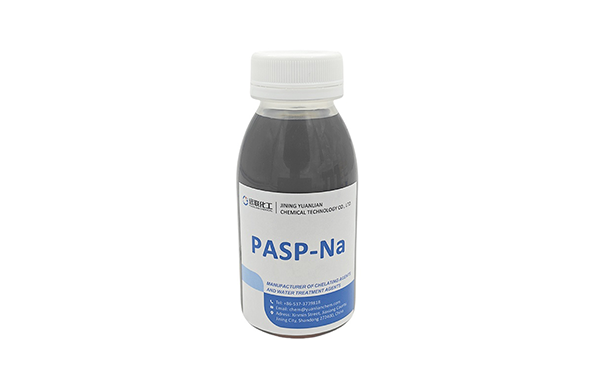
Anti-redeposition and dispersion in laundry
In laundry, redeposition is the difference between whites that stay white and whites that drift grey after a few washes. Polyaspartic acid addresses that directly by stabilising the suspension of detached soil. It performs across the temperature range of home washing, including the cold and low-energy cycles that are now common, which means the protection does not fade when the consumer chooses an eco setting. The effect is most visible on cotton and on mixed loads where soil loads vary, and it supports the colour-care claim that many brands now print on the pack. Buyers should trial it in their own soil and water matrix, because the benefit scales with how dirty and how hard the conditions are.
Co-builder and cleaning support
Although it is not a calcium chelant in the strict sense, polyaspartic acid contributes to overall cleaning by keeping particulates mobile and by supporting the builder and surfactant system. In compact and concentrated formats, where every component is scrutinised for mass and performance, that support lets the formulator shave a little from other, heavier ingredients. It also tolerates the alkaline pH of laundry and all-purpose cleaners without losing its dispersing power. The practical result is a small but repeatable improvement in cleaning efficiency that compounds across thousands of wash cycles, which is exactly the kind of quiet gain that sourcing teams look for.
Cold-water and energy-saving washes
Lower wash temperatures are no longer a niche preference but a mainstream expectation driven by energy labels and consumer habit. Polyaspartic acid keeps its dispersing behaviour in cold water, so the anti-redeposition benefit survives the move from hot to cold programmes. That matters because some additives lose efficacy as temperature drops, forcing a hidden trade-off. Here the polymer avoids that trade-off, letting the product keep its cleaning promise at thirty degrees or below. For buyers serving efficiency-conscious markets, that temperature stability is a selling point worth stating on the specification.
Enzyme and formulation compatibility
Polyaspartic acid is a gentle neighbour in a formula. It does not inhibit the proteases, amylases and cellulases common in modern detergents, nor does it react with the fragrances and optical brighteners that give a product its shelf appeal. That compatibility simplifies formulation, because the formulator need not redesign the enzyme package around the dispersant. As with any new component, a short stability and enzyme-activity screen at the intended dose is the sensible confirmation step, but the polymer is known to sit well with the usual household cleaning system. Buyers can therefore add it with low risk of disturbing an established recipe.
Choosing the grade and the form
Polyaspartic acid is supplied at various molecular weights and solids contents, and the choice changes the dispersing behaviour. Lower molecular weight grades disperse finely and suit liquids, while higher grades give stronger soil suspension for heavy-duty laundry. Buyers should specify the molecular weight range and the active content they need, then verify them against a certificate of analysis on each lot. Agree the acceptance band up front so contract manufacturers have a clear target. The grade decision is not cosmetic: it sets how much polymer is required to reach the visual result, and therefore the landed cost of the finished product.
Blending and dosing notes
Add the polymer early in the make-up, once the water is in the vessel, so it is distributed before soil and surfactant load the mix. It dissolves readily in water and needs only moderate agitation, which keeps the addition step simple on most plants. Dosing is set by the soil and water conditions rather than by a fixed table, so a bench trial with the actual wash liquor gives a more honest starting point than a generic rate. Start at the supplier's suggested window, measure the redeposition or cleaning score, then adjust. That measured approach avoids both under-dosing, which loses the benefit, and over-dosing, which adds cost without a visible return.
EU detergents rules and biodegradability
Polyaspartic acid is regarded as readily biodegradable, with ready-biodegradability testing of this class commonly referenced to the OECD 301 series, and it carries low aquatic toxicity, which aligns with the Detergents Regulation (EC) 648/2004 and with retailer chemical policies. Those policies increasingly screen out persistent or hazardous ingredients, so a polymer that breaks down quickly and cleanly supports both compliance and eco-labelling. Buyers should still keep the current regulatory texts to hand, since criteria are revised, and confirm that the grade chosen meets the latest expectation rather than last year's. The environmental profile is a genuine strength here, not a marketing claim to defend.
Storage and handling
The supplied solution is handled like other aqueous polymer streams: closed, corrosion-resistant vessels, protection from freezing and from prolonged heat, and routine stock rotation. The material is low hazard compared with many industrial additives, so warehouse demands are modest, but standard housekeeping still applies. Standardise the storage instruction across sites to avoid the minor losses that come from inconsistent handling. Buyers managing several contract manufacturers should write the storage rule into the specification so every plant treats the material the same way.
Frequently asked questions
Is polyaspartic acid a replacement for a chelating agent? Not on its own. It complements a chelant by controlling soil redeposition; in hard water a chelant such as GLDA or MGDA still does the calcium and magnesium work.
Does it work in cold washes? Yes. Its dispersing behaviour holds at low temperatures, which is one reason it suits energy-saving laundry programmes.
Will it cloud a clear surface cleaner? At typical use levels it stays clear, but confirm the grade and run a small batch, because higher molecular weight grades can add slight haze.
How is the right dose found? Through a bench trial in your own water and soil conditions, starting from the supplier's suggested window and adjusting to the measured cleaning or redeposition score.
Request a sample and formulation advice from the Yuanlian Chemical product centre, or write to [email protected] / +86-537-3739818 for technical support.
Yuanlian Chemical specializes in the production of polyaspartic acid (PASP),tetrasodium iminodisuccinate(IDS), GLDA, MGDA etc. with stable quality and excellent quantity!

Contact us